Views: 0 Author: Site Editor Publish Time: 2026-04-30 Origin: Site
Quick Answer: What Is Aluminum Friction Stir Welding? Aluminum friction stir welding (FSW) is a solid-state joining process where a rotating pin tool generates frictional heat — softening aluminum below its melting point — and mechanically stirs the material to form a fully consolidated, defect-free weld joint. No melting. No filler wire. No shielding gas.
It is the dominant welding method for aluminum in high-performance manufacturing, accounting for over 33% of the global FSW market (Coherent Market Insights, 2026). For alloy series 5xxx, 6xxx, and 7xxx — the workhorses of EV, aerospace, and electronics manufacturing — FSW consistently outperforms MIG and TIG on strength, distortion, and repeatability.
Bottom line: If your product is aluminum and joint quality matters, FSW is the process to evaluate first.
Parameter | Value |
|---|---|
Process type | Solid-state (no melting) |
Typical materials | 6xxx, 7xxx, 5xxx aluminum alloys |
Joint efficiency | Up to 90–95% of base material strength |
Defects | Zero porosity, zero hot cracking |
Common applications | Battery trays, cooling plates, motor housings, aerospace panels |
If you need leak-free, high-strength aluminum welds at production scale — FSW is the answer the industry has converged on.
Aluminum is the defining material of modern lightweight manufacturing. The shift to electrification, weight reduction mandates, and tighter thermal management requirements have all converged to make aluminum FSW not just viable — but often the only process that meets spec.
Aluminum FSW has become the backbone welding process across several high-growth industries:
Industry | Key Aluminum Components | Why FSW Wins |
|---|---|---|
EV & New Energy | Battery trays, cooling plates, motor housings | Leak-free joints, no porosity, high throughput |
Aerospace | Fuselage panels, fuel tanks, engine brackets | FAA/EASA-accepted process, 20–30% weight savings |
Electronics & Power | IGBT heat sinks, liquid cold plates, busbar assemblies | Hermetic seals, sub-millimeter flatness tolerance |
Shipbuilding | Hull panels, deck extrusions, bulkheads | Long straight joints, distortion-free on thin sheet |
Rail & Transport | Floor panels, side panels, roof sections | High-speed production on 6xxx extrusions |
The FSW equipment market is projected to grow from USD 286 million in 2026 to USD 461 million by 2035 (CAGR 5.5%), with aluminum alloys representing the largest material segment throughout this period. Explore our friction stir welding machine solutions for aluminum battery trays, cooling plates, and lightweight structural applications.
Aluminum isn't one of the applications of FSW. Aluminum IS FSW — every other material (copper, magnesium, titanium) is an extension of techniques originally developed for aluminum. Different materials require different process strategies because thermal conductivity, plastic flow behavior, and heat management vary significantly between alloys. Read our guide to friction stir welding copper alloys.
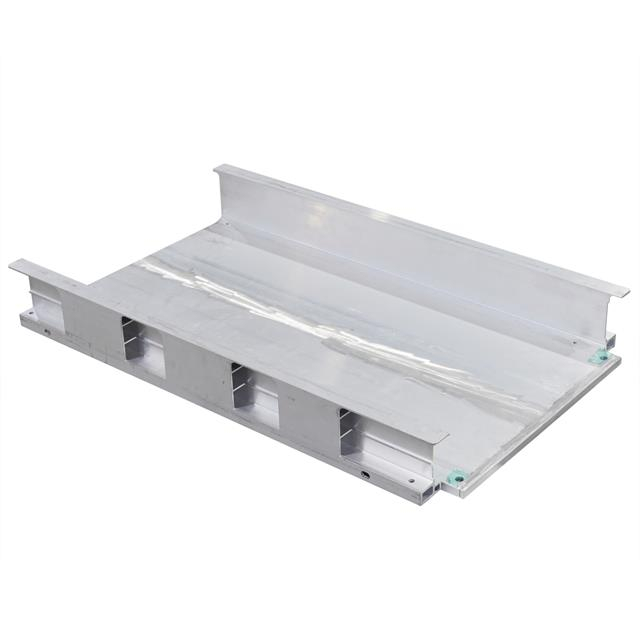
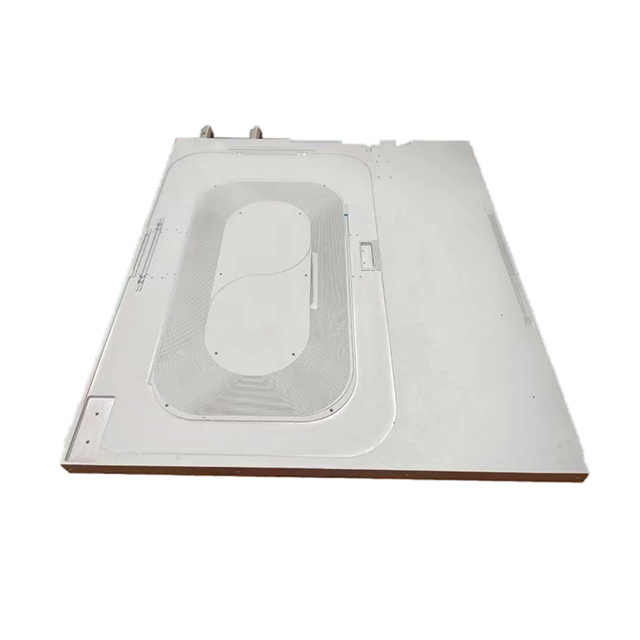
The EV revolution runs on aluminum. Battery trays, cooling plates, and motor housings all demand lightweight, leak-proof, structurally sound welds. FSW delivers all three simultaneously, making it the default choice for Tier 1 automotive suppliers worldwide. For EV battery trays and cooling plates, stable friction stir welding is critical for both structural strength and leak-proof performance. Explore our EV component welding and FSW processing services.
Battery tray enclosures: structural integrity + hermetic sealing
Liquid cooling plates: internal channel welds without distortion
Motor housings: tight-tolerance cylindrical joins
Aircraft fuselage panels, fuel tanks, and structural frames require welds with zero defect tolerance. FSW replaced riveting on several aircraft programs due to superior fatigue life and reduced weight.
Aluminum seems like it should be easy to weld — it's soft, it's everywhere. But in practice, it creates serious production headaches:
When aluminum melts during arc welding, hydrogen can dissolve into the molten weld pool. As the metal solidifies, hydrogen may become trapped inside the joint and form porosity. This weakens the weld exactly where strength and sealing performance matter most.
Hot cracking is another common risk, especially when welding high-strength aluminum alloys. Materials such as 6061-T6 and 7075-T6 are difficult to fusion-weld consistently because melting and solidification can reduce joint integrity and increase rework rates.
Aluminum has high thermal conductivity and a relatively low melting point. Arc welding introduces concentrated heat, which can cause thin aluminum parts to warp or deform.
For battery enclosures, liquid cooling plates, and thin-wall structural parts, even small distortion can create serious problems. Poor flatness may affect assembly, sealing, leak testing, and downstream machining. In precision applications, post-weld deformation can turn a qualified part into scrap.
Aluminum naturally forms an oxide layer on the surface. This aluminum oxide layer has a much higher melting point than aluminum itself, so it must be broken and dispersed properly during welding. Arc welding does not always handle this layer consistently, especially on complex joints or high-strength alloy series.
The heat-affected zone is another challenge. In 6xxx and 7xxx aluminum alloys, excessive heat can reduce the original temper and mechanical properties. This is one reason why high-strength aerospace alloys such as 7075 are considered difficult to weld by conventional MIG or TIG processes.
MIG and TIG welding often require filler wire, such as 4043 or 4047. This adds consumable cost and introduces alloy dilution into the weld area.
For marine structures, outdoor aluminum frames, and corrosion-sensitive components, the filler bead and heat-affected zone can become weak points over long-term service. This creates additional concerns for durability, surface treatment, and lifecycle performance.
High-quality TIG welding depends heavily on operator skill. Weld consistency can change with hand movement, fatigue, torch angle, wire feeding, and heat control.
For mass production, this variation becomes a major quality risk. Manufacturers need stable weld appearance, repeatable strength, predictable sealing performance, and traceable process data. Manual welding is difficult to control when customers require high process capability and consistent batch quality.
In friction stir welding, a rotating tool with a shoulder and pin is pressed into the aluminum joint line and moves along the weld path. The tool generates frictional heat and plastic deformation, softening the aluminum without melting it.
For most aluminum alloys, the welding temperature stays below the melting point. Instead of forming a liquid weld pool, the material enters a plasticized state. The rotating pin stirs the softened metal from both sides of the joint and consolidates it behind the tool, forming a solid-state metallurgical bond.
This is why FSW is especially effective for aluminum:
No liquid weld pool: The process reduces hydrogen pickup, porosity, solidification cracking, and shrinkage defects.
Mechanical oxide disruption: The rotating tool breaks and disperses the aluminum oxide layer, helping create a cleaner bond at the joint interface.
Lower heat input: The heat-affected zone is narrower than in many fusion welding processes, helping reduce distortion and preserve more base material properties.
Refined weld microstructure: The stirring action produces a fine-grained weld nugget, which can improve fatigue performance and joint consistency.
Automated process control: CNC-controlled FSW systems maintain stable rotation speed, travel speed, plunge force, and weld path, reducing operator-to-operator variation.
For aluminum components that require strength, flatness, sealing performance, and repeatability, FSW works with the material’s behavior instead of forcing it through a high-heat melting process.
Alloy Series | Fusion Weldability | FSW Weldability | Typical FSW Application |
|---|---|---|---|
5052, 5083 | Good (4xxx filler) | Excellent | Marine panels, pressure vessels |
6061, 6063 | Moderate (crack risk) | Excellent | EV chassis, extrusion joining |
6082 | Moderate | Excellent | Rail floor panels, structural |
7075, 7050 | Poor (hot cracking) | Good–Excellent | Aerospace skins, high-strength brackets |
2024, 2219 | Very Poor | Good | Fuel tanks, aerospace |
FSW is the only production-viable solid-state welding process for 7xxx and 2xxx series alloys in high-volume manufacturing.
Tool Rotation Speed:   800–2,000 RPM  (thinner = faster)
Traverse Speed:        200–1,500 mm/min
Plunge Force:          5–30 kN  (depends on material thickness & alloy)
Weld Depth:            0.5–30 mm  (single pass)
Shoulder Diameter: 10–30 mm (3× material thickness rule)A stable aluminum FSW process depends on four engineering variables: alloy selection, joint geometry, fixturing rigidity, and weld qualification requirements.
Butt joint: two plates edge-to-edge — the most common, highest structural integrity
Lap joint: one plate over another — used for battery cell interconnects, busbar assembly
T-joint: 90° joint — motor housing ribs, structural frames
Circumferential / contour: curved welding paths — cylinder joints, closed loop cooling channels
Dissimilar aluminum joining (e.g., 6061 + 5083, 6061 + 7075) is routinely achieved with FSW — something that is extremely challenging with fusion welding. For dissimilar joints, tool offset toward the harder alloy is standard practice.
FSW plunge forces of 10–25 kN mean workpieces must be rigidly fixtured. For battery trays and cooling plates, custom vacuum fixtures or toggle-clamp beds are standard. Fixture compliance is the #1 source of root defects and weld path deviation.
Per AWS D1.2 / ISO 25239:
Cross-section macros (no voids, hook defects, kissing bonds)
Tensile testing (typically 85–95% of base metal UTS for 6xxx, 70–85% for 7xxx)
Bend testing (root and face)
Fatigue testing (for structural/safety-critical parts)
Not all FSW machines are created equal. For aluminum production applications, these capabilities determine whether you can hit quality and cycle time targets:
Force-controlled machines maintain consistent shoulder penetration across surface irregularities — critical for die-cast parts where flatness tolerance is ±0.5mm or worse. Position-only control leads to variable weld quality on imperfect surfaces.
Aluminum is forgiving, but large battery tray welds at high travel speeds demand spindles in the 15–30 kW range with minimal deflection under lateral loads. Underpowered machines slow down or show speed variation artifacts in the weld.
For EV component production (battery trays, cooling plates), multi-station fixtures allow loading/unloading on one station while welding proceeds on another — doubling throughput with the same machine investment.
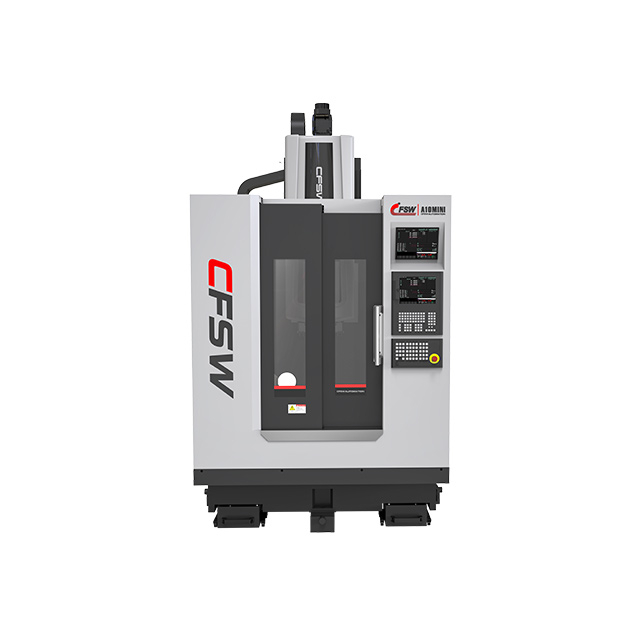
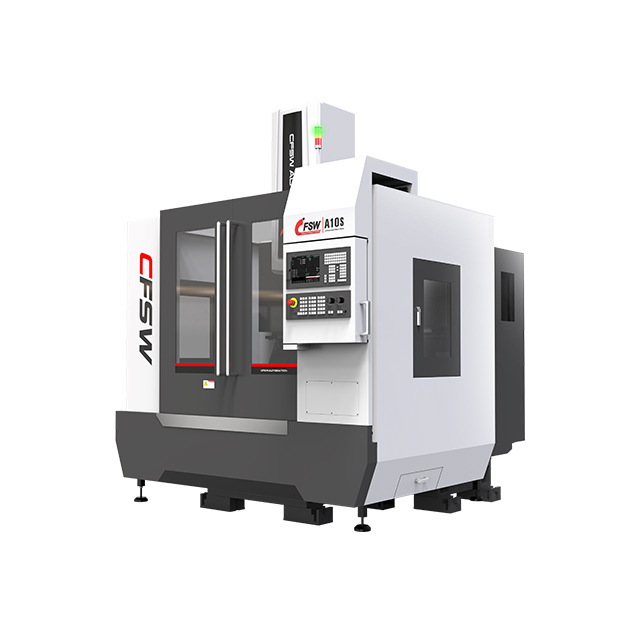
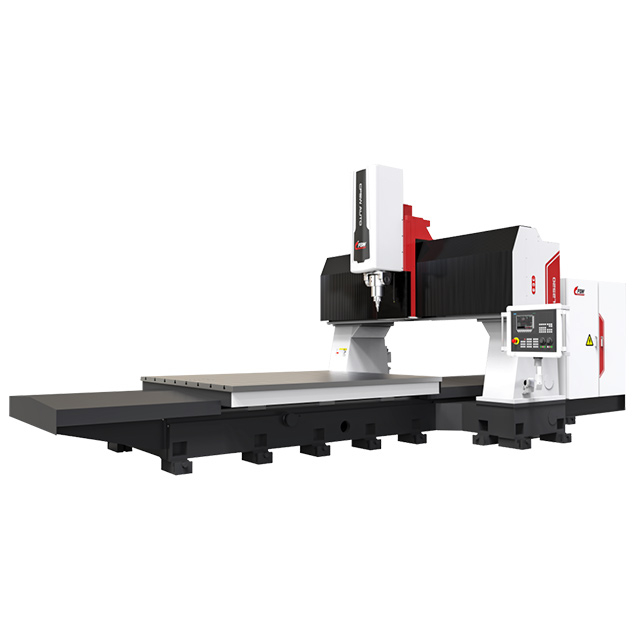
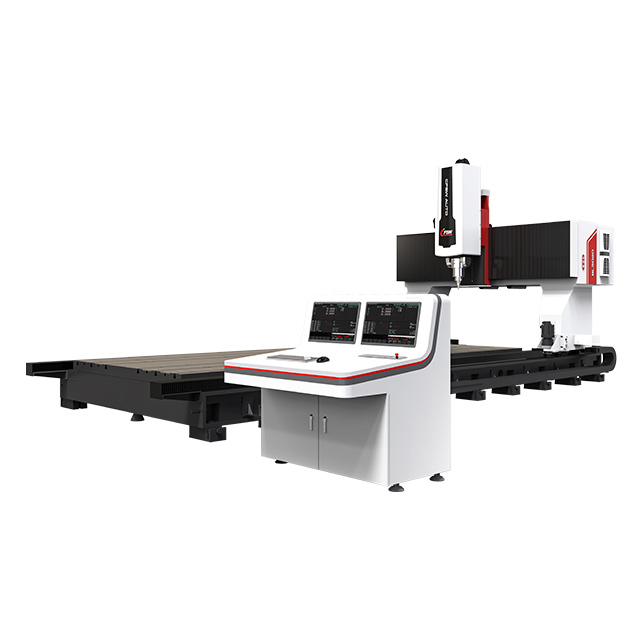
Zhihui Welding provides gantry, multi-station, compact precision, and robotic FSW systems for aluminum battery trays, cooling plates, motor housings, rail panels, ship panels, and electronics components.
Model | Working Envelope | Spindle Force | Best For |
|---|---|---|---|
FSW-BL2520 | 2500×2000mm | Up to 30 kN | Medium battery trays, cooling plates |
FSW-BL3020 | 3000×2000mm | Up to 40 kN | Large battery trays, floor panels |
FSW-DM5020 | 5000×2000mm | Up to 50 kN | Long-run shipbuilding, rail panels |
FSW-A10 / A10S | Compact / Die-cast optimized | Up to 20 kN | 3C electronics, IGBT heat sinks |
FSW-R Robotic | Flexible path | Up to 15 kN | Complex contour paths, mixed geometry |
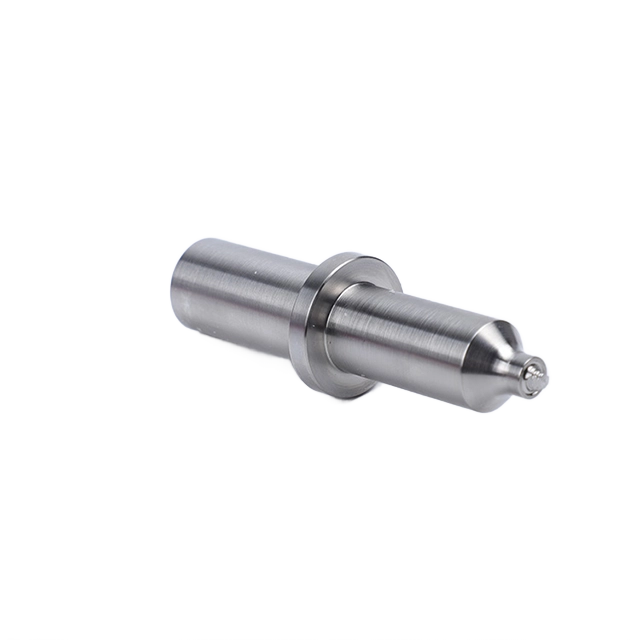
✅ Tool life optimization — We manufacture our own FSW tools, optimized for 5xxx/6xxx/7xxx alloys. Average tool life: 800–2,000m of weld per tool, versus 300–500m with generic tooling.
✅ Process recipe library — Pre-validated parameter sets for 23 aluminum alloy/thickness combinations, available to all customers at machine handover.
✅ On-site process commissioning — ZHFSW engineers commission every machine on your actual production fixture with your actual material. You don't go live until weld quality is confirmed.
✅ After-sale process support — We don't disappear post-delivery. Customers get direct access to our process engineers for parameter troubleshooting, new product launch support, and tool selection guidance.
Your aluminum FSW application has specific requirements — alloy, thickness, joint type, production rate. Generic solutions leave performance on the table.
Zhihui Welding engineers will:
Review your part drawing and identify the optimal joint design
Recommend the right machine model and fixture approach
Provide process parameter validation with sample welds
Support factory acceptance testing and production ramp