Views: 0 Author: Site Editor Publish Time: 2026-06-26 Origin: Site
Table of Contents
Why is friction stir welding used for EV motor housings?
Modern EV drive motors generate 5–20 kW of waste heat at peak load. Water-cooled motor housings — consisting of a die-cast aluminum shell with an integrated or bolted cooling jacket — require hermetically sealed joints that survive thermal cycling, vibration, and coolant pressure for the vehicle's entire service life. FSW is the preferred welding method because:
Leak-tight joints on die-cast aluminum — no porosity, no hot cracking (die-cast aluminum is notoriously difficult to fusion weld)
Minimal distortion on thin-wall die-castings (2.5–4mm) — maintains bearing bore alignment and housing roundness
No filler wire required — die-cast alloys (AlSi9Mn, AlSi10Mg, ADC12) have high silicon content that makes filler selection problematic in fusion welding
Automated and repeatable — Cpk >1.67 achievable at production volume, eliminating operator-dependent quality variation
The global motor housing casting market is projected to grow from USD 28.7 billion in 2025 to USD 51.3 billion by 2035 (6.7% CAGR), with EV motor housings as the fastest-growing segment. FSW is rapidly becoming the standard joining method for water-cooled motor housing assemblies across Chinese, European, and US EV platforms.
What FSW delivers for motor housing applications:
Requirement | FSW Performance |
|---|---|
Joint type | Circumferential butt/lap joint on cylindrical body |
Typical alloys | ADC12, A383, 6061-T6 die cast |
Wall thickness range | 2–8 mm (die-cast sections) |
Dimensional tolerance (roundness) | ±0.15 mm — no post-weld machining needed |
Leak integrity | Zero porosity, hermetic seal achievable |
Post-weld distortion | < 0.3 mm axial runout (vs. 2–5 mm MIG) |
Cycle time | 8–20 min per joint depending on diameter |
Heat-affected zone | 4–10 mm — preserves T6 temper near joint |
Motor housing FSW has moved from experimental to production-standard in the past 5 years as EV drive motor output has climbed from 80 kW to 300+ kW — and the thermal and structural demands on the enclosure have grown proportionally.
FSW has become the preferred joining process for high-precision aluminum EV motor housings requiring low distortion and reliable leak-tight performance.
Solid-state welding minimizes thermal deformation, helping maintain bearing bore alignment, housing roundness, and dimensional accuracy.
FSW performs exceptionally well on die-cast aluminum alloys, reducing porosity, hot cracking, and other common fusion welding defects.
Automated FSW systems improve production consistency, supporting high-volume manufacturing with lower reject rates and full process traceability.
Successful motor housing welding depends on more than the welding process itself, requiring optimized joint design, fixture engineering, and production planning.
Every EV has at least one drive motor; many have two (AWD) or even three (performance/luxury). Each motor requires a housing that provides structural mounting, bearing support, electromagnetic shielding, and — increasingly — integrated liquid cooling.
Factor | Impact on Motor Housing FSW |
|---|---|
EV production growth | 17M+ vehicles in 2026 → 34M+ motors requiring housings |
Higher power density | 200kW+ motors generating more heat → water cooling mandatory |
Integrated design trend | OEMs combining water jacket + housing into single casting → fewer parts but more welding |
Cost pressure | FSW eliminates filler wire, shielding gas, and post-weld machining → lower unit cost vs. TIG |
Quality mandates | OEM zero-defect requirements → FSW's automated process control delivers consistency TIG cannot |
Generation 1 (2015–2020): Separate water jacket bolted to motor housing — no welding required, but poor thermal contact, heavy, and many seals.
Generation 2 (2020–2024): Semi-solid die-cast water jacket welded to high-pressure die-cast (HPDC) shell — FSW adopted for the circumferential weld joining jacket to shell. This is the current mainstream design.
Generation 3 (2025+): Fully integrated mega-casting with internal cooling channels — FSW used to weld the closing plate/cover over internal channels, similar to cold plate welding but on a cylindrical or contoured housing geometry.
The common thread: every design generation increases the role of welding — and FSW is the process that makes it production-viable.
Early EV motor housings were passive enclosures. Modern skateboard platform designs integrate the motor housing directly into the vehicle structure — it functions as a suspension mounting point, a crash energy absorption element, and a torsionally rigid powertrain attachment.
This means the housing must maintain dimensional stability and fatigue strength across 15+ years of vibration, thermal cycling, and crash loads. The weld joints must not become fatigue crack initiation sites.
Hairpin stator motors and high-performance drive motors (300+ kW) require active cooling — a water jacket integrated into the motor housing. The coolant passages are either:
Machined channels in the housing wall (DiCu/direct cooling)
Die-cast integrated channels with a welded cover
Either way, the motor housing is now also a pressurized cooling system component. Leak integrity under 3–5 bar coolant pressure is non-negotiable. A coolant leak inside the motor housing is a motor failure event.
Over 95% of aluminum EV motor housings are high-pressure die-cast (HPDC) — ADC12, A383, or proprietary alloys. Die-castings have inherent porosity in thick sections and residual die-release agent contamination on surfaces. MIG welding on die-cast motor housings is notoriously problematic: porosity from surface contamination, hot cracking in thick-to-thin transitions, and heat-affected zone softening of the T6 temper.
FSW, as a solid-state process, mechanically consolidates the joint and eliminates both the porosity inheritance and the melting-point cracking risk.
Chinese OEMs (BYD, Geely, NIO, Xpeng): Gen 2 and Gen 3 designs in volume production with FSW
European OEMs (BMW, Volkswagen, Stellantis): FSW motor housing production for Gen 2 water jacket assemblies
US OEMs (GM Ultium, Rivian): FSW specified for next-gen integrated motor housing programs
Tier 1 suppliers (BorgWarner, Valeo, Nidec, Jingjin Electric): FSW production lines operational or commissioning
The decision to adopt friction stir welding is no longer driven by weld quality alone. As EV motor platforms become more compact, more powerful, and more integrated, manufacturers are placing greater emphasis on production consistency, dimensional accuracy, automation, and long-term reliability.
Unlike conventional fusion welding processes, FSW enables manufacturers to produce motor housings with minimal thermal distortion while maintaining bearing bore alignment, housing roundness, and cooling jacket integrity. These characteristics are becoming increasingly important as modern drive motors operate at higher rotational speeds and higher power densities, where even small dimensional deviations can affect NVH performance, rotor balance, and bearing life.
Manufacturing efficiency is another major driver. High-volume EV production requires stable, repeatable processes capable of producing hundreds of thousands of identical components every year. Because FSW is a CNC-controlled solid-state process, it significantly reduces operator dependency, minimizes weld variation, and supports automated quality monitoring and full production traceability.
The growing adoption of high-pressure die-cast aluminum motor housings has also accelerated the transition toward FSW. Die-cast aluminum alloys are well known for the welding challenges they present during conventional fusion welding, including porosity, hot cracking, and excessive heat input. By avoiding material melting altogether, friction stir welding provides a far more stable solution for joining these lightweight cast structures.
For many EV manufacturers, the discussion has shifted from whether FSW is technically feasible to how it can be integrated into next-generation motor housing production lines. As integrated cooling jackets, complex housing geometries, and automated manufacturing continue to evolve, FSW is increasingly becoming the production standard for high-performance aluminum motor housing assemblies.
Modern EV motor housings must combine structural strength, precise bearing alignment, efficient liquid cooling, and long-term sealing reliability within a lightweight aluminum structure. As power density and production volumes continue to increase, conventional fusion welding processes are finding it increasingly difficult to meet these manufacturing requirements consistently.
Motor housings require extremely tight dimensional tolerances to maintain rotor balance, bearing alignment, and overall drivetrain performance.
Conventional TIG or MIG welding introduces significant heat around the entire joint, often causing housing distortion, bearing bore misalignment, and loss of roundness. Many manufacturers must perform additional machining after welding to restore dimensional accuracy, increasing both production cost and cycle time.
Because friction stir welding generates localized heat without melting the base material, it significantly reduces thermal deformation. The narrow heat-affected zone helps preserve housing geometry and minimizes the need for post-weld machining.
Most modern EV motor housings are produced using high-pressure die-cast (HPDC) aluminum alloys such as ADC12, AlSi9Mn, and AlSi10Mg.
These materials often contain trapped gases and inherent microporosity, making conventional fusion welding prone to blowholes, hot cracking, and inconsistent weld quality. Surface contamination from die-release agents further increases welding difficulty.
Since FSW is a solid-state process, the material never reaches its melting point. Instead, the rotating tool plastically deforms and consolidates the joint, producing sound welds with significantly lower porosity and improved consistency after proper surface preparation.
In production projects, manufacturers often discover that weld quality issues originate from die-cast surface preparation rather than the welding process itself. Proper machining of the joint face and removal of die-release residues are essential for achieving stable, repeatable FSW results.
Many motor housings use precipitation-hardened aluminum alloys such as 6061-T6 to achieve high structural strength.
Fusion welding exposes a wide area to elevated temperatures, often over-aging the material and reducing mechanical strength around the weld. This weakened heat-affected zone can become a fatigue crack initiation point during long-term vehicle operation.
FSW produces a much narrower heat-affected zone while promoting dynamic recrystallization within the weld region. As a result, surrounding structural features such as bearing supports and mounting bosses retain more of their original mechanical properties.
Modern drive motors increasingly incorporate integrated liquid cooling jackets to improve thermal management.
These cooling passages must remain completely sealed throughout years of thermal cycling, vibration, and internal coolant pressure. Even minor welding defects can result in coolant leakage, reduced cooling efficiency, or complete motor failure.
With properly optimized tooling and process parameters, FSW consistently produces dense, pore-free joints capable of meeting stringent helium leak-test requirements while maintaining cooling jacket integrity.
As EV production expands globally, manufacturers are expected to produce tens or even hundreds of thousands of motor housings every year while maintaining consistent quality.
Manual welding processes introduce operator variation, higher rework rates, and increasing quality costs as production volumes rise.
Because FSW is a CNC-controlled, highly repeatable manufacturing process, every weld follows the same validated parameters for spindle speed, travel speed, axial force, and tool path. This significantly improves process stability, reduces first-pass reject rates, and supports automated quality monitoring and production traceability for large-scale manufacturing.
Type A: Circumferential Lap Weld (Water Jacket to Shell)
        Die-cast shell (HPDC)
    ╭──────────────────────╮
    │    ○ bearing bore ○   │
    │  ┌──────────────────┐ │
    │  │  Water jacket    │ │ ← FSW lap weld along
    │  │  (semi-solid cast)│ │    the circumference
    │  └──────────────────┘ │
    ╰──────────────────────╯
         Weld line → ═══════
The water jacket (semi-solid/rheocast aluminum) is assembled over or inside the HPDC shell and welded along the circumferential joint line. This is a lap joint where the FSW tool penetrates through one component and into the other.
Type B: Cover Plate Weld (Integrated Channel Housing)
    ╭──────────────────────╮
    │  ╱ch╲╱ch╲╱ch╲╱ch╲   │  ← Internal cooling channels
    │ ┌──────────────────┐ │
    │ │  Cover plate     │ │ ← FSW lap weld
    │ └──────────────────┘ │    (similar to cold plate)
    ╰──────────────────────╯
A flat or contoured cover plate is welded over machined or cast internal channels — functionally identical to cold plate welding, but on a housing with mounting features and bearing bores.
① Die-cast skin management The first 0.3–0.5mm of a die-cast surface is the "skin layer" — dense and relatively pore-free. Below this, the casting interior contains distributed microporosity. FSW should not remelt the skin (avoiding porosity blow-out) but should penetrate through it to stir clean material. FSW's solid-state process naturally avoids this problem — the material never melts.
② Circumferential weld path control For round housings, the weld path is a circle — straightforward for a CNC-controlled machine with a rotary table. For non-circular housings (oval, D-shaped, or contoured), a 5-axis machine or robotic FSW system is required. ZHFSW's FSW-R robotic system handles complex contour paths with real-time path compensation.
③ Weld start/stop overlap On circumferential welds, the tool must overlap the start point by 10–20mm to ensure full joint closure. The overlap zone requires careful parameter ramping (tool entry and exit) to avoid keyhole defects. ZHFSW machines use programmed retract cycles with force-controlled ramp-up to ensure clean overlap transitions.
④ Heat input management Motor housings have varying wall thickness — thick at mounting flanges, thin at the barrel. Varying thermal mass along the weld path means the FSW process must adapt heat input in real-time. ZHFSW's force control mode naturally compensates: the machine maintains consistent axial force regardless of local thermal conditions.
Alloy Combination | Joint Type | Thickness | RPM | Traverse | Force |
|---|---|---|---|---|---|
AlSi10Mg (HPDC shell) + A356 (semi-solid jacket) | Circ. lap | 3+3mm | 1,000–1,500 | 400–700 mm/min | 12–20 kN |
AlSi9Mn (HPDC) + 6061 (extruded jacket) | Circ. lap | 3+4mm | 800–1,200 | 300–600 mm/min | 15–25 kN |
AlSi10Mg (HPDC) + 6061 (cover plate) | Linear lap | 3+2mm | 1,200–1,800 | 500–900 mm/min | 8–15 kN |
The most common motor housing FSW joint is a full-circumference butt weld joining the cylindrical body to a flange or end cap:
Motor Body (die-cast cylinder) ─── Butt joint ─── Flange / End Cap
         ↓
Rotating FSW tool traverses around circumference
↓ Pin plunges through joint interface
↓ Material plasticizes and flows around pin
↓ Sound metallurgical bond — no filler, no porosity
Key parameters for cylindrical motor housing FSW:
Parameter | Typical Range | Notes |
|---|---|---|
Tool rotation | 1200–2500 RPM | Higher for thinner walls |
Traverse speed | 400–1000 mm/min | Affects heat input |
Plunge force | 2–8 kN | Controlled by servo |
Shoulder diameter | Pin diameter × 3–4 | Standard proportion |
Pin depth | Wall thickness + 0.5 mm | Must fully penetrate |
For motor housings with integrated water jackets, there are typically two levels of FSW joints:
Outer perimeter weld — closes the cylindrical body to the main flange. This is the primary structural joint.
Internal channel weld — seals the cooling jacket cover. This is often a lap joint with the same retractable pin tool approach used for cooling plates. Requires precise Z-height control to avoid channel deformation.
Motor housing FSW requires a stiff, concentric fixture that:
Holds the cylindrical housing perfectly round during welding (aluminum deflects if unsupported)
Provides a backing bar beneath the weld to support the tool plunge force
Allows rapid loading/unloading for production cycle time targets
ZHFSW engineers work with customer tooling teams to design motor housing-specific fixtures — typically a split-ring design that opens for loading and closes concentrically around the housing before welding.
Parameter | Typical Range | Influence |
|---|---|---|
Tool Rotation | 800–1800 RPM | Heat generation |
Travel Speed | 300–900 mm/min | Productivity |
Axial Force | 8–25 kN | Weld consolidation |
Tool Tilt | 1.5–3° | Material flow |
Shoulder Diameter | 12–24 mm | Surface finish |
Successful friction stir welding begins long before the welding process itself. For electric motor housings, product design has a direct influence on weld quality, dimensional stability, bearing alignment, and long-term production reliability. Evaluating these factors during the design stage helps reduce manufacturing risk while improving process consistency.
Bearing bores are among the most critical features of an electric motor housing. Because bearing alignment directly affects rotor balance, vibration, and service life, the weld zone should be positioned far enough away from precision-machined bearing seats to minimize thermal influence.
As a general recommendation, the bearing bore should be located at least 15 mm from the weld centerline whenever possible. This helps preserve machining accuracy and reduces the need for post-weld correction.
Unlike flat aluminum components, motor housings are cylindrical structures that can deform if they are not properly supported during welding.
Before selecting an FSW process, manufacturers should evaluate:
Housing diameter and wall rigidity
Roundness tolerance
Clamping method
Fixture support around the full circumference
A properly designed concentric fixture helps maintain housing geometry throughout the welding cycle and improves repeatability during high-volume production.
Motor housings often contain mounting bosses, cooling jackets, reinforcement ribs, and bearing supports, resulting in significant wall thickness variation.
Large thickness transitions can change local heat flow and material plasticization during welding. Whenever possible, the weld path should be designed through areas with relatively uniform wall thickness to maintain stable material flow and consistent weld quality.
Many modern EV motor housings integrate water jackets or internal cooling channels directly into the casting.
During product design, sufficient clearance should be maintained between the weld path and internal cooling structures to avoid excessive deformation caused by tool penetration or welding force.
Engineers should also consider:
Channel spacing
Cover plate overlap
Coolant passage location
Minimum land width around the weld path
These design details directly influence leak-tightness and long-term cooling performance.
The accessibility of the weld path determines both machine selection and production efficiency.
Simple circumferential welds are generally well suited for gantry FSW systems equipped with rotary tables, while complex housing geometries with multiple weld paths or irregular contours may require robotic FSW solutions.
Considering equipment accessibility during product development can simplify fixture design, reduce programming complexity, and improve future manufacturing scalability.
Design Element | Recommended Guideline |
|---|---|
Bearing bore distance | ≥15 mm from weld centerline |
Wall thickness | 2.5–8 mm preferred |
Land width | ≥5 mm around the weld path |
Weld accessibility | External access preferred |
Housing roundness | Maintain fixture-supported concentricity |
Cooling channel clearance | Avoid placing channels directly beneath the weld line |
Before specifying a machine, verify these design attributes:
Design Feature | FSW-Friendly | FSW-Challenging |
|---|---|---|
Joint access | External weld path, tool can reach joint from outside | Internal weld path requiring tool insertion into housing bore |
Land width | ≥5mm solid land between weld line and internal features | <3mm land or weld line adjacent to thin channel wall |
Wall thickness | ≥2.5mm on both components at the joint | <2mm on either component (requires micro-FSW) |
Weld path geometry | Circular or simple contour | Complex 3D path with tight radii (<50mm) |
Material | Aluminum casting + aluminum casting/extrusion | Aluminum + steel (dissimilar metal FSW is possible but requires specialized process) |
Question | Why It Matters |
|---|---|
What aluminum alloy is used? | Determines welding parameters |
Is the housing die-cast or machined? | Influences process stability |
Is leak-tightness required? | Determines quality inspection |
What is the annual production volume? | Influences machine selection |
Is automation planned? | Determines fixture and control strategy |
① Machine type: Gantry vs. Robotic
Gantry machine (FSW-BL series): Best for high-volume, single-housing-type production. Higher rigidity, faster cycle time, simpler programming. Ideal for circumferential welds on round or near-round housings with a rotary table.
Robotic system (FSW-R): Best for multi-housing-type production with varying weld path geometries. More flexible, handles non-circular and contoured paths. Slightly lower rigidity limits maximum axial force.
② Rotary table vs. Linear axis
Rotary table: Housing rotates under a stationary FSW head — simplest setup for circumferential welds
Linear axis: Housing stationary, FSW head traverses — better for linear cover plate welds
Combined: Rotary table + linear axis for housings with both circumferential and linear weld requirements
③ Fixture design Motor housing fixtures must:
Locate the housing relative to the weld path within ±0.1mm
Support the housing against axial force without distorting thin walls
Allow rapid load/unload (target: <60 seconds)
Accommodate bearing bore protection (don't clamp on machined bearing surfaces)
Test | Frequency | Specification |
|---|---|---|
Helium leak test | 100% of production | <1×10⁻⁷ mbar·L/s at 0.3 bar |
Bearing bore measurement | 100% (post-weld) | Concentricity ≤0.02mm, cylindricity ≤0.05mm |
Cross-section macro | First article + 1/100 | No voids, cracks, or incomplete consolidation |
Tensile test | First article + 1/500 | ≥80% of HPDC base metal UTS |
Fatigue test | First article + annual | Per OEM specification (typically 10⁶ cycles at design stress) |
Pressure cycling | First article + annual | 50,000 cycles -40°C to +130°C, zero leaks |
A successful motor housing FSW project depends on much more than the welding process itself. From casting quality to final leak testing, every manufacturing step contributes to the dimensional accuracy, sealing performance, and long-term reliability of the finished motor housing.
The workflow below illustrates a typical production process for aluminum EV motor housings using friction stir welding.
Step | Manufacturing Stage | Key Objectives |
|---|---|---|
1 | Housing Design Review | Verify joint geometry, bearing bore location, cooling jacket layout, wall thickness, and weld accessibility. |
2 | Die Casting & Machining | Produce the aluminum housing, machine bearing bores, sealing surfaces, and weld preparation areas to the required tolerances. |
3 | Surface Preparation | Remove die-release residue, oxidation, and contaminants from the weld zone to ensure stable material flow. |
4 | Fixture Positioning | Secure the housing using concentric fixtures or rotary tables to maintain roundness and dimensional stability during welding. |
5 | Friction Stir Welding | Perform circumferential or linear welds using optimized spindle speed, travel speed, axial force, and tool geometry. |
6 | In-Process Monitoring | Record welding parameters, spindle load, axial force, and process data for quality traceability. |
7 | Leak & Dimensional Inspection | Perform helium leak testing, bearing bore inspection, roundness verification, and dimensional measurement. |
8 | Final Validation & Assembly | Complete quality documentation, verify OEM specifications, and release the housing for motor assembly. |
Although individual production lines may vary depending on motor design and production volume, most EV manufacturers follow a similar workflow to ensure consistent weld quality, stable bearing alignment, and reliable cooling system performance throughout mass production.
Manufacturing Stage | Primary Quality Control |
|---|---|
Casting | Porosity inspection |
Machining | Bearing bore accuracy |
Surface Preparation | Cleanliness verification |
FSW | Weld parameter monitoring |
Leak Test | Helium leak testing |
Final Inspection | Roundness, concentricity, dimensional verification |
Selecting the right friction stir welding system is just as important as choosing the appropriate welding process. EV motor housings require precise control of axial force, stable fixture support, accurate weld path positioning, and reliable process monitoring to ensure dimensional accuracy and long-term production consistency.
Different motor housing designs also require different machine configurations depending on housing diameter, joint geometry, production volume, and automation requirements.
Model | Configuration | Best Suited For |
|---|---|---|
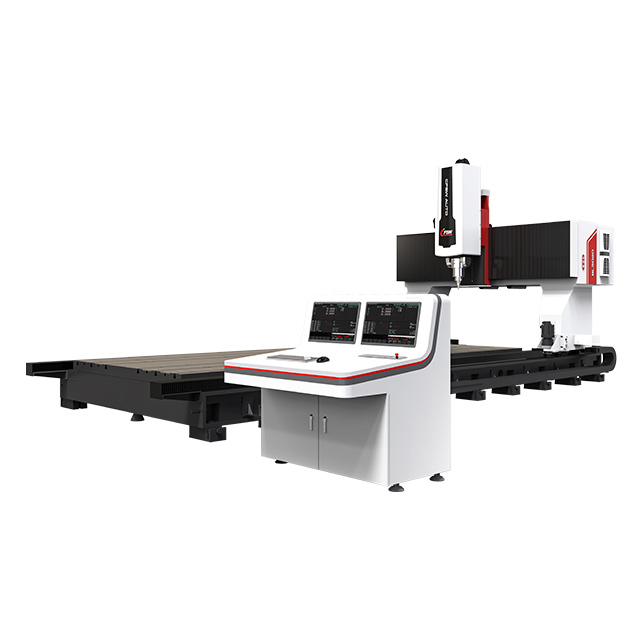
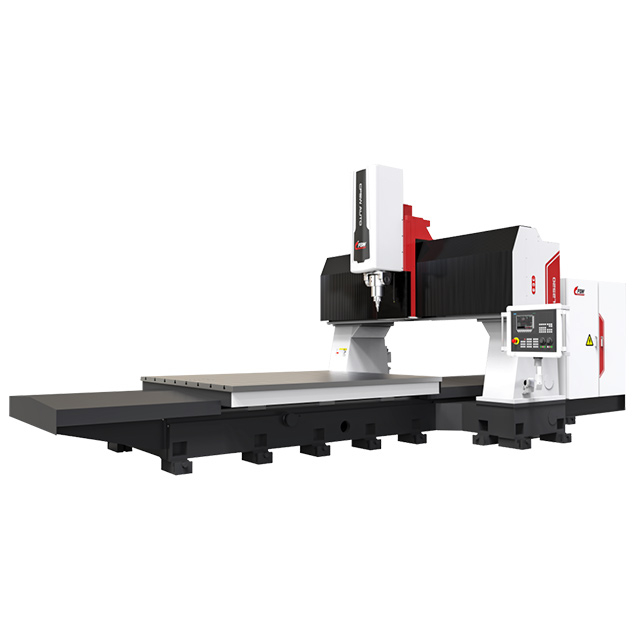
FSW-BL2520 + Rotary Table | High-rigidity gantry system | Large-volume production of round motor housings with circumferential welds |
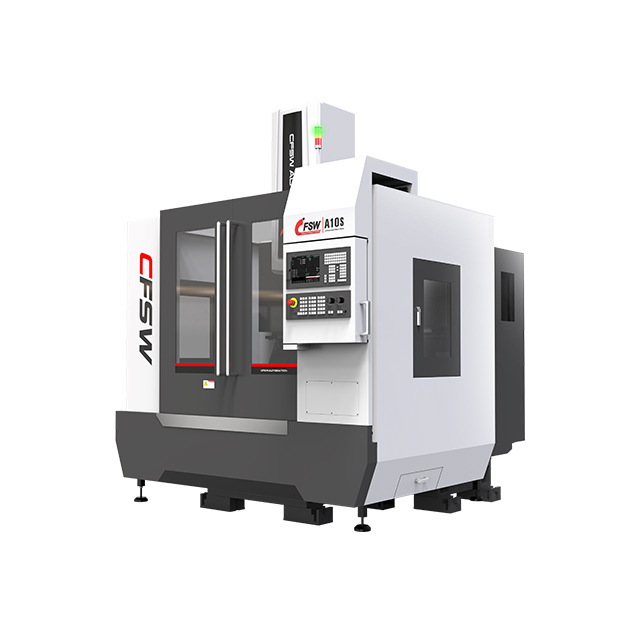
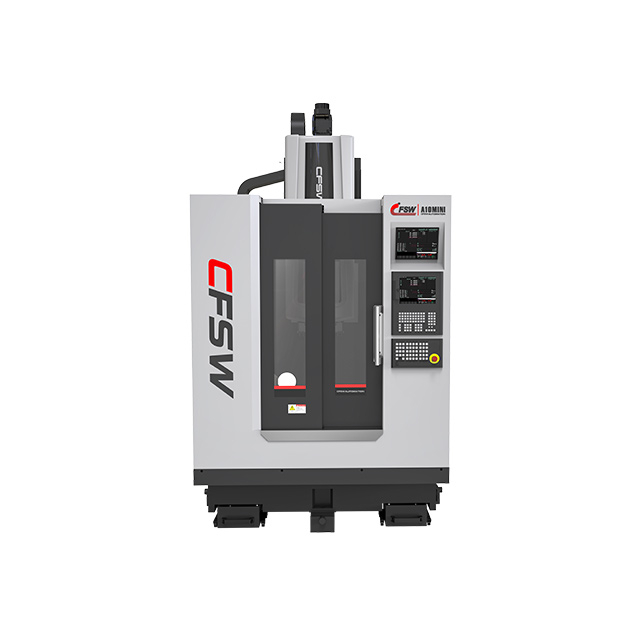
FSW-A10 + Rotary Table | Compact gantry system | Small and medium-sized motor housings with stable production requirements |
FSW-R Robotic System | Six-axis robotic FSW | Non-circular housings, complex weld paths, and mixed-model production |
High-pressure die-cast aluminum motor housings present unique welding challenges because silicon content, casting porosity, and surface conditions vary significantly between alloys. Production-grade FSW systems should therefore support validated welding parameters for commonly used die-cast materials such as ADC12, AlSi9Mn, AlSi10Mg, and A356.
Through extensive application validation, Zhihui Welding has developed optimized process parameters for these widely used motor housing alloys, helping manufacturers improve weld consistency while reducing porosity-related defects.
Most EV motor housings require full-circumference welds joining the housing body to cooling jackets, end caps, or structural flanges.
To maintain consistent weld quality around a 360-degree joint, production equipment should provide:
High-accuracy rotary positioning
Stable axial force throughout the weld path
Smooth start-stop overlap control
Automatic synchronization between spindle motion and rotary movement
Zhihui Welding integrates precision rotary tables with gantry FSW systems to achieve stable circumferential welding while maintaining excellent dimensional consistency.
Motor housing geometry can easily deform if clamping forces are uneven or insufficiently supported.
Well-designed fixtures should:
Maintain housing roundness during welding
Protect precision-machined bearing bores
Support thin-wall castings against welding forces
Reduce setup variation between production batches
Enable fast loading and unloading for automated production
Rather than relying on standard fixtures, Zhihui Welding develops application-specific tooling based on each customer's housing geometry, production requirements, and automation objectives.
Although many motor housings are circular, modern EV designs increasingly include irregular contours, integrated cooling structures, and multiple weld paths.
Production systems should therefore support:
CAD-based weld path programming
Automatic speed adjustment on curved sections
Closed-loop force control
Multi-axis interpolation for complex geometries
These capabilities help maintain stable material flow and consistent weld quality regardless of housing shape.
Automotive manufacturing requires complete process documentation for quality assurance and OEM compliance.
A modern FSW production system should record:
Spindle speed
Travel speed
Axial force
Welding temperature (when applicable)
Weld cycle time
Pass/fail inspection results
Part serial number and production history
Zhihui Welding supports complete production data recording and MES integration through standard industrial communication protocols, enabling full process traceability throughout the manufacturing lifecycle.
Actual production performance varies according to motor housing design, alloy selection, fixture configuration, and production conditions. Under validated manufacturing conditions, typical production results include:
Performance Indicator | Typical Result |
|---|---|
Helium leak-test pass rate | >99.2% |
Bearing bore distortion | <0.015 mm |
Circumferential weld cycle time | Approximately 3.5 min (Ø280 mm housing) |
Joint tensile efficiency | 82–88% of base material strength |
Pressure cycling performance | 50,000+ cycles without leakage |
Typical tool life | 800–1,200 m on die-cast aluminum alloys |
These values serve as general production references. Actual performance depends on housing geometry, aluminum alloy, joint configuration, fixture design, and process optimization.
Selecting an FSW system is only one part of a successful motor housing project. Long-term production performance depends on the integration of product design, fixture engineering, welding process development, automation, and quality validation.
Zhihui Welding works closely with EV motor manufacturers throughout the development process, providing engineering support from feasibility studies and process validation to fixture design, equipment integration, and production optimization.
✔ Joint feasibility evaluation
✔ Weld path optimization
✔ Fixture design support
✔ Sample welding and process validation
✔ Production line integration
✔ Operator training
✔ Process optimization for mass production
Different welding technologies offer different advantages depending on motor housing design, production volume, material type, and quality requirements. The comparison below provides a general guideline for selecting the most appropriate joining process.
Evaluation Criteria | Friction Stir Welding (FSW) | TIG Welding | Laser Welding |
|---|---|---|---|
Die-Cast Aluminum Compatibility | Excellent | Fair | Good |
Weld Porosity | Very Low | High Risk | Moderate |
Thermal Distortion | Very Low | High | Low |
Bearing Bore Accuracy | Excellent | Often Requires Re-Machining | Good |
Heat-Affected Zone | Narrow | Wide | Narrow |
Joint Strength | Excellent | Good | Good |
Leak-Tight Performance | Excellent | Moderate | Good |
Production Automation | Excellent | Moderate | Excellent |
Process Repeatability | Excellent | Operator Dependent | Excellent |
Initial Equipment Investment | Medium | Low | High |
Best Application | High-volume EV motor housings | Low-volume fabrication and repair | Thin-sheet precision components |
Selection Tip: For high-volume EV motor housing production requiring excellent dimensional stability, leak-tight performance, and automated manufacturing, friction stir welding is generally the preferred solution. TIG welding remains suitable for prototype work and repair applications, while laser welding is often selected for thin-wall precision assemblies where minimal heat input is critical.
As electric drive systems continue to evolve toward higher power density, integrated cooling, and lightweight aluminum structures, motor housing manufacturing demands far greater precision than traditional fusion welding can consistently deliver.
Friction stir welding addresses these challenges through solid-state joining, providing excellent dimensional stability, low distortion, superior leak-tight performance, and highly repeatable production quality. These advantages make FSW particularly well suited for die-cast aluminum motor housings with integrated cooling jackets and high-volume automated manufacturing.
For manufacturers developing next-generation EV drive systems, selecting the appropriate welding technology during the early design stage can reduce production risk, improve product reliability, and support future production scalability.
Your Requirement | Recommended Solution |
|---|---|
HPDC die-cast motor housing | ✅ FSW |
Bearing bore accuracy is critical | ✅ FSW |
Annual production >50,000 units | ✅ FSW |
Prototype or repair welding | ✅ TIG |
Thin precision aluminum parts | ✅ Laser |
Complex non-circular weld paths | ✅ Robotic FSW |
Friction stir welding is preferred because it produces low-distortion, high-strength joints without melting the base material. Compared with conventional fusion welding, FSW better preserves housing roundness, bearing bore alignment, and dimensional accuracy, making it particularly suitable for lightweight aluminum motor housings used in electric vehicles.
Yes. FSW performs exceptionally well on many high-pressure die-cast aluminum alloys, including ADC12 and AlSi-based materials. Since the process does not melt the material, it significantly reduces common fusion welding defects such as porosity, hot cracking, and gas-related blowholes. Proper surface preparation remains essential for consistent weld quality.
One of the main advantages of FSW is its low heat input. Because only the material immediately surrounding the rotating tool is plasticized, thermal distortion is significantly lower than with TIG or MIG welding. This helps maintain bearing bore alignment and often reduces or eliminates the need for post-weld corrective machining.
Yes. When combined with appropriate joint design, tooling, and process parameters, FSW can consistently produce fully sealed cooling jackets capable of meeting demanding helium leak-test requirements for EV drive systems and liquid-cooled motor housings.
Typical materials include 6061-T6, 6082, 6005A, AlSi10Mg, ADC12, and other cast or wrought aluminum alloys. The most suitable welding parameters depend on alloy composition, wall thickness, and the specific housing design.
Compared with TIG welding, FSW generally provides lower distortion, better dimensional stability, reduced porosity, higher process consistency, and improved suitability for automated mass production. TIG welding remains appropriate for prototype fabrication, repair work, or low-volume applications where production speed is less critical.
Most manufacturers verify weld quality through dimensional inspection, bearing bore measurement, roundness inspection, visual examination, non-destructive testing when required, and helium leak testing for liquid-cooled housings. Production lines also record welding parameters such as spindle speed, travel speed, and axial force to ensure process traceability.
Yes. Modern FSW systems can be configured to manufacture multiple housing sizes by changing fixtures, tooling, and welding programs. Flexible fixture systems and programmable CNC controls allow manufacturers to switch efficiently between different product models while maintaining consistent weld quality.
Manufacturers typically consider switching to FSW when production volumes increase, dimensional tolerances become tighter, or conventional welding results in excessive distortion, porosity, or rework. The investment becomes particularly attractive for automated production lines requiring stable quality and repeatable manufacturing processes.
The optimal solution depends on several factors, including housing dimensions, aluminum alloy, wall thickness, joint configuration, cooling jacket design, annual production volume, automation requirements, and quality standards. Evaluating these factors early in product development helps determine the appropriate machine configuration, tooling, fixture design, and production strategy.