Views: 0 Author: Site Editor Publish Time: 2026-05-28 Origin: Site
Table of Contents
FSW has become the preferred welding technology for aluminum EV battery trays.
Leak-tight cooling channels require precise force-control and process stability.
Battery tray flatness can typically be maintained below 0.5 mm after welding.
Modern EV manufacturers increasingly require full weld-process traceability.
Dedicated battery tray FSW systems improve production consistency, throughput, and quality assurance.
EV battery trays must simultaneously be lightweight, structurally rigid, hermetically sealed, and crash-safe — four requirements that no fusion welding process reliably delivers together on aluminum. Friction stir welding (FSW) achieves all four in a single automated process:
Leak-tight joints with zero porosity (critical for liquid-cooled battery systems)
No filler metal or shielding gas — lower BOM cost, no weld wire procurement
Distortion under 0.5mm on large-format trays — flatness required for cell stack assembly
Automated, repeatable — Cpk ≥ 1.67 achievable at volume production
The EV battery tray has become one of the most demanding structural welding applications in modern automotive manufacturing.
Unlike conventional automotive enclosures, battery trays must simultaneously function as:
- Structural crash members
- Thermal management housings
- Hermetically sealed enclosures
- Lightweight platforms for battery modules
This combination of requirements is one of the main reasons friction stir welding (FSW) adoption has accelerated rapidly across the global EV industry.
Metric | Data |
|---|---|
Global EV production 2026 | ~17 million vehicles |
Battery trays per EV | 1 (pack-level) + often 2–4 (module-level) |
Aluminum battery tray penetration | ~65% of all new EV platforms (2026) |
Average FSW weld length per tray | 15–40 meters (depending on pack size) |
FSW market CAGR (EV segment) | 12–15% through 2030 |
Battery trays are no longer a niche FSW application.
A single EV production line producing 100,000 vehicles annually may require continuous, high-uptime FSW production capability to maintain takt time and avoid line stoppages caused by weld rework or leak-test failures.
Tier 1 and Tier 0.5 suppliers globally have standardized on FSW for battery enclosure welding:
China: BYD, CATL's pack supplier ecosystem, Geely, SAIC
Europe: BMW i-series, Volkswagen MEB platform, Audi e-tron, Stellantis
North America: GM Ultium platform, Ford, Rivian
Japan/Korea: Toyota bZ series, Hyundai Ioniq, LG Energy Solution
The commonality: all are running 6xxx series aluminum alloy trays welded by FSW.
Large-format aluminum battery trays are extremely difficult to weld consistently using fusion welding processes at EV production volumes.
Manufacturers require:
- Stable flatness control
- Hermetic sealing
- High structural integrity
- Automated repeatability
- Full process traceability
FSW is one of the few technologies capable of meeting all of these requirements simultaneously.
Battery tray production is deceptively complex. The enclosure must satisfy mechanical, thermal, electrical, and regulatory requirements simultaneously — and any weld failure in the field means battery fire risk, OEM recall, and liability exposure.
Coolant-integrated battery trays (with built-in cooling channels) must pass helium leak tests at <1×10⁻⁷ mbar·L/s. MIG and TIG welds on thin aluminum fail this test at 8–15% rates due to porosity. Each failure requires weld repair or scrap — both expensive. FSW routinely achieves <0.1% leak failure rates in production. Manufacturers experiencing repeated leak-test failures often begin by validating weld quality through sample production trials before investing in full-scale equipment.
Leak-test failures are one of the most expensive quality issues in battery tray manufacturing because they are often discovered late in the production process.
A failed tray may require:
Weld repair and retesting
Production line interruption
Additional helium consumption
Scrap of high-value assemblies
Delayed downstream battery module installation
At high EV production volumes, even small leak-failure percentages can create significant operational cost and throughput instability.
Cell modules are precision components. The battery tray must be flat to ±0.3–0.5mm after welding to allow cell stack insertion and proper thermal contact with the cooling base plate. MIG welding a 1.5m × 1.0m aluminum tray introduces 3–8mm of bow. Straightening adds cycle time and creates residual stress. FSW distortion on the same geometry: typically under 0.4mm.
Battery modules require precise contact with cooling surfaces inside the tray assembly.
Excessive distortion can create:
Poor thermal interface contact
Module installation difficulty
Increased assembly stress
Cooling efficiency reduction
Additional straightening operations
For large-format battery trays, dimensional consistency directly affects both production efficiency and long-term battery performance.
Crash regulations (ECE R100, FMVSS 305, GB/T 31485) require battery enclosures to protect cells from intrusion in side-impact scenarios. Fusion welds have HAZ softening zones that become the failure initiation point. FSW welds maintain 85–95% of base metal tensile strength, eliminating HAZ as the weakest link.
Battery tray weld quality is directly linked to crash safety performance.
Inconsistent weld properties or excessive HAZ softening may affect:
Side-impact resistance
Bottom-impact protection
Fatigue durability
Long-term vibration performance
For OEMs, this creates both safety risk and potential warranty exposure.
High-volume EV production means takt times of 60–120 seconds per tray weld cycle at Tier 1 suppliers. Human TIG welding can't maintain quality at that rate. Even robotic MIG struggles with porosity at speed. FSW machines purpose-built for battery trays achieve traverse speeds of 800–1,500 mm/min while maintaining full process quality.
Modern EV battery production operates under extremely demanding takt-time requirements.
Manufacturers must balance:
Weld quality
Equipment uptime
Automation stability
Inspection efficiency
Production throughput
A welding process that performs well in prototype production may become unstable under continuous 24/7 mass-production conditions.
This is one of the key reasons many OEM suppliers transition from fusion welding toward friction stir welding for battery tray applications.
Some designs integrate 6061 extruded frames + 5083 stamped sheets + die-cast 6005A corner nodes in a single tray assembly. FSW handles dissimilar aluminum combinations routinely. Fusion welding requires different filler wires, parameter changes, and often produces cracking at the dissimilar interface.
In low-volume manufacturing, many battery tray welding defects can still be corrected through manual rework or additional inspection.
However, at EV production scale, even small process inconsistencies can quickly expand into major manufacturing risks.
As production volume increases, manufacturers require welding processes that deliver:
Predictable quality
Stable cycle time
Minimal rework
Full traceability
Automated consistency
This is one of the primary reasons friction stir welding has become the preferred joining technology for modern aluminum battery tray manufacturing.
Unlike conventional aluminum plate welding, EV battery tray FSW involves large-format structures, multi-pass weld paths, integrated cooling channels, and strict flatness requirements.
This means battery tray welding is not simply a joining operation — it is a highly controlled manufacturing process where weld quality directly affects sealing performance, thermal management, and final battery assembly accuracy.
Assembly sequence (standard 6xxx aluminum tray):
Step 1: Extrusion + stamped base plate → Butt joint (side rails to base)
Step 2: Corner castings → T-joint (die-cast corners to frame)
Step 3: Internal cooling channel cover → Lap joint (lid over channel)
Step 4: Top cover → Butt or lap joint (lid close-out)
Each joint type requires a specific FSW tool geometry and fixturing strategy.
Unlike simple flat-plate welding, EV battery trays combine multiple joint configurations within a single assembly, including:
Butt joints
Lap joints
T-joints
Hollow cooling-channel structures
Large perimeter sealing welds
Each joint geometry behaves differently under heat and mechanical load, requiring dedicated FSW tooling strategies and process parameter control.
Alloy | Thickness | Tool RPM | Traverse Speed | Plunge Force |
|---|---|---|---|---|
6061-T6 butt | 3mm | 1,200–1,800 RPM | 600–1,000 mm/min | 8–12 kN |
6082-T6 butt | 4mm | 1,000–1,500 RPM | 500–800 mm/min | 12–18 kN |
5083 lap | 2+2mm | 1,500–2,000 RPM | 700–1,200 mm/min | 6–10 kN |
Die-cast 6005A T-joint | 4mm | 800–1,200 RPM | 400–700 mm/min | 15–25 kN |
Actual production parameters vary depending on:
Alloy composition
Extrusion geometry
Cooling-channel structure
Joint configuration
Fixture rigidity
Required leak-test standards
This is why production parameter development is typically validated through sample welding trials before full-scale equipment deployment.
Integrated cooling channels (liquid-cooled base plates) require lap welding over a hollow extrusion — a joint configuration where the FSW tool must penetrate the upper plate without breaking through into the cooling channel below. This requires:
Precise axial force control (±2% tolerance) to maintain consistent weld depth
Tool design with controlled shoulder penetration — we use concave shoulder geometry for this application
Real-time z-axis height compensation to account for channel extrusion dimensional variation
This is a technically demanding application that separates experienced FSW machine builders from entry-level equipment. Cooling-channel welding is also one of the most challenging applications within modern EV component friction stir welding solutions due to the strict sealing and dimensional requirements involved. Cooling-channel battery trays require welds to seal liquid-cooling paths without collapsing the internal channel geometry.
This creates several manufacturing challenges simultaneously:
Maintaining stable weld penetration depth
Preventing channel deformation
Controlling thermal distortion
Ensuring long continuous leak-tight welds
Managing dimensional variation in aluminum extrusions
Even small deviations in plunge depth or axial force may create:
Coolant leakage
Restricted coolant flow
Channel collapse
Incomplete bonding
This is why cooling-plate FSW is generally considered a high-difficulty production application requiring advanced force-control systems and highly stable fixture engineering.
Battery tray FSW is fundamentally different from standard aluminum joining applications.
Success depends not only on the welding process itself, but also on:
Fixture design
Force-control stability
Tool geometry
Cooling-channel strategy
Production takt-time planning
Inline inspection integration
For this reason, many EV manufacturers work closely with specialized FSW equipment suppliers during the early battery-platform development stage.
A battery tray FSW project involves far more than selecting a welding machine.
Manufacturers must simultaneously consider:
Product geometry
Weld-joint architecture
Production takt time
Leak-test requirements
Automation strategy
Fixture stability
Future platform expansion
In large-scale EV manufacturing, the welding process must integrate seamlessly into the entire battery-pack production workflow.
Standard passenger EV battery trays range from 800×600mm (compact city car) to 2,800×1,400mm (full-size truck/SUV). Your machine working area must accommodate the largest tray in your product roadmap, not just current models.
Battery tray dimensions directly affect:
Machine structure rigidity
Weld-path accessibility
Fixture complexity
Tool reach
Cycle time
Production layout planning
Many EV manufacturers also plan future battery-platform compatibility during equipment selection to avoid premature production-line replacement.
List every weld joint: butt, lap, T-joint, circumferential. Each joint type may require a different tool. Multi-tool automatic tool changers reduce cycle time vs. manual tool swap.
Different joint configurations often require:
Different tool geometries
Independent parameter sets
Specialized fixture support
Separate force-control strategies
For example:
Butt joints prioritize flatness and penetration consistency
Lap joints prioritize sealing performance
Cooling-channel welds prioritize depth stability and channel protection
This is why battery tray FSW systems are typically engineered around the complete tray architecture rather than a single weld seam.
Work backward from your annual volume and available production hours. A 1,500mm×1,000mm tray with 25m of total weld length at 800 mm/min traverse = ~31 minutes of weld time. With fixturing, tool positioning, and end-of-line leak test integration: typical cycle time of 45–65 minutes per tray on a single machine.
In prototype production, welding quality is usually the primary focus.
However, in mass-production EV manufacturing, manufacturers must balance:
Weld quality
Equipment uptime
Automation stability
Tool-change frequency
Leak-test throughput
Maintenance scheduling
A process that performs well in laboratory conditions may become unstable during continuous 24/7 production.
This is one of the primary reasons battery tray manufacturers increasingly prioritize process repeatability and automation compatibility during FSW system selection.
FSW machines can be designed with inline leak test stations — pressurize the cooling channel immediately post-weld before unloading. This catches failures at the lowest possible cost point (before downstream processing).
For battery tray manufacturing, leak testing is not simply a quality-control step — it is a critical production-risk management process.
Inline leak-test integration helps manufacturers:
Detect defects immediately after welding
Reduce downstream assembly scrap
Improve root-cause analysis
Prevent defective tray accumulation
Stabilize production flow
Many EV manufacturers now require weld-process traceability to be directly linked with leak-test results for quality documentation and OEM compliance.
OEMs increasingly require weld-by-weld data records — RPM, speed, axial force, temperature — stored per VIN. Ensure your FSW machine control system exports to MES/ERP in your required format (CSV, OPC-UA, or custom protocol).
Modern EV battery manufacturing increasingly requires full weld-process traceability.
Typical production records may include:
Weld ID
Timestamp
Tool ID
Spindle RPM
Traverse speed
Axial force
Temperature data
Leak-test results
This information is often linked directly to battery-pack serial numbers or vehicle VIN systems for long-term quality tracking and warranty analysis.
Successful EV battery tray production depends on much more than weld quality alone.
Manufacturers must engineer:
Welding stability
Fixture rigidity
Automation flow
Leak-test integration
Quality traceability
Maintenance accessibility
Future scalability
As EV battery platforms continue evolving, many manufacturers increasingly treat FSW implementation as a long-term production strategy rather than a standalone welding upgrade.
EV battery tray welding places unusually high demands on FSW equipment compared with conventional aluminum joining applications.
Large-format structures, long continuous welds, cooling-channel integration, and strict flatness requirements require highly stable machine platforms with advanced process-control capability.
For production-scale EV manufacturing, machine stability and process consistency are often more important than maximum spindle power alone.
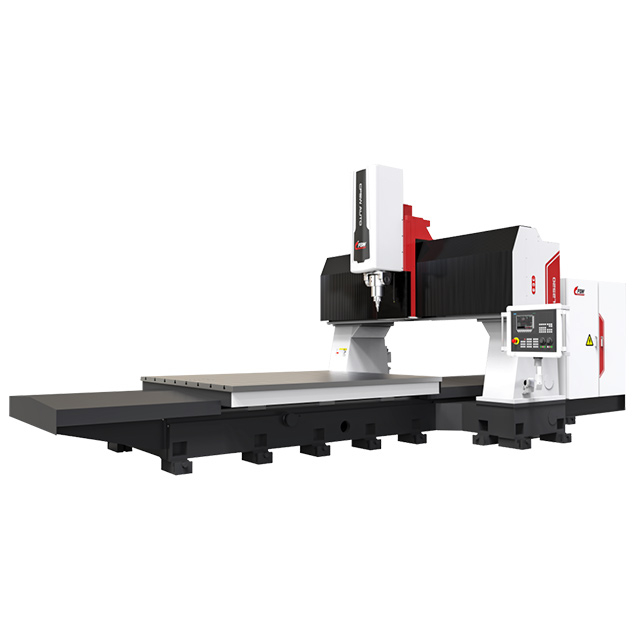
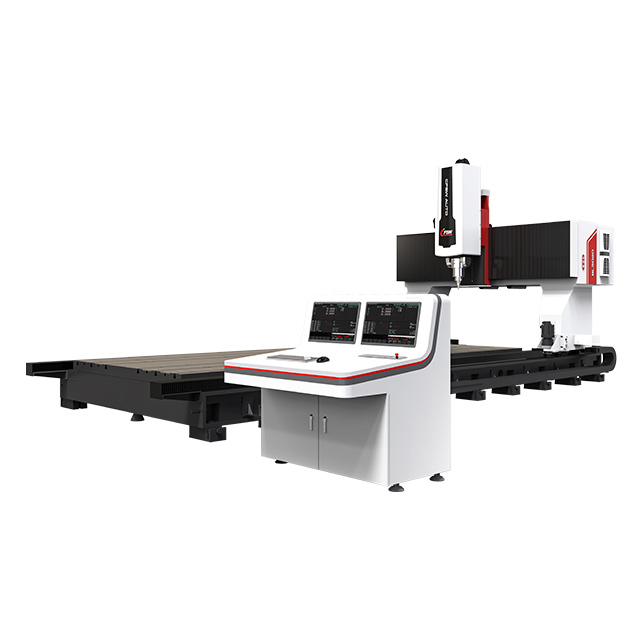
Model | Max Tray Size | Spindle Force | Cycle Optimization |
|---|---|---|---|
FSW-BL2520 | 2500×2000mm | 30 kN | 3-axis precision, compact car / SUV trays |
FSW-BL3020 | 3000×2000mm | 40 kN | Full-size EV / commercial vehicle trays |
FSW-DM5020 | 5000×2000mm | 50 kN | Long-wheelbase truck packs, energy storage trays |
Most EV battery trays require large-format gantry-style FSW systems due to:
Long weld paths
Large tray dimensions
Multi-side accessibility requirements
Fixture integration complexity
Heavy clamping loads
Typical production systems may support battery trays ranging from compact EV platforms to full-size commercial vehicle battery packs.
Battery tray weld quality is highly sensitive to axial force variation.
Even small instability in force control may affect:
Weld penetration consistency
Cooling-channel integrity
Flatness stability
Joint sealing performance
This becomes especially critical for:
Hollow cooling-channel structures
Thin-wall aluminum extrusions
Long continuous perimeter welds
For this reason, modern EV battery tray FSW systems increasingly use closed-loop servo force-control systems capable of maintaining stable axial-load conditions throughout the weld path.
In battery tray production, fixture stability directly affects:
Weld consistency
Flatness control
Cooling-channel alignment
Production repeatability
Large aluminum structures are highly sensitive to:
Thermal expansion
Residual stress
Clamping distribution
Surface variation
As a result, many EV manufacturers treat fixture engineering as part of the welding-process development rather than as a separate tooling task. Zhihui Welding provides fixture engineering as part of the machine package. Our standard battery tray fixture uses zone-based vacuum clamping — each zone independently adjustable for different tray variants. Tray changeover: under 8 minutes.
Every Zhihui Welding machine logs: timestamp, weld ID, RPM, traverse speed, axial force (mean + peak), shoulder temperature, and pass/fail status. Data exported in CSV or OPC-UA format for MES integration. Available as standard — no additional software license.
Optional factory-integrated leak test station — tray pressurized to 0.3 bar immediately after weld completion, held for 30 seconds, result logged to quality record. Fail triggers alarm and holds tray at station for operator review.
✅ Helium leak test pass rate: >99.4% at volume production (6061 + 6082 tray assembly)
✅ Flatness post-weld: <0.4mm over 2,400mm tray length
✅ Tensile joint efficiency: 89–93% of 6061-T6 base metal UTS
✅ Tool life: 1,200–1,800m per tool on 6061 / 6082 battery tray alloys
✅ Takt time achieved: 52 minutes per tray on a 2,000×1,200mm passenger EV tray (including fixture, weld, leak check, unload)
Production validation results are important because battery tray manufacturing performance is typically evaluated based on:
Leak reliability
Flatness stability
Structural consistency
Tool-life predictability
Long-term production repeatability
For EV manufacturers, stable production capability is often more valuable than short-term peak welding speed.
Battery tray FSW systems are fundamentally different from standard aluminum welding equipment.
They must simultaneously support:
Large-format structural welding
High flatness consistency
Hermetic sealing performance
Continuous production operation
Cooling-channel protection
Full process traceability
As EV battery platforms continue evolving, manufacturers increasingly require application-specific FSW systems optimized for long-term production stability rather than general-purpose welding capability.
FSW produces high-strength, low-distortion welds while maintaining excellent sealing performance, making it ideal for aluminum battery tray manufacturing.
Yes. Properly controlled FSW processes can achieve extremely low leak rates suitable for liquid-cooled battery systems.
Typical materials include 6061, 6082, 6005A, and 5083 aluminum alloys, depending on structural and thermal requirements.
Production results typically show post-weld flatness deviations below 0.5 mm, significantly lower than conventional fusion welding methods.
Modern gantry FSW systems can weld battery trays ranging from compact EV platforms to large commercial vehicle and energy storage systems.