- All
- Product Name
- Product Keyword
- Product Model
- Product Summary
- Product Description
- Multi Field Search


| Quantity: | |
|---|---|
Manufacturers increasingly require welding solutions capable of handling complex geometries, higher automation levels, and stricter quality standards.
Common production challenges include:
Complex three-dimensional weld paths
Inconsistent weld quality on curved structures
Limited flexibility of conventional welding equipment
Labor-intensive production processes
Difficult integration into automated manufacturing systems
The FSW-R Series addresses these challenges through intelligent robotic control and advanced friction stir welding technology.
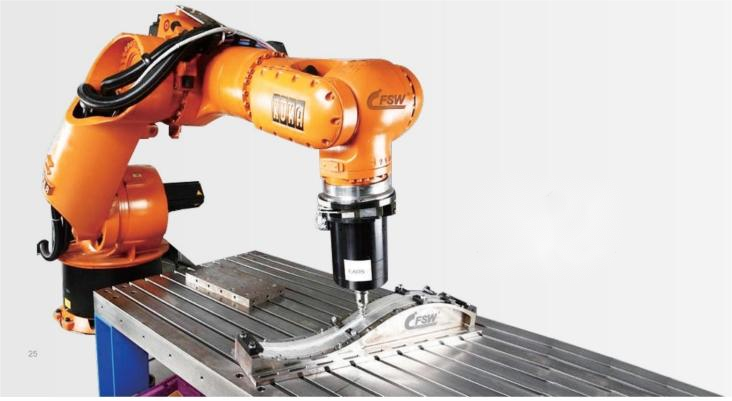
The FSW-R Series integrates industrial robotic platforms with advanced friction stir welding systems to provide exceptional flexibility, precision, and process stability.
Unlike traditional fixed welding equipment, robotic friction stir welding systems can perform continuous welding, circular welding, spot welding, and complex three-dimensional weld paths while maintaining consistent weld quality.
The combination of robotic motion control and solid-state welding technology allows manufacturers to achieve high-strength, low-distortion welds with improved production efficiency.
Constant Displacement Control
Maintains precise plunge depth throughout the welding process to improve weld consistency and reduce defects.
Constant Torque Control
Automatically regulates welding force to ensure stable material flow and repeatable weld quality.
Weld Seam Tracking
Real-time correction of welding paths improves positioning accuracy and process reliability.
Intelligent Process Monitoring
Continuous monitoring of critical welding parameters enhances production stability and quality control.
Multi-Axis Motion Capability
Supports complex weld geometries that are difficult or impossible to achieve using conventional gantry systems.
Flexible Welding Automation
Suitable for complex weld paths, irregular geometries, and advanced manufacturing applications.
Improved Production Safety
Reduces operator exposure in hazardous, high-temperature, or restricted manufacturing environments.
Consistent Weld Quality
Advanced process control minimizes variability and improves repeatability.
Smart Manufacturing Integration
Compatible with automated production lines and intelligent manufacturing systems.
Lower Production Costs
Reduced rework, lower scrap rates, and improved production efficiency contribute to long-term cost savings.
FSW-R06
Robot Platform: KUKA KR500
Payload Capacity: 500 kg
Maximum Welding Thickness: ≤ 6 mm Aluminum
Maximum Speed: ≤ 6000 rpm
Typical Applications:
Motor housings
Cooling plates
Thermal management assemblies
Precision aluminum structures
FSW-R10
Robot Platform: KUKA Titan
Payload Capacity: 1000 kg
Maximum Welding Thickness: ≤ 10 mm Aluminum
Maximum Speed: ≤ 5000 rpm
Typical Applications:
Large aluminum structures
EV battery assemblies
Industrial aluminum components
Heavy-duty lightweight structures
FSW-RS4
Robot Platform: KUKA KR500
Payload Capacity: 500 kg
Maximum Welding Thickness: ≤ 4 mm Aluminum
Maximum Speed: ≤ 3000 rpm
Typical Applications:
Aircraft structures
Aerospace spot welding
Precision lightweight assemblies
Electric Vehicle Manufacturing
Battery enclosures
Motor housing assemblies
Thermal management systems
Lightweight aluminum structures
Aerospace Manufacturing
Aircraft panels
Structural assemblies
Spot welding applications
Rail Transportation
Lightweight rail structures
Aluminum transportation systems
Thermal Management
Heat exchangers
Liquid cooling modules
Industrial cooling products
Industrial Manufacturing
Precision aluminum assemblies
Customized lightweight components
Complex welded structures
Related Friction Stir Welding Solutions
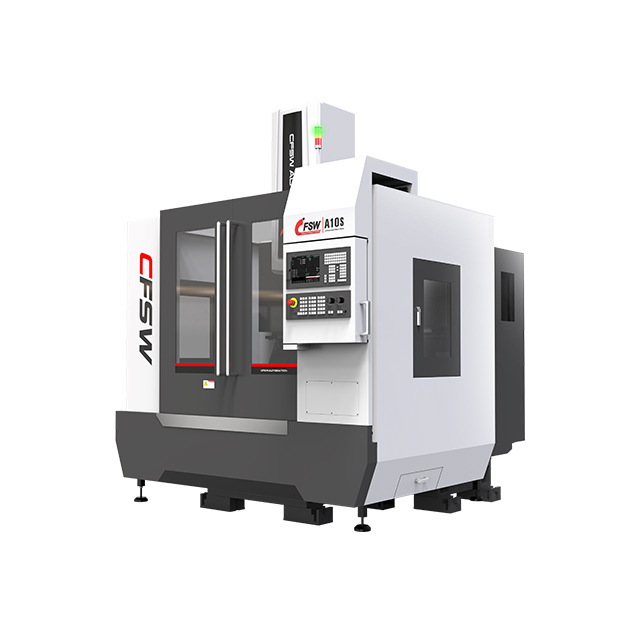
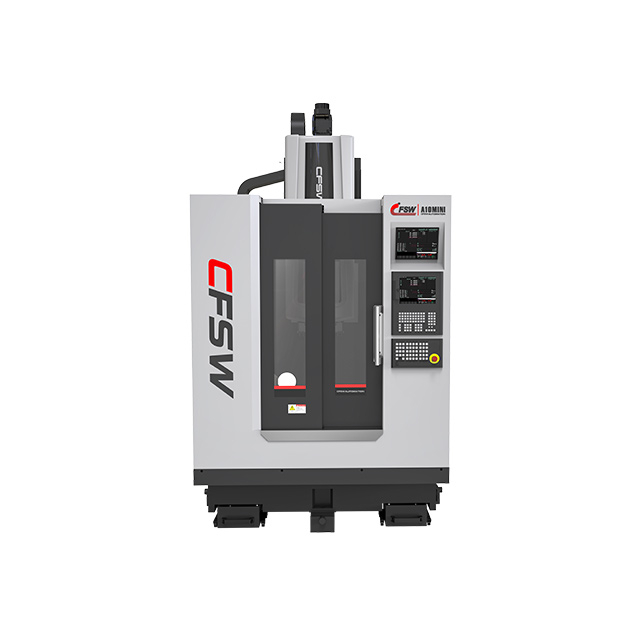
Friction Stir Welding Machines for EV & Industrial Aluminum Applications
FSW-A10 Series – Compact Friction Stir Welding Machines
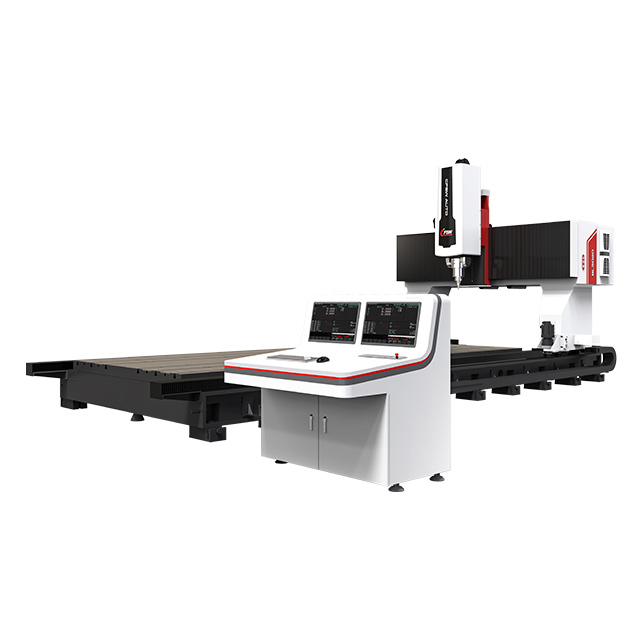
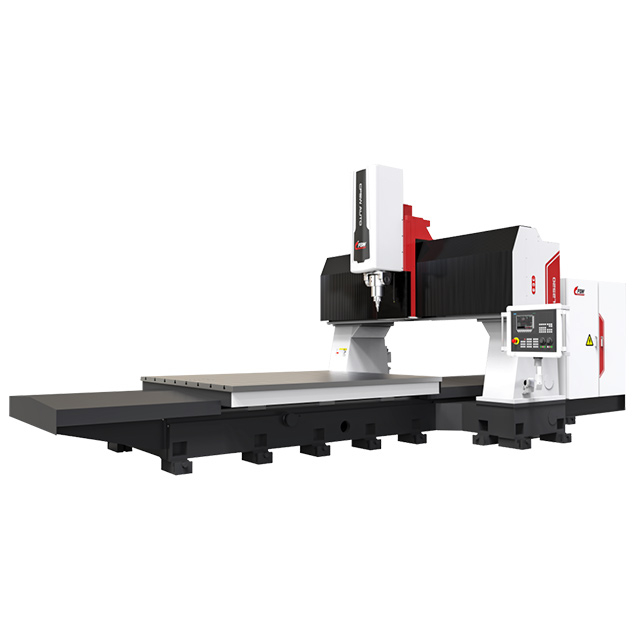
Large Gantry Friction Stir Welding Machines for Battery Trays & Structural Components
Friction Stir Welding ToolsEV Component Welding Services
A1.The three models differ in payload capacity, welding thickness capability, and application focus. FSW-R06 is designed for general aluminum welding, FSW-R10 supports larger and thicker components, while FSW-RS4 is optimized for aerospace spot welding applications.
A2.Depending on the model, the system can weld aluminum structures up to 10 mm thick.
A3.The system is commonly configured with KUKA robotic platforms and can be customized for integration with other industrial robot systems depending on project requirements.
A4.Yes. We provide customized fixtures, welding heads, control systems, and automation solutions based on customer applications.
A5.Yes. The robotic systems are designed for integration into automated production environments and smart manufacturing systems.
A6.Robotic friction stir welding systems provide greater flexibility for curved, circular, and three-dimensional weld paths.
Gantry friction stir welding machines are generally preferred for large flat components such as battery trays, cooling plates, and structural aluminum assemblies where maximum rigidity and productivity are required.
A7.Yes. The system's precise process control and stable welding performance make it suitable for aerospace aluminum structures and high-quality lightweight assemblies.
Looking for a robotic friction stir welding solution for complex aluminum welding applications?
Send us your drawings, material specifications, and production requirements. Our engineering team will recommend the most suitable FSW-R robotic welding system to improve weld quality, increase automation, and support long-term production efficiency.