Views: 0 Author: Site Editor Publish Time: 2026-08-10 Origin: Site
Table of Contents
The transition from traditional fusion welding to solid-state joining changes how we handle high-strength aluminum assemblies in aerospace, automotive, and marine manufacturing. You must navigate the aluminum alloy designation system to determine weldability. Many high-performance grades, particularly in the 2xxx and 7xxx series, present significant challenges when joined using conventional fusion welding methods. They suffer severe hot cracking, porosity, and massive drops in mechanical properties. Understanding metallurgical classifications is your first step to evaluating solid-state feasibility. This guide breaks down the numbering system and evaluates compatibility across wrought and cast series. We outline the technical trade-offs you need to achieve defect-free, high-strength joints.
Wrought vs. Cast Dynamics: While FSW excels with wrought aluminum, applying it to cast aluminum (1xx.x–9xx.x) requires specific parameter adjustments to manage pre-existing casting porosity and distinct thermal conductivities.
Tooling and Parameter Dependencies: Alloy hardness and temper directly dictate FSW tool material selection, pin geometry, spindle speed, and traverse rates.
Dissimilar Alloy Capabilities: FSW enables the reliable joining of dissimilar aluminum series (e.g., 6xxx to 7xxx) and cast-to-wrought combinations without the complex filler metal matching required in fusion welding.
Traditional fusion welding methods like MIG and TIG rely on melting the base material and adding a filler metal. When applied to specific aluminum grades, this melting phase introduces severe metallurgical failures. Solidification cracking occurs frequently in alloys with wide freezing ranges. The material contracts during cooling and tears along grain boundaries. Hydrogen porosity is another persistent defect. Molten aluminum readily absorbs hydrogen, which then becomes trapped as gas pockets upon rapid solidification. The heat-affected zone (HAZ) in fusion welds experiences extreme thermal cycling. This degrades the mechanical properties of the base metal, dissolving or coarsening the strengthening precipitates in heat-treatable alloys. The joint is left significantly weaker than the parent material.
Evaluating the success of a solid-state joint requires specific, measurable baseline metrics. Ultimate tensile strength (UTS) retention is a primary indicator. High-quality FSW joints can retain a substantial portion of the parent material's ultimate tensile strength (UTS), although actual joint efficiency depends on the alloy series, temper, thickness, joint design, and welding parameters. Fatigue life improvements are equally important. The fine-grained microstructure generated by severe plastic deformation resists crack initiation and propagation under cyclic loading. The complete elimination of consumable filler materials and shielding gases serves as both a quality metric and a process advantage. The final assembly maintains the exact chemical composition of the base alloys without introduced contaminants.
Integrating Friction Stir Welding Aluminum into production environments yields substantial returns on investment. The solid-state process drastically reduces scrap rates by eliminating common fusion defects like porosity and hot cracking. Pre-weld preparation can be simplified because FSW generally requires little or no edge beveling, although proper cleaning and oxide management remain important for consistent joint quality. The automation potential for linear and complex joint geometries allows manufacturers to deploy robotic or CNC-driven FSW systems. This ensures repeatable, high-throughput production. Scalability is highly advantageous for manufacturing large continuous panels, battery trays, and structural extrusions where precision and speed dictate operational efficiency.
Process Metric | Traditional Fusion (MIG/TIG) | Friction Stir Welding (FSW) |
|---|---|---|
Joint Strength Retention | Highly alloy-and process-dependent | Generally high with optimized parameters |
Defect Susceptibility | High (Porosity, Hot Cracking) | Low (Solid-state consolidation) |
Consumables Required | Filler wire, shielding gas | None |
Pre-Weld Prep | Cleaning and joint preparation often required | Minimal edge preparation; clean surfaces recommended |
The aluminum industry divides alloys into two primary categories based on their manufacturing process: wrought and cast. Wrought alloys follow a 4-digit system governed by the Aluminum Association (AA) and the Unified Numbering System (UNS). These materials are mechanically deformed into shape through rolling, forging, or extrusion. They have a directional grain structure that responds exceptionally well to the severe plastic deformation of FSW. Cast alloys utilize a 3-digit plus decimal system (e.g., 356.0) and are formed by pouring molten metal into molds. Castings possess an isotropic, often dendritic grain structure with inherent micro-porosity. During FSW, the tool must break down this cast structure, requiring different plunge forces and tool geometries compared to wrought materials.
The aluminum alloy designation system classifies wrought alloys into different series based on their primary alloying elements and strengthening mechanisms. For Friction Stir Welding (FSW), the 1xxx, 3xxx, and 5xxx series are generally the easiest to weld because of their excellent plastic flow and non-heat-treatable characteristics. The 6xxx series is the most widely used structural alloy family, offering an excellent balance of strength, weldability, and corrosion resistance. The 7xxx series provides the highest mechanical strength but requires much tighter process control because of its precipitation-hardened microstructure.
The primary alloying elements define each wrought series and directly influence solid-state weldability, thermal conductivity, and mechanical resistance. The 1xxx series represents commercially pure aluminum, offering high thermal conductivity but low mechanical resistance. The 2xxx series utilizes copper for high strength, making it ideal for aerospace but highly susceptible to fusion cracking. The 3xxx series relies on manganese for moderate strength and excellent workability. The 4xxx series incorporates silicon to lower the melting point. The 5xxx series uses magnesium for marine-grade corrosion resistance and solid-solution strengthening. The 6xxx series combines magnesium and silicon, creating versatile, extrudable alloys. The 7xxx series leverages zinc for maximum strength, while the 8xxx series includes advanced elements like lithium. Each element alters the material's flow stress, dictating the torque and heat input required during the FSW process.
Alloy Series | Primary Alloying Element | FSW Weldability | Common Applications |
|---|---|---|---|
1xxx | None (Pure Aluminum) | Excellent | Electrical conductors, chemical equipment |
2xxx | Copper | Good to Excellent (FSW; process-dependent) | Aerospace structures, military vehicles |
3xxx | Manganese | Good to Excellent | Heat exchangers, sheet products |
4xxx | Silicon | Good, parameter-dependent | Welding products, automotive components |
5xxx | Magnesium | Excellent | Marine hulls, pressure vessels |
6xxx | Magnesium & Silicon | Excellent | Automotive extrusions, architectural frames |
7xxx | Zinc | Good to Excellent (FSW; tighter process control required) | Aircraft fittings, high-stress components |
8xxx | Other elements depending on grade | Grade-dependent | Aerospace, specialty aluminum applications |
Aluminum alloys are categorized by their strengthening mechanisms. This dictates how they react to the thermal cycle of FSW. Non-heat-treatable alloys (1xxx, 3xxx, 5xxx) gain strength through strain hardening (cold working). During FSW, the heat generated in the thermo-mechanically affected zone (TMAZ) can cause localized annealing. This slightly reduces the strength of strain-hardened (H-temper) materials. Heat-treatable alloys (2xxx, 6xxx, 7xxx) rely on precipitation hardening (T-temper). The thermal cycle of FSW alters these precipitates. While the stir zone undergoes dynamic recrystallization, the surrounding HAZ experiences precipitate coarsening or dissolution. This creates a softened region. You must understand these microstructural changes to predict joint performance and design post-weld treatments.
Another important distinction is between solid solution strengthened alloys and precipitation hardened alloys. Solid solution strengthened aluminum alloys, such as most 1xxx, 3xxx, and 5xxx series grades, obtain their strength primarily through alloying elements dissolved in the aluminum matrix and cold working. In contrast, precipitation hardened alloys, including the 2xxx, 6xxx, and 7xxx series, rely on finely dispersed strengthening precipitates formed during heat treatment. Because FSW introduces localized thermal cycles, precipitation hardened alloys generally experience greater softening in the Heat-Affected Zone than solid solution strengthened alloys.
The temper designation appended to the alloy number (e.g., -O, -H, -T, -F, -W) indicates the material's processing history and current mechanical state. An annealed (-O) temper presents the lowest yield strength. It requires less tool torque but risks excessive flash generation if heat input is too high. Strain-hardened (-H) tempers may require different force and heat-input settings depending on alloy grade and thickness. Artificially aged (-T6) tempers present high initial yield strengths. They necessitate robust FSW machinery capable of maintaining high plunge forces and spindle torque. The temper dictates the processing temperature limits. Exceeding critical temperatures can permanently degrade the mechanical properties of heat-treatable tempers, requiring precise control of spindle RPM and traverse speed.
FSW weldability varies with the specific alloy grade, temper, thickness, joint configuration, tooling, and process parameters. In general, 1xxx, 3xxx, 5xxx, and 6xxx alloys offer relatively broad processing windows, while high-strength 2xxx and 7xxx alloys typically require tighter heat-input control, greater tooling rigidity, and more careful parameter development. Cast and high-silicon aluminum alloys may also require additional attention to tool wear and material flow.
Commercially pure aluminum (1xxx), manganese alloys (3xxx), and magnesium alloys (5xxx) demonstrate excellent FSW compatibility. These materials flow easily under the rotating tool, producing defect-free joints with broad processing windows. Because these alloys are relatively soft, engineers must optimize parameters to prevent excessive flash generation and surface tearing. Lower spindle speeds and higher traverse rates often yield the best results by controlling heat input. Common applications for these series include marine panels, pressure vessels, and heat exchangers. In these applications, corrosion resistance and formability take precedence over ultimate tensile strength.
The 2xxx and 7xxx series drive FSW adoption in the aerospace and defense sectors. These alloys offer high strength-to-weight ratios but suffer from severe hot cracking and property degradation when fusion welded. FSW joins these crack-sensitive alloys without filler metals by keeping the material in a solid state. It entirely avoids the liquidus phase. Joining these grades requires precise heat input control. Excessive heat causes the over-aging of strengthening precipitates in the HAZ, leading to a drastic drop in joint strength. Engineers utilize active cooling systems or strict parameter control to narrow the HAZ and preserve the base metal's mechanical properties.
Silicon-rich wrought alloys in the 4xxx series offer moderate strength and excellent wear resistance. They are often used in automotive engine components and welding wire. Their solid-state weldability is generally good, but the high silicon content presents unique challenges. Higher silicon content can increase abrasive tool wear, particularly in demanding or high-volume FSW applications. Processing 4xxx series alloys often requires advanced tool materials or specialized coatings to maintain the pin profile and ensure consistent joint quality over long production runs.
The 6xxx series is the backbone of structural aluminum extrusions. It is widely used in automotive battery trays, railcars, and architectural frames. FSW is highly effective for joining 6xxx extrusions. The primary challenge lies in balancing traverse speed and joint strength to maintain structural integrity, particularly in T6 tempers. Fast traverse speeds minimize heat input and limit the width of the softened HAZ. Pushing the speed too high risks incomplete penetration or root flaws. Optimizing the tool geometry to maximize material flow at high speeds is required for high-volume 6xxx series production.
The 8xxx series, particularly Aluminum-Lithium (Al-Li) alloys, represents the cutting edge of lightweight aerospace structures, launch vehicles, and cryogenic tanks. Lithium reduces the density of aluminum while increasing its elastic modulus. Fusion welding Al-Li alloys causes extreme hot-cracking susceptibility and lithium vaporization. Solid-state processing circumvents these issues entirely. FSW retains the lithium within the alloy matrix and prevents solidification cracking. FSW has become an important solid-state joining method for large-scale Al-Li structures in modern aerospace engineering.
Friction stir welding cast aluminum introduces processing challenges that differ from those encountered with wrought alloys. Castings, particularly high-silicon alloys such as A356, contain hard silicon-rich particles that can increase abrasive wear on the FSW tool, potentially affecting pin geometry and weld consistency over extended production runs. In addition, casting microstructure, porosity, surface condition, and local thickness variations can influence material flow during welding. These characteristics make appropriate tool design, rigid fixturing, and careful process-parameter optimization especially important when applying FSW to cast aluminum.
One of the important advantages of applying FSW to cast aluminum is its ability to reduce the influence of porosity within the processed zone. Castings may contain micro-porosity and shrinkage defects resulting from the solidification process. During FSW, compressive forces and severe plastic deformation can close or redistribute some pre-existing pores within the stir zone, while the solid-state process avoids the gas expansion associated with fusion welding. As a result, properly optimized FSW can produce a more consolidated weld region and improve joint integrity. However, the final weld quality still depends on the initial casting quality, porosity level, alloy composition, joint design, and welding parameters.
Automotive and structural applications frequently require joining cast aluminum components to wrought extrusions. FSW can be effective for these dissimilar aluminum combinations, but the process requires careful evaluation of material placement, tool offset, joint geometry, and welding parameters. Because cast and wrought alloys can differ significantly in composition, hardness, microstructure, and material-flow behavior, the optimum welding strategy should be established for each specific alloy combination.
Evaluate material placement on the advancing and retreating sides based on the specific cast and wrought alloy combination and their material-flow behavior.
Optimize tool offset to promote sufficient material mixing and stable flow across the cast-to-wrought interface.
Control plunge depth and axial force to accommodate thickness and dimensional variations in the components while maintaining consistent shoulder contact.
Monitor key process variables such as spindle torque, axial force, rotation speed, and travel speed to maintain a stable welding condition and consistent joint quality.
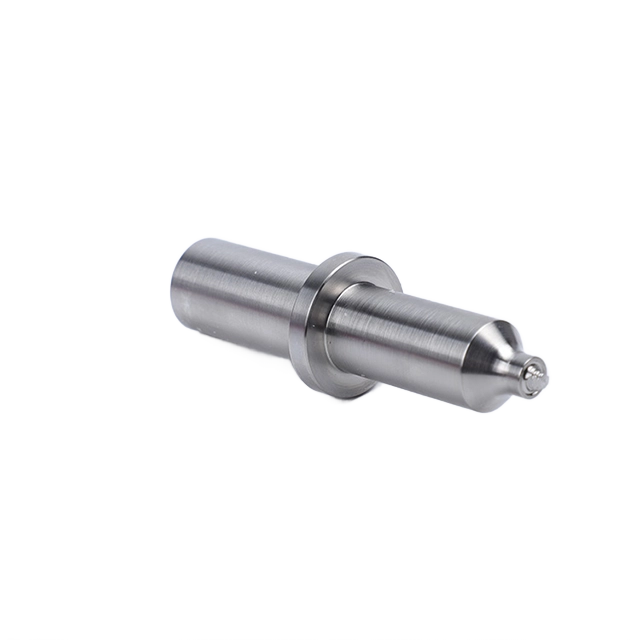
Tool material and geometry should be selected according to the specific aluminum alloy, material thickness, joint configuration, welding parameters, and expected production volume. H13 tool steel is commonly used for many aluminum FSW applications, but tool wear can increase when welding abrasive cast alloys or under demanding high-load production conditions. In these applications, more wear-resistant tool materials, surface treatments, or specialized coatings may be considered based on the required tool life and process conditions. Pin and shoulder geometry should also be optimized for the material-flow characteristics of the specific alloy to promote stable material flow and minimize weld defects.
Balancing spindle speed (RPM) and traverse rate (travel speed) is the core of heat input management in FSW. High thermal conductivity alloys require higher RPM to generate sufficient frictional heat before the surrounding material wicks it away. Running the RPM too high relative to the traverse rate creates a hot weld, leading to excessive flash generation, surface tearing, and severe degradation of the HAZ. Running the traverse rate too fast relative to the RPM results in a cold weld, where insufficient plasticization causes wormhole defects and incomplete consolidation. The optimal processing window should be established based on the alloy, temper, thickness, joint configuration, tool geometry, and the relationship between rotation speed and travel speed.
For heat-treatable aluminum alloys such as 2xxx, 6xxx, and 7xxx series, the thermal cycle of FSW can alter the strengthening precipitates and may create softened regions in the heat-affected zone (HAZ). Depending on the alloy, initial temper, welding parameters, and required mechanical properties, natural aging or post-weld heat treatment may be considered to improve post-weld properties. Natural aging can provide partial strength recovery in some alloys, while artificial aging or other heat-treatment strategies may further modify the precipitation state and mechanical performance. The appropriate post-weld treatment should therefore be evaluated for the specific alloy and application, considering joint performance, dimensional stability, production requirements, and processing cost.
Root flaws and kissing bonds are important quality concerns in friction stir welding. They can develop when insufficient penetration, inadequate material flow, or persistent oxide layers prevent complete bonding near the root of the joint. Because these defects can be difficult to detect visually and may reduce fatigue performance and joint strength, careful control of pin length, plunge depth, joint fit-up, and process parameters is essential. The pin geometry and penetration depth should be selected according to the workpiece thickness and backing configuration. Where thickness variation or demanding quality requirements are involved, force or position monitoring can help maintain consistent weld penetration.
Friction stir welding generates substantial axial and lateral forces as the rotating tool traverses the joint. The fixturing system must provide sufficient rigidity and clamping force to prevent workpiece lifting, separation, or movement during welding. Inadequate fixturing can contribute to excessive flash, joint mismatch, and internal defects. Higher-strength alloys, thicker sections, and demanding welding conditions may require greater machine rigidity and clamping capacity. Fixture design should therefore consider workpiece geometry, alloy, thickness, welding parameters, and expected process forces. Hydraulic, pneumatic, or mechanical clamping systems can be selected according to the application, together with a sufficiently rigid backing structure to minimize deflection during welding.
Quality assurance for friction stir welded components may combine process monitoring, visual inspection, dimensional inspection, mechanical testing, and non-destructive testing (NDT), depending on the application and acceptance requirements. Internal defects such as voids, lack of penetration, and certain root flaws may not be identifiable through visual inspection alone. Ultrasonic testing, including phased array ultrasonic testing (PAUT), can be used to evaluate some internal discontinuities, while radiographic testing may also be applied where appropriate. However, tightly closed defects such as kissing bonds can be particularly challenging to detect reliably using conventional NDT methods. For critical applications, the inspection method and acceptance criteria should therefore be selected according to the joint geometry, material, expected defect types, and applicable quality requirements.
Successfully implementing Friction Stir Welding Aluminum requires selecting the appropriate aluminum alloy series, optimizing welding parameters, and maintaining precise process control throughout production. By understanding alloy weldability, heat treatment characteristics, and tooling requirements, manufacturers can produce stronger, more reliable joints while reducing common fusion welding defects and improving long-term production efficiency.
Working with an experienced friction stir welding solution provider is equally important for ensuring consistent weld quality and reliable manufacturing performance. Zhihui specializes in advanced friction stir welding equipment, customized FSW automation solutions, and professional technical support, helping customers improve productivity and welding quality across aerospace, automotive, rail transit, marine, battery, and other high-end manufacturing industries.
Initiate a feasibility study based on your specific aluminum alloy grades and temper designations to determine baseline FSW compatibility.
Request weld coupon testing from an FSW provider to validate the mechanical properties and UTS retention achievable for your specific application.
Consult with an FSW tooling and process engineer to define preliminary weld parameters, including spindle RPM, traverse speed, and tool geometry.
Design and procure rigid fixturing with sufficient clamping capacity and backing support for the expected FSW process forces.
A: Yes. 7075 aluminum can be friction stir welded successfully with appropriate tooling, heat-input control, and process parameters. Because FSW operates below the melting point, it significantly reduces the solidification cracking and porosity associated with conventional fusion welding of high-strength 7xxx alloys.
A: There is no single “best” aluminum alloy for FSW. The 5xxx and 6xxx series are widely used because they generally offer good material flow and broad process windows. High-strength 2xxx and 7xxx alloys can also be successfully friction stir welded, but typically require tighter control of heat input, tooling, and welding parameters.
A: FSW introduces a localized thermal cycle that can modify strengthening precipitates in heat-treatable aluminum alloys such as the 2xxx, 6xxx, and 7xxx series. The Heat-Affected Zone (HAZ) may experience precipitate coarsening or dissolution, resulting in localized softening. The extent of strength reduction depends on the alloy, temper, heat input, thickness, and welding parameters.
A: Yes. FSW can join many dissimilar aluminum combinations, including 6xxx-to-7xxx and cast-to-wrought joints. Successful welding depends on alloy compatibility, material placement, tool offset, joint design, and process parameters. Because FSW is a solid-state process, it avoids many of the filler-metal compatibility issues associated with conventional fusion welding.
A: Many 2xxx aluminum alloys are susceptible to solidification cracking and property degradation during conventional fusion welding. FSW joins the material without melting it, significantly reducing solidification-related defects while enabling high-strength joints when the welding parameters and heat input are properly controlled.