Views: 0 Author: Site Editor Publish Time: 2026-07-15 Origin: Site
Fusion welding high-pressure die-cast (HPDC) aluminum presents a notorious bottleneck on the manufacturing floor. Severe porosity, outgassing, and hot cracking frequently ruin assemblies. High-pressure injection traps release agents and ambient gases inside the metal matrix. When traditional MIG or TIG processes melt the joint, these trapped pockets expand rapidly. Manufacturers historically accepted high scrap rates or avoided welding die castings entirely. Original equipment manufacturers scaling production for e-mobility, thermal management, and structural components face a severe challenge. They require the complex geometries provided by die casting combined with the structural integrity of welded assemblies. Traditional liquid-phase welding fails to meet these demands, resulting in unacceptable scrap rates and frequent joint failures in the field.
Solid-state joining serves as the definitive workaround for these metallurgical roadblocks. By keeping the metal below its melting point, the process circumvents liquid-phase defects entirely. Implementing Friction Stir Welding Aluminum enables reliable, leak-tight joints. It works exceptionally well on challenging cast alloys. Engineers successfully process ADC12, A380, and A360 using this method. The rotating tool plasticizes the metal, forging a high-strength bond without liberating trapped gases.
Solid-State Superiority: Friction Stir Welding (FSW) eliminates hydrogen-induced porosity and solidification cracking inherent to fusion welding die-cast aluminum.
Alloy Compatibility: ADC12, A380, and A360 are highly weldable using FSW, though high silicon content requires specialized tool materials and geometries to manage abrasive wear.
Dissimilar Joining: FSW excels at joining cast nodes (ADC12/A380/A360) to extruded profiles (6061/5052), a critical requirement for modern lightweight automotive architectures.
Process Control is Critical: Successful implementation requires shifting from position-control to load-control FSW machines to accommodate the dimensional variations typical in die-cast components.
Table of Contents
A successful die-cast weld must meet strict baseline requirements before it ever reaches a production line. Hermetic sealing is non-negotiable for fluid enclosures like battery trays and cold plates. Mechanical strength retention ensures structural safety under dynamic loads and vibration. Zero volumetric defects guarantee long-term fatigue resistance. Achieving these criteria requires overcoming inherent material flaws. Die castings naturally contain internal imperfections from the injection process. Standard joining methods exacerbate these hidden flaws, turning microscopic gas pockets into massive structural voids.
On the shop floor, operators see the immediate results of these failures. Parts fail helium leak testing. Tensile tests reveal brittle fractures along the heat-affected zone. To solve this, engineers must look beyond traditional arc welding and understand the specific thermal mechanics that cause these failures.
Outgassing destroys fusion welds in die-cast materials. High-pressure injection traps ambient air inside the mold during the casting cycle. It also traps vaporized die lubricants within the metal matrix. These trapped pockets remain dormant at room temperature. TIG and MIG welding melt the surrounding aluminum to form the joint. The trapped gases rapidly expand upon melting, seeking an escape route through the liquid pool. This expansion creates massive porosity throughout the weld zone.
Micro-cracking follows as the liquid metal solidifies unevenly. The high silicon content in alloys like ADC12 forms brittle phases during rapid cooling. Joint integrity drops below acceptable engineering standards. The resulting assemblies fail leak tests and structural evaluations. Reworking these parts is often impossible, leading to scrapped castings and wasted machine time.
Friction stir welding utilizes a thermomechanical process to bypass melting entirely. A rotating tool plunges into the joint line under high downward force. Friction generates localized heat to soften the material into a plastic state. The peak temperature remains at 70 to 80 percent of the melting point. Trapped gases are never liberated because the metal never reaches a liquid phase. The rotating pin mechanically mixes the softened aluminum across the joint line.
Severe plastic deformation refines the cast microstructure. It breaks up brittle silicon particles and distributes them evenly throughout the stir zone. The process strengthens the joint rather than destroying it. The resulting weld exhibits a fine-grained structure with mechanical properties often exceeding those of the base casting. This solid-state advantage makes it the only reliable method for joining HPDC components in high-stress applications.
Engineers must establish a comparison framework for dominant die-casting alloys before designing a joint. ADC12, A380, and A360 offer distinct advantages and challenges on the machine table. Understanding their metallurgical profiles dictates tool selection, spindle speeds, and feed rates. We evaluate them based on composition, flow characteristics, and mechanical performance post-weld.
ADC12 features a high silicon and copper content. This composition provides excellent fluidity during the casting process. It allows foundries to cast highly complex, thin-walled geometries like motor housings and inverter cases. However, the resulting microstructure interacts aggressively with the FSW tool. High silicon levels create significant abrasive wear on the pin and shoulder.
Tool degradation occurs faster than with wrought alloys. Engineers must select robust tool materials to maintain dimensional accuracy over long production runs. Proper parameter optimization ensures consistent material flow despite the abrasive particles. High spindle speeds combined with moderate traverse rates generally yield the best consolidation in ADC12. Operators must monitor spindle torque closely to detect tool wear before it causes root defects.
A380 serves as the standard equivalent in many North American markets. It balances mechanical performance with favorable thermal properties. A380 offers good structural integrity for automotive housings and structural nodes. Achieving defect-free consolidation requires precise parameter windows. Spindle speed must balance perfectly against traverse speed to maintain the correct heat input.
Excessive heat input causes flash formation and degrades the surrounding cast structure. Insufficient heat leads to tunnel defects and tool breakage. Controlling the thermal gradient ensures a solid, void-free joint in A380 components. We often utilize active cooling on the anvil to manage heat buildup during continuous welding of large A380 assemblies.
A360 provides a high-ductility, corrosion-resistant alternative for marine and exposed automotive applications. It contains lower silicon content compared to ADC12 and A380. This lower silicon level impacts weld flow positively. Heat generation remains more stable during the friction stir process. Tool wear decreases significantly, extending pin lifespan and reducing tooling changeovers.
The alloy requires slightly different plunge forces to achieve optimal plasticization. A360 yields excellent post-weld elongation profiles, making it ideal for crash-relevant structures. The material flows smoothly around the pin thread, reducing the risk of wormhole defects even at higher traverse speeds.
Selecting the right alloy requires balancing multiple engineering requirements. The following table outlines key selection criteria for production environments.
Criteria | ADC12 | A380 | A360 |
|---|---|---|---|
Casting Complexity | Excellent thin-wall flow | Good overall flow | Moderate flow |
Mechanical Performance | High yield strength | Balanced strength | Superior ductility |
Tool Wear Risk | High (Abrasive) | Moderate to High | Low to Moderate |
Surface Finish Quality | Prone to heavy oxide skin | Standard oxide layer | Cleaner post-weld surface |
Thermal Conductivity | Moderate | Good | Excellent |
Modern architectures demand mixed-material assemblies to optimize weight and strength. Welding cast nodes to extruded profiles is a high-demand application in chassis manufacturing. Engineers frequently join ADC12 or A380 to 6061 or 5052 extrusions. This creates specific cracking risks at the cast-to-wrought interface due to differing thermal expansion rates and flow stresses.
Joint-line impurities like oxides and lubricants complicate the weld. Material placement strategy is critical for success. Place the softer extruded alloy on the retreating side of the tool. Position the harder cast alloy on the advancing side. Use proper tool offsets, shifting the pin slightly into the softer material, to optimize material flow. This prevents root flaws and ensures complete metallurgical bonding across the dissimilar interface.
Die-cast friction stir welding carries specific failure modes that differ from wrought material processing. Engineers must identify and engineer out these risks during the prototyping phase. Process deviations lead to volumetric flaws and weak joints. Strict parameter control mitigates these implementation risks effectively. Operators must understand how to read the weld surface and machine feedback to diagnose issues.
Flash Formation: Excessive plunge depth or high heat input causes plasticized material to escape the shoulder containment. Mitigate this by reducing spindle RPM, decreasing downward force, or utilizing a concave shoulder design.
Wormholes / Tunnel Defects: Insufficient material flow creates continuous subsurface voids along the advancing side. Low heat input or high traverse speeds cause this. Mitigate by increasing RPM, slowing the travel speed, or increasing plunge depth.
Kissing Bonds: Retained surface oxides prevent true metallurgical bonding despite apparent consolidation. Ensure adequate disruption of the oxide layer through aggressive pin thread dynamics and proper pre-weld surface machining.
Root Flaws: Lack of penetration at the bottom of the joint line. Correct this by verifying pin length against material thickness and ensuring the anvil provides rigid support without deflection.
Position-control machines struggle with die-cast dimensional tolerances. Castings inherently exhibit warp, shrinkage, and thickness variations from batch to batch. A rigid Z-axis position either plunges too deep, causing massive flash, or loses contact, resulting in lack of penetration. Load-control systems solve this critical problem on the production floor.
They dynamically adjust the Z-axis position during the weld based on load cell feedback. The machine maintains a constant downward force on the material. This ensures consistent consolidation despite casting variations. Force-control is mandatory for high-volume die-cast assemblies. It compensates for fixture deflection and part inconsistencies, drastically reducing scrap rates.
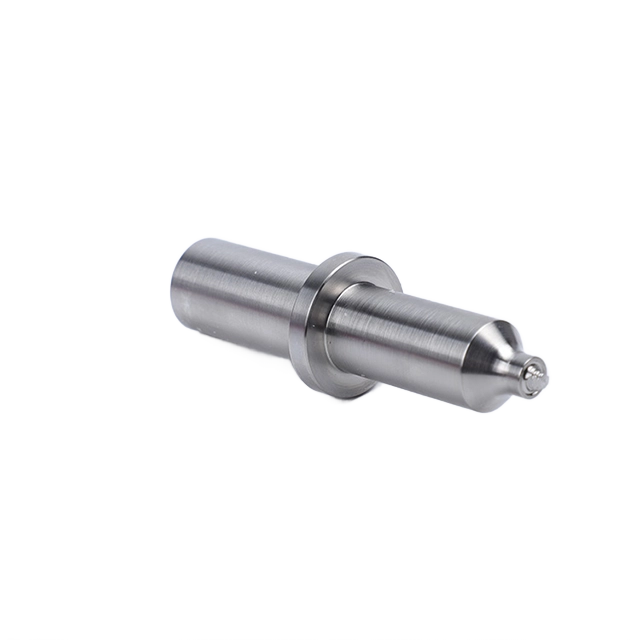
High-silicon alloys demand wear-resistant tool materials. Standard H13 tool steel degrades rapidly when processing ADC12, losing thread geometry within a few meters of welding. Engineers utilize advanced materials like MP159, tungsten carbide, or specialized coatings to combat abrasion. Thread geometries must accommodate cast microstructures.
Fluted pins enhance material mixing and break up silicon clusters effectively. Concave shoulder designs contain the plasticized metal, preventing flash on uneven cast surfaces. Proper tool design extends lifespan and maintains weld quality. Implementing a strict tool change schedule based on linear weld distance prevents unexpected defects from worn pins.
Technical capabilities must translate into production return on investment. Solid-state joining reduces scrap rates drastically compared to MIG welding. It eliminates the need for consumable filler wires and shielding gases, simplifying supply chain logistics. Post-weld inspection requirements decrease due to high process repeatability. The overall value proposition justifies the initial capital expenditure for specialized CNC equipment.
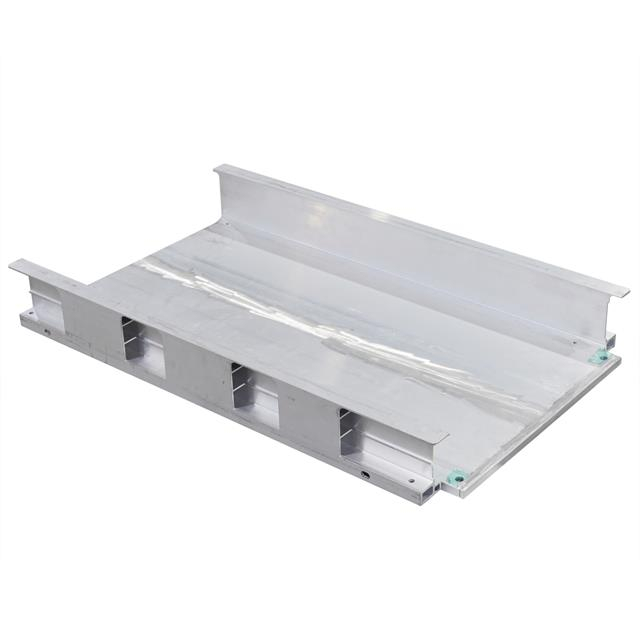
Electric vehicle battery housings require absolute structural integrity. They must survive crash impacts and provide IP67 leak-tight sealing to protect high-voltage components. Joining die-cast nodes to extruded trays achieves this lightweight architecture. Friction stir welding delivers the necessary crash-worthiness without distorting the large assemblies. The solid-state joints prevent moisture ingress and protect internal cells over the vehicle's lifespan.
Liquid cold plates require flawless sealing to prevent coolant leaks into sensitive electronics. FSW seals these plates without introducing filler metals. Filler metals often degrade thermal conductivity in the assembly and introduce galvanic corrosion risks. Processing die-cast heat sinks with FSW is highly efficient.
It serves as a superior alternative to vacuum brazing, which requires massive energy consumption and precise atmospheric control. It also outperforms mechanical fastening and gasketed joints, which degrade over time under thermal cycling. The flush surface finish of an FSW joint allows for direct mounting of electronic components.
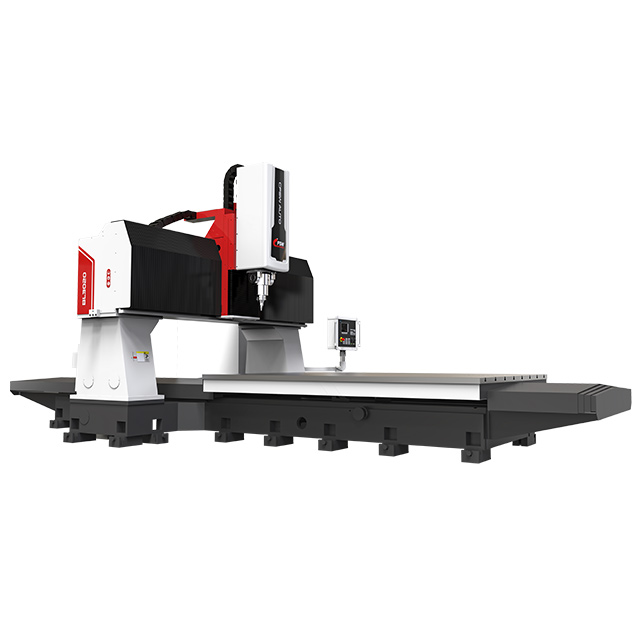
High initial capital expenditure is required for FSW CNC equipment and heavy-duty spindles. Custom rigid fixturing also adds to upfront engineering costs. However, the process yields near-zero consumable costs during operation. You eliminate expenses for shielding gas, filler wire, and tungsten electrodes. Scalability is excellent for high-volume production lines.
Reductions in post-weld inspection save significant labor hours. Lower scrap rates compared to traditional welding maximize material utilization. The automated nature of the process reduces reliance on highly skilled manual welders, stabilizing production output and quality.
Transitioning to solid-state joining requires systematic evaluation. Production readiness depends on several critical dimensions. You must address surface preparation, parameter development, fixturing, and quality assurance before launching full-scale manufacturing.
Faying surfaces require careful preparation before welding. Machining or aggressive mechanical cleaning removes heavy die-release agents. It also removes thick casting skin layers that contain high concentrations of oxides and impurities. Clean surfaces prevent these contaminants from entering the stir zone. This step is vital for eliminating kissing bonds and ensuring hermetic seals.
Accelerate process window optimization using historical data. Leverage weld database metrics from previous trials on similar alloys. Analyze torque, temperature, and RPM records to establish a baseline. This data guides the selection of initial parameters. It reduces the time required for prototype validation and minimizes wasted test coupons.
Friction stir welding generates high downward and lateral forces. Robust, custom anvil designs are an absolute necessity. The fixture must withstand these forces without distorting the casting or allowing the joint line to separate. Hydraulic or heavy-duty pneumatic clamping is usually required. Inadequate fixturing leads to dimensional inaccuracies, root flaws, and excessive flash.
Implement non-destructive testing in production environments to verify joint integrity. Ultrasonic testing verifies consolidation rapidly on the line. Phased array techniques detect subsurface wormholes and lack of penetration with high accuracy. Consistent NDT ensures every assembly meets structural requirements before shipping to the customer.
Friction Stir Welding Aluminum stands out as the most reliable solution for joining high-pressure die-cast aluminum alloys such as ADC12, A380, and A360. By selecting the appropriate alloy, optimizing process parameters, and implementing load-controlled equipment with proper tooling, manufacturers can significantly reduce welding defects, improve joint strength, and achieve stable, high-volume production.
Working with an experienced friction stir welding solution provider is equally important for ensuring consistent weld quality and production efficiency. Zhihui specializes in advanced friction stir welding equipment, customized FSW automation solutions, and professional technical support, helping manufacturers successfully weld die-cast aluminum components for automotive, battery, thermal management, and other high-performance industrial applications.
Initiate a feasibility study focusing on your specific cast-to-extrusion joint design.
Conduct coupon testing to establish baseline mechanical properties and parameter windows.
Develop prototype fixturing to evaluate part distortion under high downward forces.
Perform tool-life evaluation studies to project long-term maintenance cycles.
Implement phased array ultrasonic testing protocols for production quality assurance.FAQ
A: Yes. FSW is highly effective for joining dissimilar aluminum alloys. Success relies on proper tool offset, placing the softer 6061 on the retreating side, and optimizing plunge depth.
A: FSW does not introduce new porosity because it operates below the melting point. It prevents trapped gases from expanding, effectively eliminating the massive porosity seen in fusion welding.
A: Die castings have inherent dimensional variations like warp and shrinkage. Load control dynamically adjusts the tool's vertical position to maintain constant downward force, ensuring consistent weld quality.
A: High-silicon alloys cause severe abrasive wear. Advanced materials like MP159 or H13 tool steel with specialized wear-resistant coatings are required to maintain tool geometry and extend lifespan.
A: Yes. Faying surfaces should be machined or thoroughly cleaned. This removes heavy die-release agents and casting skin layers, preventing impurities from causing kissing bonds in the joint.
A: A360 has a lower silicon content than ADC12. This significantly reduces abrasive wear on the FSW pin and shoulder, extending tool life and stabilizing the welding process.