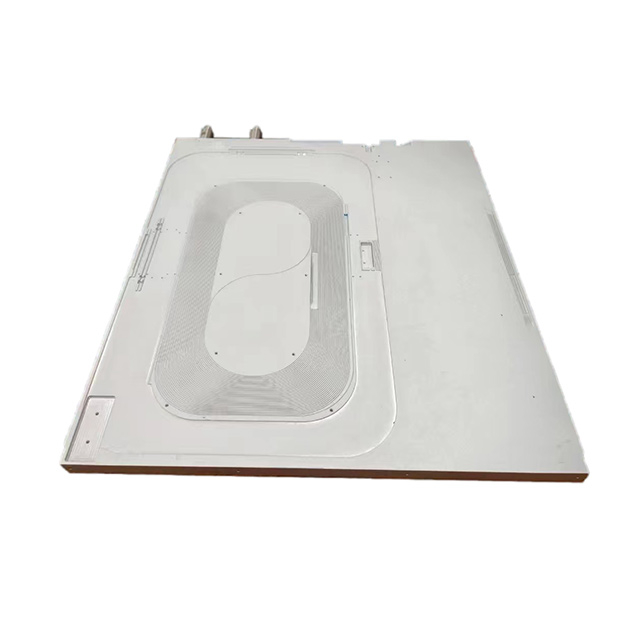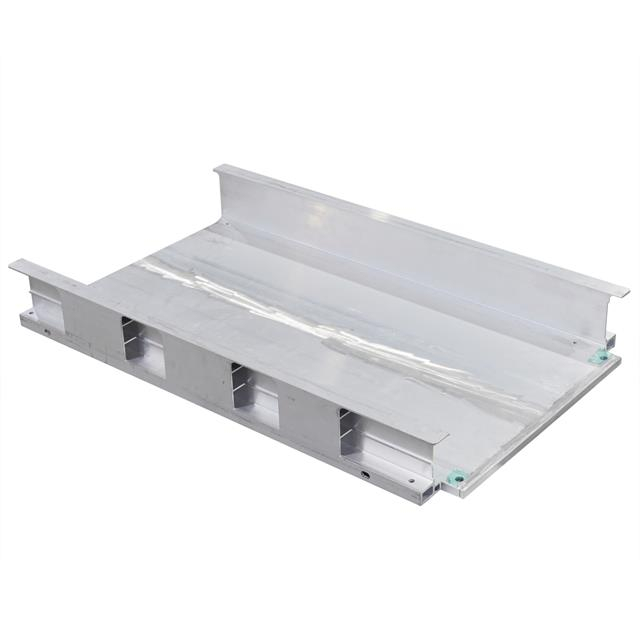


Zhihui provides friction stir welding services for aluminum liquid cold plates with serpentine and custom flow-channel designs, supporting both customer-supplied components and project-specific sourcing requirements.
From sample validation and repeat welding to dedicated FSW equipment for in-house production, we support manufacturers at different stages of their welding projects.
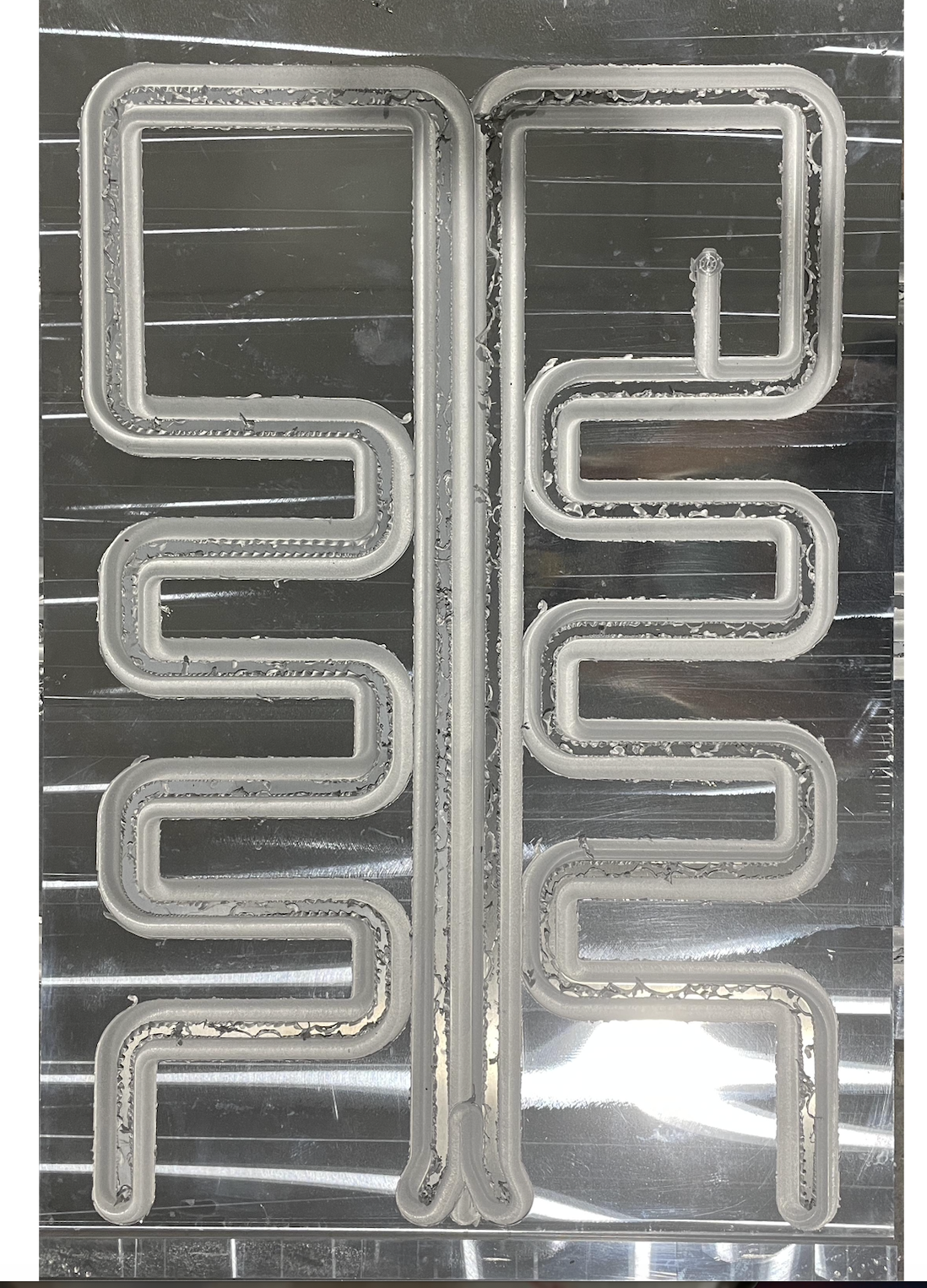
Serpentine-channel liquid cold plates use long, continuous coolant paths to distribute liquid across areas that require thermal management. These structures can involve multiple straight sections, tight turns, long sealing paths and limited space between the internal channel and the welding zone.
Zhihui provides serpentine channel liquid cold plate friction stir welding services for aluminum cooling components supplied by customers or prepared according to agreed project requirements.
Our core work covers FSW application evaluation, fixture and tooling requirements, welding parameter development, sample validation and repeat welding production.
For customers planning to bring the welding process into their own factory, the validated application requirements can also be used to configure a suitable FSW machine, fixture and tooling solution.
A serpentine-channel cold plate uses a continuous winding coolant path rather than a simple straight-channel layout.
In aluminum FSW cold plate structures, internal flow channels are enclosed within the plate assembly and the required sealing or structural joints are completed using friction stir welding.
This page focuses specifically on serpentine and custom flow-channel aluminum cold plates requiring FSW welding.
It should not be confused with tube-embedded serpentine cold plates, where a formed copper, stainless-steel or aluminum tube is installed into a machined groove in a base plate.
For the FSW structures we evaluate, the important question is not only the shape of the internal coolant path. The weld path, available weld land, component fit-up, backing support, fixture rigidity and tool penetration must also be suitable for reliable welding.
Serpentine liquid cold plates can contain long welding paths located close to internal coolant channels.
The FSW process must create a stable joint while avoiding unintended penetration into the coolant passage, excessive local deformation or inconsistent weld formation.
Before welding, we therefore review factors such as:
serpentine channel position relative to the weld path;
available solid material around the welding zone;
base and cover thickness;
joint fit-up and local support;
FSW tool accessibility;
weld start and end positions;
inlet and outlet locations;
critical dimensional and flatness requirements; and
customer-defined pressure or leak-test criteria.
Because every cold plate structure is different, Zhihui does not apply one fixed welding parameter set to every serpentine-channel project.
Friction stir welding is a solid-state joining process. The rotating tool generates frictional heat and plastic deformation without creating a conventional molten weld pool.
For suitable aluminum liquid cold plate structures, this provides several practical manufacturing advantages.
| Manufacturing Requirement | FSW Consideration |
|---|---|
| Long sealing paths | CNC-controlled FSW supports continuous welding along long sealing paths when sufficient weld land, backing support and tool access are available. |
| Distortion control | Localized solid-state processing can help reduce thermal distortion compared with many conventional fusion-welding processes. |
| No filler metal | The joint is produced without conventional welding filler wire. |
| Repeat welding | Once the fixture and process window have been validated, programmed welding conditions can support repeat production. |
| Automation potential | The validated welding application can later be transferred to dedicated FSW equipment for in-house production. |
FSW should not be treated as an automatic guarantee of a leak-free cold plate. Joint design, tool penetration, component fit-up, fixture rigidity and welding parameters must all be controlled, and the final component should be validated according to the customer's acceptance requirements.
For more technical background on cooling plate structures and friction stir welding, read our cooling plate friction stir welding guide.
Customers can supply their own aluminum cold plate components or prepared assemblies for friction stir welding.
This model is suitable for manufacturers that already manage their own material sourcing, component preparation, thermal design or upstream manufacturing and require an experienced FSW partner for the welding process.
We review the supplied components and drawings before confirming weld feasibility, fixture requirements and the proposed welding process.
For customers that prefer a broader supply arrangement, material sourcing and pre-welding preparation can also be coordinated according to the agreed project scope.
The exact responsibilities for material sourcing, preparation, welding and inspection are confirmed before the project begins.
This gives customers flexibility while keeping the FSW welding process and application requirements at the center of the project.
We first review the cold plate drawing, material, overall dimensions, channel layout, welding location and final acceptance requirements.
The objective is to determine whether the component provides sufficient welding space, structural support and tool accessibility for a practical FSW process.
For serpentine and custom-channel structures, the relationship between the internal coolant path and the required FSW seam is especially important.
The weld path must provide sufficient supporting material while maintaining an appropriate relationship with the internal coolant passages.
Friction stir welding applies significant process loads to the workpiece.
The cold plate therefore requires suitable backing and clamping to maintain joint contact and dimensional stability during welding.
Fixture requirements are evaluated according to the plate size, weld location, channel structure and loading conditions.
FSW tool geometry, rotation speed, travel speed, tool penetration and other process variables are developed according to the actual cold plate structure.
For application-specific tooling requirements, explore our friction stir welding tools.
Because aluminum alloy, material thickness, joint geometry and fixture rigidity vary from project to project, there is no universal parameter set for every serpentine liquid cold plate.
For new designs, sample welding can be used to establish and verify the welding process before repeat production.
The validation plan is defined according to the customer's requirements and may include visual inspection, dimensional inspection, cross-section evaluation, pressure testing, leak testing or other agreed methods.
Once the welding process, fixture and acceptance method have been agreed and validated, the process can be transferred into repeat welding production.
Customers can continue to use Zhihui for outsourced FSW welding or evaluate dedicated equipment for their own production line.
Our liquid cold plate projects include real components with serpentine, multi-pass and other custom internal flow-channel layouts.
These applications demonstrate why the welding process must be developed from the actual workpiece rather than from a generic cold plate specification.
Different channel layouts can require different weld paths, fixture arrangements, tool access and process settings.
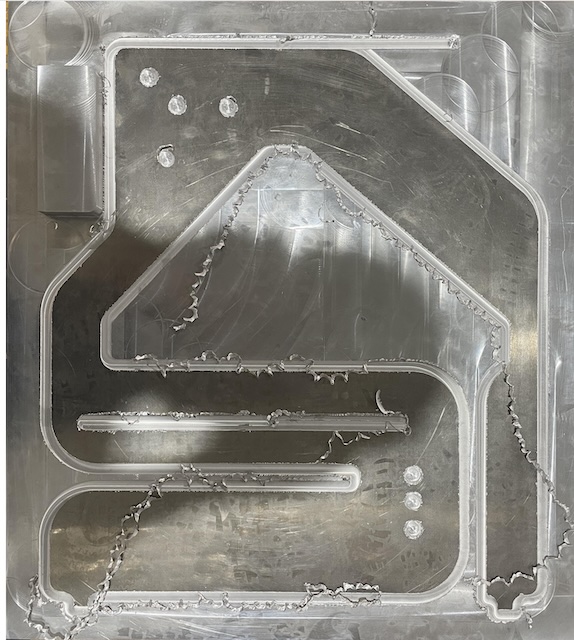
The welding path must provide enough supporting material beneath and around the FSW tool while avoiding unintended penetration into the coolant passage.
Stable contact between the parts before welding is important. Gaps, local lifting or inconsistent support can affect weld formation and dimensional control.
The start and end positions of the FSW seam should be considered during design, especially when they are close to coolant channels, ports, sealing areas or functional mounting surfaces.
The fixture and backing system must support the component against FSW process loads while maintaining consistent joint positioning.
Serpentine channels are not always simple repeated S-shaped paths. Real components may combine straight sections, large turns, multiple channel zones and other application-specific flow layouts.
The welding solution therefore needs to follow the actual component design rather than assuming one standard cold plate geometry.
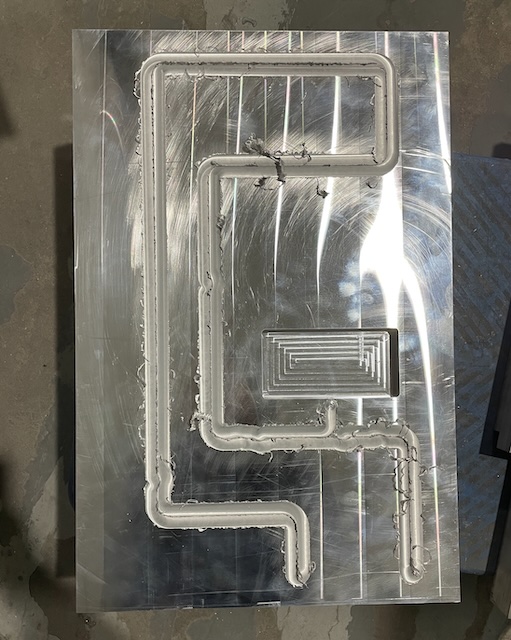
The inspection and acceptance method should be defined according to the function of the cold plate and the customer's specifications.
Depending on the project, evaluation may include:
visual weld inspection;
dimensional or flatness inspection;
cross-section evaluation during process qualification;
pressure testing according to customer requirements;
leak testing according to customer requirements; and
other project-specific validation methods.
We do not apply one universal leak, pressure or dimensional specification to every liquid cold plate project. Acceptance criteria should be agreed before repeat production.
Serpentine and custom-channel aluminum liquid cold plates requiring FSW can be used in thermal-management systems for:
EV battery and powertrain systems;
energy storage systems;
power electronics and inverter cooling;
industrial power modules;
laser and electronic equipment;
data-center and computing applications; and
other custom liquid-cooling systems.
For projects specifically focused on ESS and BESS applications, see our energy storage liquid cold plate friction stir welding service.
Different manufacturers require different production models.
For prototype development, process validation or outsourced production, customers can supply their liquid cold plate components to Zhihui for friction stir welding.
As production volume increases, some manufacturers may prefer to bring the welding process into their own factory for greater production control, shorter logistics cycles or long-term manufacturing efficiency.
Because Zhihui works with both welding applications and FSW equipment, the validated welding requirements can also be used to evaluate a suitable machine, fixture and tooling configuration for in-house production.
Explore our friction stir welding machines for EV and industrial aluminum applications.
Our capability is supported by real aluminum liquid cold plate welding projects with serpentine and custom flow-channel structures.
The welding process is developed from the actual component, material, weld path, fixture conditions and acceptance requirements rather than from a generic process recipe.
Customers can supply their own components, while material sourcing or pre-welding preparation support can be coordinated when required by the project.
Customers can begin with sample validation or outsourced welding and later transition to dedicated FSW equipment when in-house production becomes more suitable.
The FSW machine, fixture, welding tool and process settings are evaluated together to support stable welding implementation.
| Project Information | What to Provide |
|---|---|
| Drawing | 2D drawing and 3D model if available |
| Material | Exact aluminum alloy and temper |
| Overall Dimensions | Length, width and thickness of the component |
| Channel Layout | Serpentine or custom internal flow-channel geometry |
| Joint Structure | Joint geometry and relevant material thicknesses |
| Weld Path | Required welding locations, length and geometry |
| Critical Dimensions | Flatness, position or other dimensions that must be controlled |
| Quality Requirements | Customer-defined pressure, leak, dimensional or other acceptance criteria |
| Supply Model | Customer-supplied components or additional sourcing/preparation support if required |
| Production Requirement | Sample quantity and expected repeat-production volume |
It is a liquid-cooling component that uses a continuous winding internal coolant path. The applications covered on this page involve aluminum cold plate structures requiring friction stir welding along a sealing or structural weld path.
No. Tube-embedded serpentine cold plates use a formed tube installed into a base plate. This page focuses on aluminum cold plate structures with internal flow channels that require friction stir welding.
Yes. Customer-supplied components are supported. We review the drawing, material, joint design, weld path and acceptance requirements before confirming the welding process.
Yes. Project-specific material sourcing or pre-welding preparation can be coordinated when required. The exact project scope is confirmed according to the customer's drawing and supply requirements.
Yes, provided that the component offers sufficient weld land, backing support, fixture access and a practical welding path. The actual drawing should be reviewed before feasibility is confirmed.
No welding process alone should be treated as an unconditional guarantee of final leak performance. Joint design, component preparation, fit-up, tooling, fixture conditions, process control and final inspection all influence the result.
Yes. Sample welding and process validation are recommended for new liquid cold plate structures before transferring the process into repeat production.
Yes. For customers planning in-house production, we can evaluate the validated welding application and recommend a suitable FSW machine, fixture, tooling and process configuration.
Please provide the cold plate drawing, aluminum alloy, dimensions, channel layout, joint structure, weld path, critical dimensions, acceptance requirements and expected production volume.
Have a serpentine or custom-channel aluminum liquid cold plate that requires friction stir welding?
Send us your drawing, material, channel layout, weld path and acceptance requirements. Our engineering team will review the application and recommend a practical FSW welding approach.
If your project is moving toward in-house production, we can also evaluate a dedicated FSW machine, fixture and tooling solution.
Send Your Drawing for FSW Evaluation