- All
- Product Name
- Product Keyword
- Product Model
- Product Summary
- Product Description
- Multi Field Search


| Quantity: | |
|---|---|
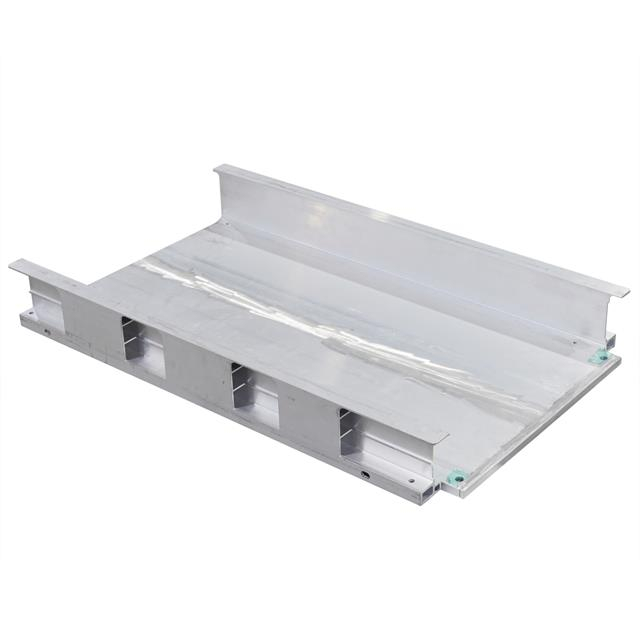
We provide specialized FSW contract welding for fiber laser water-cooled radiators, including aluminum, copper–aluminum composite plates, micro-channel structures, and precision optical cooling bases.
Customers may bring their own CNC-machined parts, outsource full machining + FSW to us, or request equipment customization for in-house welding.
Our service focuses on reliability—precision sealing of water channels, stable metallurgical bonding, and consistent thermal performance.
High-power fiber laser systems rely heavily on efficient thermal management to maintain stable operation and avoid overheating. The core of this system is often a precision-machined, water-cooled aluminum-copper radiator, where any defect can compromise performance.
However, traditional joining methods like TIG or brazing present significant limitations:
Micro-channel leakage – Fusion welding often causes porosity or weak fusion areas, leading to coolant leakage.
Thin-wall deformation – High heat input distorts delicate aluminum fins, affecting surface flatness and assembly precision.
Dissimilar metal joint failure – Bonding aluminum to copper is inherently difficult using conventional methods.
These technical bottlenecks increase rejection rates, raise manufacturing costs, and reduce product reliability in the field.
Friction Stir Welding (FSW) is a solid-state process that avoids melting, providing a cleaner, more precise alternative to traditional fusion welding.
Key advantages include:
Defect-free weld seams – Eliminates porosity and leakage pathways in high-density coolant channels.
Minimal heat input – Prevents distortion in thin-walled or precision-milled parts.
Aluminum-copper compatibility – Achieves strong, consistent bonding across dissimilar materials.
High repeatability – CNC-controlled equipment delivers consistent quality from prototype to mass production.
FSW enables high-reliability performance for components used in critical thermal applications like fiber lasers.
High joint strength – Achieves 90–95% of parent material strength in aluminum and aluminum-copper joints.
Low distortion – Welded components typically maintain flatness within ≤0.25 mm, even on thin-walled sections.
No filler material – Solid-state joining eliminates the need for flux or filler wire.
Automated process control – Consistent, repeatable weld quality at scale.
Our FSW welding process is ideal for:
Fiber laser cutting & welding systems – Reliable cooling under continuous high load.
High-power laser modules (3–10kW) – Efficient thermal control in compact form factors.
Industrial water-cooled radiators – Leak-free joining of aluminum-copper composite plates.
Precision photonics & optics equipment – Low-distortion welds for high alignment accuracy.
We offer flexible cooperation models tailored for overseas laser manufacturers:
For clients wanting full in-house manufacturing.
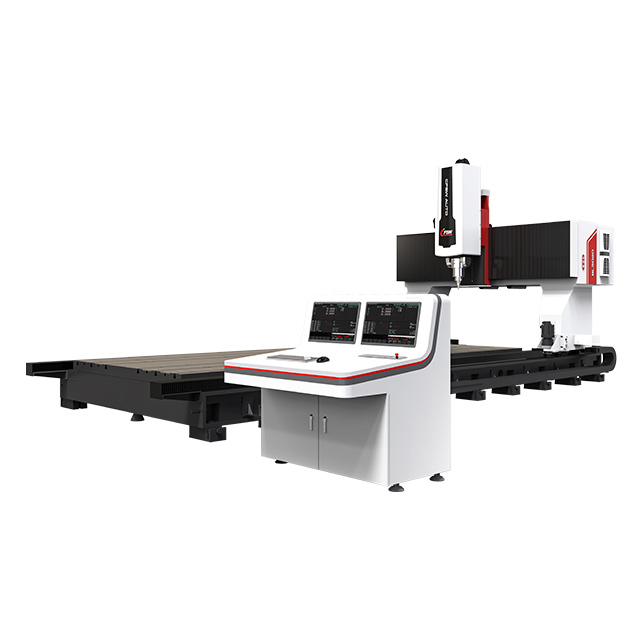
We design and build custom FSW machines optimized for laser radiator welding.
You machine the parts (or supply semi-finished plates),
and we provide FSW contract welding + leak testing + finishing.
If you prefer outsourcing, we:
Source aluminum or Al–Cu composites from approved suppliers
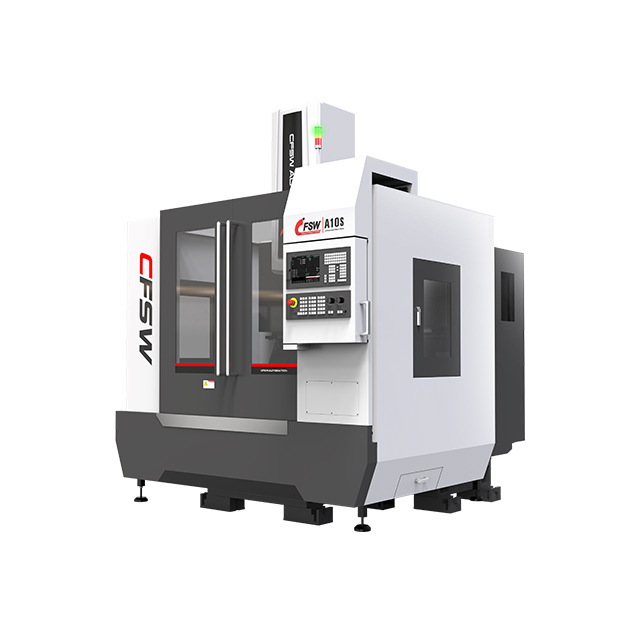
Provide CNC milling (2 CNC machines for pre- and post-processing)
Complete FSW welding & QC
Deliver finished radiator assemblies
Ideal for OEMs seeking stable quality and controlled cost.
CAD/CAM design confirmation
Material preparation and surface cleaning
CNC pre-machining and clamping
Friction stir welding under optimized parameters
Post-machining and drilling
Pressure and leak testing
Cleaning, packaging, and delivery
Every radiator undergoes standardized FSW inspection:
100% visual weld inspection
Flatness measurement (≤0.25 mm typical)
Leak testing: air pressure / water pressure / immersion testing
Sample tensile testing for new projects
Material traceability & batch welding records
SPC process monitoring for mass production stability
A leading laser equipment OEM experienced chronic leakage in copper-aluminum radiators welded by TIG. These defects disrupted coolant flow and compromised system uptime.
After switching to our FSW process, they reported:
Zero leakage across 500+ units
Radiator flatness controlled to ≤0.25 mm
Continuous operation at 10kW power output
Reduced rework and warranty-related returns
This translated into more stable laser performance and improved cost efficiency.FSW became their long-term manufacturing solution.
Q1: What materials do you support for radiator welding?
A1: We work with aluminum alloys (6000 & 7000 series) and aluminum-copper composite designs commonly used in laser cooling systems.
Q2: How do you ensure quality control?
A2: Each project includes 100% visual inspection, dimensional checks, and sample tensile testing. Leak testing (air/hydro) is available upon request.
Q3: Do you handle both prototypes and volume production?
A3: Yes. We support R&D prototyping, small-batch runs, and full-scale contract manufacturing.
Q4: What part size and weld thickness can you handle?
A4: Workpieces up to 800 mm in length; weld thicknesses from 1.5 mm to 8 mm, depending on joint design.
Q5: What’s the typical lead time?
A5: Prototypes are ready in 7–10 business days. Mass production starts from 2–4 weeks based on volume and testing needs.
Q6: Can you process customer-supplied materials or semi-finished plates?
A6:Yes. We accept customer-supplied raw materials or CNC-prepared plates and provide welding-only services to ensure full flexibility.
Fiber laser cooling modules
Aluminum-copper heat sink plates
Micro-channel radiator joining
Custom laser thermal components
Our team combines technical expertise with advanced FSW equipment to ensure every weld meets industrial thermal performance standards. Whether you're an OEM, system integrator, or R&D lab, we help you deliver precision with confidence.
⚡Whether you're solving leakage problems or scaling production, our FSW service ensures stronger, cleaner, and more reliable fiber laser cooling components.
Contact us for a technical evaluation or sample review.
We help you deliver stable laser performance with confidence.
We provide specialized FSW contract welding for fiber laser water-cooled radiators, including aluminum, copper–aluminum composite plates, micro-channel structures, and precision optical cooling bases.
Customers may bring their own CNC-machined parts, outsource full machining + FSW to us, or request equipment customization for in-house welding.
Our service focuses on reliability—precision sealing of water channels, stable metallurgical bonding, and consistent thermal performance.
High-power fiber laser systems rely heavily on efficient thermal management to maintain stable operation and avoid overheating. The core of this system is often a precision-machined, water-cooled aluminum-copper radiator, where any defect can compromise performance.
However, traditional joining methods like TIG or brazing present significant limitations:
Micro-channel leakage – Fusion welding often causes porosity or weak fusion areas, leading to coolant leakage.
Thin-wall deformation – High heat input distorts delicate aluminum fins, affecting surface flatness and assembly precision.
Dissimilar metal joint failure – Bonding aluminum to copper is inherently difficult using conventional methods.
These technical bottlenecks increase rejection rates, raise manufacturing costs, and reduce product reliability in the field.
Friction Stir Welding (FSW) is a solid-state process that avoids melting, providing a cleaner, more precise alternative to traditional fusion welding.
Key advantages include:
Defect-free weld seams – Eliminates porosity and leakage pathways in high-density coolant channels.
Minimal heat input – Prevents distortion in thin-walled or precision-milled parts.
Aluminum-copper compatibility – Achieves strong, consistent bonding across dissimilar materials.
High repeatability – CNC-controlled equipment delivers consistent quality from prototype to mass production.
FSW enables high-reliability performance for components used in critical thermal applications like fiber lasers.
High joint strength – Achieves 90–95% of parent material strength in aluminum and aluminum-copper joints.
Low distortion – Welded components typically maintain flatness within ≤0.25 mm, even on thin-walled sections.
No filler material – Solid-state joining eliminates the need for flux or filler wire.
Automated process control – Consistent, repeatable weld quality at scale.
Our FSW welding process is ideal for:
Fiber laser cutting & welding systems – Reliable cooling under continuous high load.
High-power laser modules (3–10kW) – Efficient thermal control in compact form factors.
Industrial water-cooled radiators – Leak-free joining of aluminum-copper composite plates.
Precision photonics & optics equipment – Low-distortion welds for high alignment accuracy.
We offer flexible cooperation models tailored for overseas laser manufacturers:
For clients wanting full in-house manufacturing.
We design and build custom FSW machines optimized for laser radiator welding.
You machine the parts (or supply semi-finished plates),
and we provide FSW contract welding + leak testing + finishing.
If you prefer outsourcing, we:
Source aluminum or Al–Cu composites from approved suppliers
Provide CNC milling (2 CNC machines for pre- and post-processing)
Complete FSW welding & QC
Deliver finished radiator assemblies
Ideal for OEMs seeking stable quality and controlled cost.
CAD/CAM design confirmation
Material preparation and surface cleaning
CNC pre-machining and clamping
Friction stir welding under optimized parameters
Post-machining and drilling
Pressure and leak testing
Cleaning, packaging, and delivery
Every radiator undergoes standardized FSW inspection:
100% visual weld inspection
Flatness measurement (≤0.25 mm typical)
Leak testing: air pressure / water pressure / immersion testing
Sample tensile testing for new projects
Material traceability & batch welding records
SPC process monitoring for mass production stability
A leading laser equipment OEM experienced chronic leakage in copper-aluminum radiators welded by TIG. These defects disrupted coolant flow and compromised system uptime.
After switching to our FSW process, they reported:
Zero leakage across 500+ units
Radiator flatness controlled to ≤0.25 mm
Continuous operation at 10kW power output
Reduced rework and warranty-related returns
This translated into more stable laser performance and improved cost efficiency.FSW became their long-term manufacturing solution.
Q1: What materials do you support for radiator welding?
A1: We work with aluminum alloys (6000 & 7000 series) and aluminum-copper composite designs commonly used in laser cooling systems.
Q2: How do you ensure quality control?
A2: Each project includes 100% visual inspection, dimensional checks, and sample tensile testing. Leak testing (air/hydro) is available upon request.
Q3: Do you handle both prototypes and volume production?
A3: Yes. We support R&D prototyping, small-batch runs, and full-scale contract manufacturing.
Q4: What part size and weld thickness can you handle?
A4: Workpieces up to 800 mm in length; weld thicknesses from 1.5 mm to 8 mm, depending on joint design.
Q5: What’s the typical lead time?
A5: Prototypes are ready in 7–10 business days. Mass production starts from 2–4 weeks based on volume and testing needs.
Q6: Can you process customer-supplied materials or semi-finished plates?
A6:Yes. We accept customer-supplied raw materials or CNC-prepared plates and provide welding-only services to ensure full flexibility.
Fiber laser cooling modules
Aluminum-copper heat sink plates
Micro-channel radiator joining
Custom laser thermal components
Our team combines technical expertise with advanced FSW equipment to ensure every weld meets industrial thermal performance standards. Whether you're an OEM, system integrator, or R&D lab, we help you deliver precision with confidence.
⚡Whether you're solving leakage problems or scaling production, our FSW service ensures stronger, cleaner, and more reliable fiber laser cooling components.
Contact us for a technical evaluation or sample review.
We help you deliver stable laser performance with confidence.