Views: 0 Author: Site Editor Publish Time: 2026-09-30 Origin: Site
Table of Contents
Welding distortion is a common challenge in aluminum EV battery tray manufacturing. Uneven heating, cooling, and residual stresses can cause warping, dimensional deviations, and sealing surface misalignment, affecting battery enclosure assembly and manufacturing quality.
For large aluminum battery trays, friction stir welding (FSW) offers a solid-state joining process that can help reduce thermal distortion compared with conventional fusion welding. However, welding parameters, joint design, fixture support, and welding sequence still influence final dimensional accuracy.
In this guide, we explore the main causes of EV battery tray welding distortion and practical methods for reducing deformation through material preparation, optimized welding processes, fixture design, and FSW equipment selection.
When welding aluminum EV battery trays, thermal expansion and contraction play a major role in distortion. Aluminum heats up quickly and expands during welding. As it cools, it contracts unevenly, causing warping or bending. This happens because heat concentrates near the weld area, creating temperature gradients. These gradients cause differential expansion and contraction, leading to residual stresses that distort the tray’s shape. Managing heat input carefully helps reduce this effect.
Aluminum’s material properties make it prone to welding distortion. It has a high thermal conductivity, so heat spreads fast, but its low melting point means it can easily overheat. Aluminum also has a high coefficient of thermal expansion, causing significant size changes during heating and cooling. Its relatively low stiffness means it deforms more easily under stress. These factors combined make controlling distortion challenging during welding.
Several friction stir welding (FSW) parameters can affect heat generation, material flow, and distortion in aluminum EV battery trays:
Tool Rotation Speed: Influences frictional heat generation and material plasticization.
Welding Travel Speed: Affects heat distribution and the duration of thermal exposure along the weld seam.
Axial Force and Plunge Depth: Influence tool engagement, material consolidation, and local mechanical loading.
Tool Geometry: Shoulder diameter and pin design affect heat generation and material flow.
Welding Sequence: The order and direction of welding operations influence temperature distribution and residual stress development.
Optimizing these parameters together helps manufacturers maintain consistent weld quality while reducing unnecessary thermal and mechanical deformation.
Design features affect distortion susceptibility:
Geometry: Thin sections distort more easily than thick ones.
Joint Design: Butt joints, lap joints, and other joining configurations have different material flow, support, and heat distribution requirements. Their influence on distortion depends on the specific joint geometry and welding conditions.
Part size: Larger trays accumulate more heat, increasing distortion risk.
Stiffening elements: Ribs or gussets add rigidity, helping resist warping.
Weld placement: Symmetrical welds help balance stresses, reducing distortion.
Good design considers these factors to minimize welding-induced deformation.
Note: For FSW-welded aluminum battery trays, controlling heat generation, tool forces, welding sequence, and fixture support is important for minimizing distortion and maintaining dimensional accuracy.
Aluminum alloys in the 5xxx and 6xxx series are commonly used in structural applications and can be suitable for friction stir welding. However, distortion behavior depends on alloy temper, material thickness, joint configuration, welding parameters, and fixture conditions. Manufacturers should evaluate alloy selection together with the mechanical and dimensional requirements of the battery tray.
Clean surfaces reduce defects and improve weld quality, limiting distortion. Remove oils, dirt, oxides, and contaminants before welding. Common cleaning methods include:
Chemical cleaning with solvents or acids
Mechanical cleaning using wire brushes or abrasive pads
Ultrasonic cleaning for precision parts
Proper surface preparation helps reduce contamination-related welding defects and supports consistent material flow during friction stir welding. Clean joining surfaces and accurate joint preparation contribute to stable welding conditions and reliable joint formation.
Uniform thickness across battery tray parts helps control heat distribution during welding. Thin sections heat up and cool quickly, causing uneven expansion and contraction. Thicker or inconsistent thickness areas create thermal gradients, increasing distortion risk.
For FSW applications, material thickness variations should be considered when selecting tool geometry, plunge depth, welding parameters, and backing support. Consistent component thickness and proper joint alignment help maintain stable welding conditions and reduce distortion risks.
Proper preparation before friction stir welding helps improve joint alignment and manufacturing consistency.
Key preparation measures include:
Material Inspection: Check aluminum components for thickness variations, existing deformation, and surface damage.
Surface Cleaning: Remove oils, dirt, and contaminants from joining surfaces.
Joint Alignment: Maintain suitable joint fit-up and minimize unintended gaps.
Fixture Setup: Provide rigid backing support and appropriate clamping to withstand welding forces.
Process Validation: Select suitable tool geometry and validated welding parameters for the aluminum alloy and joint design.
Preheating or heat treatment may be considered for specific engineering applications, but these processes are not universally required for FSW battery tray manufacturing.
Choosing the right welding method plays a crucial role in controlling distortion. Common techniques for aluminum battery trays include:
TIG (Tungsten Inert Gas) welding: Offers precise heat control and clean welds but is slower.
MIG (Metal Inert Gas) welding: Faster and good for thicker sections but can introduce more heat.
Laser welding: Provides minimal heat input and narrow weld zones, reducing distortion.
Friction stir welding: A solid-state process that avoids melting, greatly minimizing distortion.
For large aluminum EV battery trays, friction stir welding offers advantages in reducing solidification-related defects and thermal distortion compared with conventional fusion welding. However, the most suitable welding process depends on material thickness, joint geometry, accessibility, production volume, and dimensional requirements.
In friction stir welding, heat is generated primarily through friction and plastic deformation rather than an electric arc.
Tool rotation speed, welding travel speed, axial force, and tool geometry influence heat generation and material flow.
Excessive heat generation may increase thermal distortion, while insufficient heat or inappropriate material flow can cause welding defects.
Manufacturers should optimize welding parameters according to aluminum alloy, thickness, joint design, and production requirements.
Stable CNC-controlled welding operations help maintain consistent processing conditions along long battery tray weld seams.
Welding sequence influences heat distribution, residual stress development, and dimensional stability in aluminum battery tray manufacturing.
For large friction stir welded structures, manufacturers should consider:
Balanced Welding Sequence: Arrange welding operations to reduce excessive heat concentration in individual areas.
Joint Accessibility: Plan welding paths according to tool clearance and fixture positioning.
Fixture Support: Maintain stable backing support and clamping throughout welding.
Thermal Expansion: Consider material movement during welding and fixture release.
Process Validation: Verify the selected welding sequence through dimensional inspection and welding trials.
An optimized welding sequence can help reduce deformation while maintaining continuous weld integrity where required by the battery tray design.
Tip: For aluminum EV battery trays, combine optimized FSW parameters, balanced welding sequences, and stable fixture support to reduce distortion without compromising joint integrity.
Fixtures play a crucial role in controlling welding distortion in aluminum EV battery trays. They hold parts firmly in place during welding, preventing movement caused by thermal expansion and contraction. By stabilizing the tray, fixtures help maintain dimensional accuracy and reduce warping. Proper fixture design also distributes welding stresses evenly, lowering residual stress concentrations that lead to distortion. Without effective fixturing, trays may shift or deform, resulting in poor fit and compromised battery performance.
In friction stir welding, fixtures must also withstand substantial axial and lateral welding forces. Rigid backing support beneath the weld path is essential for maintaining joint stability and limiting unwanted movement during tool engagement.
Clamps must be designed to spread welding stresses uniformly across the battery tray. Uneven clamping pressure can cause localized deformation or bending. Using multiple clamps placed strategically reduces stress concentration points. Clamps should apply consistent force without damaging the aluminum surface. Soft jaws or protective pads can prevent surface marring while maintaining grip. Adjustable clamps allow fine-tuning pressure to match tray geometry and thickness. Even stress distribution helps the tray resist distortion during and after welding.
Adjustable and modular fixtures offer flexibility for different battery tray designs and production volumes. Modular systems consist of interchangeable components that can be reconfigured quickly. This adaptability speeds up setup times and reduces costs for manufacturing various tray models. Adjustable fixtures accommodate slight variations in part dimensions, ensuring consistent clamping force. They also allow for easy maintenance and replacement of worn parts. Using these fixtures supports lean manufacturing principles and improves overall welding quality.
Proper fixture placement and support are vital to distortion control:
Support near weld zones: Position fixtures close to weld seams to counteract thermal stresses.
Balanced support: Distribute supports evenly to prevent sagging or bending.
Minimize over-constraining: Avoid excessive clamping that may cause stress buildup.
Allow thermal expansion: Design fixtures to permit slight movement without losing control.
Rigid Backing Support: Provide sufficient support beneath the FSW joint to resist axial tool forces and maintain component positioning. Thermal management features may be considered where validated for the specific welding application.
Following these practices ensures the battery tray remains stable throughout welding and cooling, preserving its shape and strength.
Tip: Combine appropriate clamping distribution, rigid backing support, and controlled fixture release procedures to reduce welding-related deformation in large aluminum battery trays.
After friction stir welding, aluminum battery trays should be inspected for dimensional deviations, flatness, and joint integrity.
If excessive distortion is detected, manufacturers should first investigate its causes, including welding parameters, fixture constraints, material conditions, and welding sequence.
Mechanical straightening or thermal treatments may be considered only when supported by validated engineering procedures. Improper corrective operations can introduce additional residual stresses or affect the mechanical properties and sealing performance of welded joints.
For production applications, preventing excessive distortion through stable FSW processes and suitable fixture design is generally preferable to relying on extensive post-weld correction.
Post-welding inspection ensures trays meet dimensional and quality standards. Key methods include:
Visual inspection: Checking weld bead appearance, cracks, and surface defects.
Dimensional measurement: Using coordinate measuring machines (CMM) or gauges to detect warping or deviations.
Non-destructive testing (NDT): Techniques like ultrasonic testing or X-ray detect internal flaws.
Residual stress measurement: Advanced methods assess stress distribution, guiding corrective actions.
Implementing rigorous quality control catches distortion early, reducing scrap and rework costs. Automated inspection systems improve consistency and speed in high-volume production. Post-weld dimensional inspection should be performed under defined measurement and support conditions, as battery tray flatness may change after fixture release and cooling.
Tip: Prioritize distortion prevention through FSW process control and fixture optimization. Any post-weld correction should be validated to avoid compromising joint integrity or dimensional stability.
Simulation software has become a game-changer for predicting welding distortion in aluminum EV battery trays. These programs model heat flow, thermal expansion, and stress distribution during welding. They help engineers visualize potential distortion before actual production. By adjusting welding parameters, fixture design, and sequence in the software, manufacturers can optimize processes to minimize distortion. Popular tools include finite element analysis (FEA) software like ANSYS and SYSWELD. When supported by appropriate material data and validated models, simulation can help engineers evaluate welding sequences, fixture constraints, and potential distortion risks before production trials.
Automation enhances welding precision and consistency, crucial for controlling distortion. Robotic welding systems maintain exact heat input, speed, and path, reducing human error. Robots can execute complex welding sequences and stitch patterns repeatedly, ensuring uniform heat distribution. This repeatability lowers residual stresses and distortion risks. Additionally, robots improve safety by reducing operator exposure to fumes and heat. In high-volume EV battery tray manufacturing, robotic welding boosts productivity while maintaining tight tolerances.
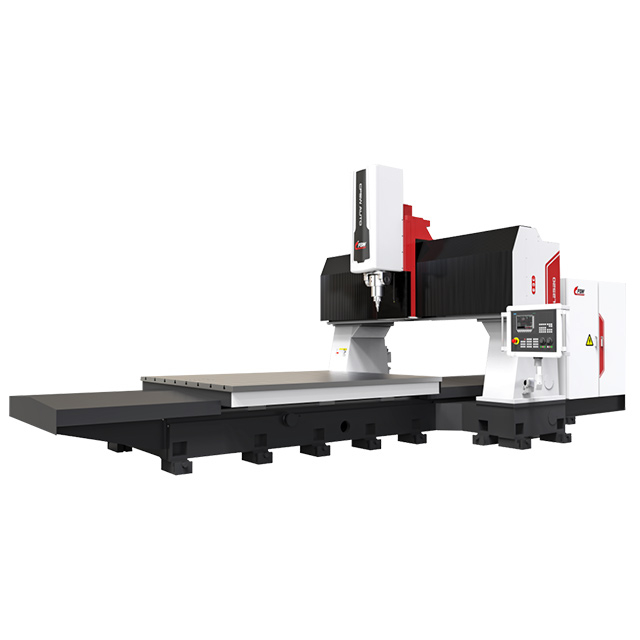
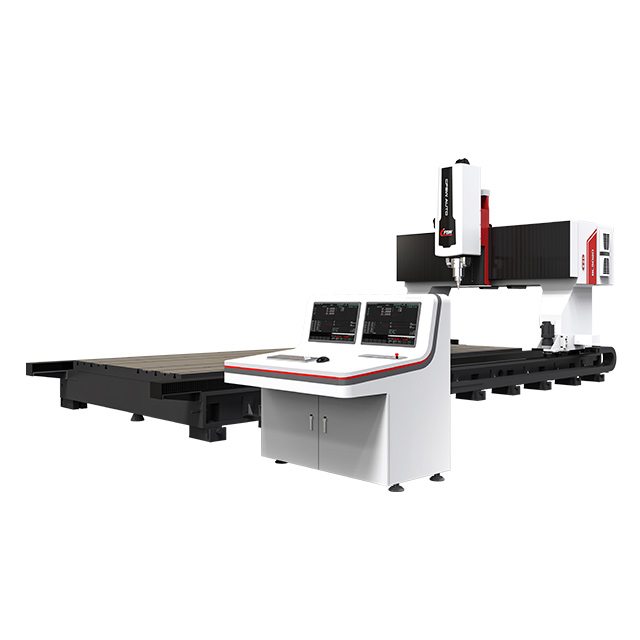
For large aluminum battery trays, CNC-controlled gantry FSW machines offer another approach to automated welding. Their rigid structures and programmed tool paths can support stable welding conditions and repeatable production operations across large aluminum assemblies.
Friction stir welding machines play an important role in controlling welding-related distortion in large aluminum EV battery trays.
Unlike conventional fusion welding, FSW joins aluminum materials without melting the base metal, helping reduce solidification-related defects and thermal deformation.
However, achieving consistent dimensional accuracy also depends on machine rigidity, process stability, tool positioning, and fixture support.
Machine Rigidity: A stable machine structure helps maintain consistent tool engagement under welding loads.
Axial Force Control: Appropriate welding force supports stable material flow and joint formation.
CNC Positioning Accuracy: Repeatable tool movement helps maintain consistent welding paths.
Fixture Integration: Proper clamping and backing support help prevent unwanted movement during welding.
Welding Parameter Stability: Consistent rotation speed, travel speed, and tool engagement help reduce process variation.
At ZHFSW, we provide friction stir welding machines for EV battery trays and industrial aluminum applications.
Our FSW-BL3020 Friction Stir Welding Machine is designed for large-format aluminum battery tray manufacturing.
Its gantry structure and CNC-controlled welding system support repeatable welding operations across large aluminum assemblies.
For battery tray manufacturers, selecting suitable FSW equipment and validating welding parameters can help reduce distortion risks and improve dimensional consistency.
Explore our large gantry FSW machines to learn more about equipment options for aluminum battery tray production.
Reducing welding distortion in aluminum EV battery trays requires careful control of material conditions, welding parameters, joint design, fixture support, and welding sequence.
Friction stir welding (FSW) provides an effective solid-state joining process that can help reduce thermal distortion compared with conventional fusion welding. However, consistent dimensional accuracy still depends on proper process optimization and reliable equipment performance.
At ZHFSW, we provide friction stir welding machines for EV battery trays and industrial aluminum applications.
Contact our team to discuss your battery tray dimensions, welding requirements, and suitable FSW equipment options for improving production consistency.
A: Battery tray welding distortion mainly results from thermal expansion and contraction during welding, aluminum’s material properties, and welding parameters that cause uneven stresses and warping.
Manufacturers can reduce welding distortion by selecting suitable joining processes, optimizing welding parameters, planning balanced welding sequences, and using appropriate fixture support. Friction stir welding can help minimize thermal deformation compared with conventional fusion welding when properly controlled.
A: Fixtures stabilize the tray during welding, evenly distribute stresses, and prevent movement, all crucial for reducing battery tray welding distortion.
Mechanical straightening or thermal treatment may be considered for certain aluminum battery tray applications, but these procedures require engineering validation. Improper rework can affect joint integrity, mechanical properties, and dimensional stability. Preventing distortion during welding is generally preferable.
A: Simulation predicts distortion risks, optimizing parameters, while robotic welding ensures consistent heat input, both effectively reducing battery tray welding distortion.
Friction stir welding joins aluminum materials in a solid state without melting the base metal. This can reduce thermal distortion and solidification-related defects compared with conventional fusion welding. Stable welding parameters, rigid machine structures, and proper fixture support also help maintain dimensional consistency.