Views: 0 Author: Site Editor Publish Time: 2026-09-30 Origin: Site
Table of Contents
Fixture design plays a critical role in EV battery tray friction stir welding (FSW), directly affecting joint alignment, welding stability, and dimensional accuracy. Large aluminum battery trays require reliable clamping and backing support to withstand the forces generated during the welding process.
A properly designed battery tray welding fixture helps prevent workpiece movement, maintain consistent joint positioning, and reduce welding-related distortion. It must also work with the FSW machine's structure, tool path, and process requirements.
In this article, we explore the key design principles, fixture types, common challenges, and optimization strategies for reliable EV battery tray friction stir welding.
Battery tray welding fixtures must provide stable positioning, reliable clamping, and sufficient structural support during friction stir welding (FSW). Unlike many conventional welding processes, FSW generates substantial axial and lateral forces that must be resisted by the workpiece and fixture system.
Key design requirements include:
Rigid Backing Support: Supports the aluminum components beneath the welding path and helps resist axial welding forces.
Secure Clamping: Prevents workpiece movement and maintains consistent joint alignment during welding.
Dimensional Accuracy: Helps maintain battery tray geometry and minimize positioning deviations.
Thermal Stability: Accommodates temperature changes without introducing excessive distortion or constraint.
Tool Accessibility: Provides sufficient clearance for the FSW tool, spindle, and machine movements.
Production Efficiency: Supports safe loading, unloading, and repeatable positioning.
The fixture must be designed according to the battery tray geometry, aluminum material properties, welding parameters, and FSW machine configuration.
For a broader framework covering clamping, backing support, thermal behavior, tool clearance, and fixture validation, see our guide to aluminum FSW fixture design.
Choosing the right materials is crucial for fixture durability and performance. Fixtures often use hardened steel or aluminum alloys for their strength and resistance to wear. Steel offers excellent rigidity and thermal stability but can be heavy. Aluminum alloys reduce weight, making fixtures easier to handle while providing good thermal conductivity to dissipate heat from welding. Some components may use composite materials or ceramics for thermal insulation or wear resistance. Corrosion resistance is also important, especially in environments with coolant or lubricants. Material choice balances cost, durability, and the fixture's operational demands.
Good fixture design considers operator comfort and ease of use. Fixtures should allow easy access to the battery tray for loading, unloading, and inspection. Controls and clamps must be reachable without awkward movements. Ergonomic design reduces operator fatigue and the risk of injury. It also speeds up the welding process by minimizing handling time. Accessibility for maintenance is another factor; components should be easy to replace or repair. Designing fixtures that support safe and efficient workflows boosts overall production effectiveness.
Precision is vital for friction stir welding, as even small misalignments can cause defects. Fixtures must hold trays in the exact position every time to ensure repeatable weld quality. This requires tight manufacturing tolerances and robust clamping mechanisms. Locating pins, stops, or custom-shaped supports help position trays consistently. The fixture’s rigidity prevents movement during welding, maintaining alignment under load. Repeatability also depends on minimizing wear and deformation over time. Regular inspection and maintenance keep fixtures performing reliably.
Tip: Prioritize rigid backing support, reliable clamping, and accurate joint positioning when designing fixtures for large aluminum EV battery trays. Modular components can be introduced where they do not compromise welding stability. For final dimensional inspection and process control, see our guide to EV battery tray flatness control.
Clamping fixtures play a crucial role in friction stir welding (FSW) of EV battery trays. They hold the tray firmly during welding, preventing any movement that could cause weld defects or misalignment. These fixtures use mechanical clamps, pneumatic systems, or hydraulic actuators to apply consistent force. The clamping force must be strong enough to resist welding forces but gentle enough to avoid damaging the tray. Some designs include adjustable clamps to fit different tray thicknesses or shapes. Proper clamping ensures weld quality and repeatability.
Modular fixtures consist of interchangeable parts that can be rearranged or replaced to accommodate different battery tray designs. They provide flexibility, support faster changeovers, and can reduce tooling investment when multiple tray models or product variants must be handled. However, modular fixtures require careful validation of rigidity, locating accuracy, backing support, and positioning repeatability.
Custom fixtures can be optimized for a specific battery tray geometry, allowing dedicated backing support, locating features, clamping positions, and tool clearance for repeat production. However, they usually require higher initial engineering investment and offer less flexibility when tray designs change. The choice between modular and custom fixtures should therefore be based on production volume, tray geometry, changeover requirements, required repeatability, and process validation.
Fixture Type | Advantages | Limitations | Best Applications |
|---|---|---|---|
Modular Fixtures | Flexible configuration, reusable components, faster changeovers | Requires careful validation of rigidity and positioning repeatability | Prototyping, multiple tray designs, low-to-medium volume production |
Custom Fixtures | Optimized support, clamping, and tool clearance for a specific tray | Higher initial engineering cost and reduced flexibility | High-volume production, complex battery tray geometries |
EV battery trays vary widely in size, shape, and material. Fixtures must adapt to these differences to support multiple EV models or design updates. Adjustable locating pins, interchangeable clamping elements, and flexible mounting points enhance adaptability. Some fixtures use quick-change jaws or inserts tailored to specific tray features. Designing for adaptability reduces the need for multiple dedicated fixtures, lowering tooling costs and floor space. It also enables faster response to design changes, a key advantage in the fast-evolving EV market.
Depending on production requirements, battery tray welding fixtures may incorporate sensors and automation for selected monitoring and handling functions. Sensors can be used to monitor variables such as clamping status or force, workpiece position, and temperature where these measurements are relevant to the fixture and process design. Automation can support functions such as clamp actuation, tray loading, unloading, and repeatable workpiece handling.
Tip: Use adjustable clamping mechanisms and selected sensor feedback where appropriate to support fixture flexibility, setup verification, and repeatable production across different battery tray models.
During friction stir welding, localized heat generation causes aluminum battery tray components to expand. Uneven temperature distribution and excessive mechanical constraints may introduce residual stress, deformation, or joint misalignment.
Fixture design must balance secure restraint with controlled thermal movement. Insufficient restraint can allow workpiece movement or joint gaps, while excessive or poorly distributed restraint can alter stress development and post-weld distortion behavior.
For large aluminum battery trays, manufacturers should consider welding sequence, clamping distribution, backing support, and fixture release procedures.
Optimizing these factors together with FSW process parameters helps improve dimensional stability and reduce post-weld flatness deviations.
For a detailed discussion of thermal and mechanical distortion control, see our guide to EV battery tray FSW welding distortion.
EV battery trays are often large, requiring long weld paths. Maintaining consistent weld quality over these distances is difficult. The fixture must hold the entire tray firmly and evenly to prevent vibration or movement during welding. Uneven clamping forces can cause inconsistent heat distribution, affecting weld integrity. The fixture design should distribute forces uniformly and resist bending or twisting. Repeatability is key—any variation in tray placement affects weld quality. Designers may use multiple clamping points or segmented fixtures to support large trays securely.
For long FSW weld seams, continuous or appropriately distributed backing support is also important for maintaining joint stability under axial welding loads. Fixture rigidity and clamping arrangements should be evaluated together with the machine's welding force and travel path.
Good fixture design must consider access for the welding tool and operators. FSW tools need unobstructed paths to the weld seam, which can be challenging on complex tray geometries. Fixtures should avoid blocking tool movement or creating areas where fixture components interfere with tool access. Operator access is also critical for loading, unloading, inspection, and maintenance. Poor accessibility slows production and increases error risk. Designers often use modular or removable fixture parts to improve access without sacrificing rigidity.
Tool shoulder clearance, spindle accessibility, and collision-free welding paths should be verified during fixture and FSW machine integration.
Fixtures endure repeated mechanical stress, heat cycles, and contact with welding tools, causing wear over time. Worn fixtures lose precision, leading to misalignment and weld defects. Maintenance is essential to preserve fixture accuracy and extend service life. Designers should select wear-resistant materials and surface treatments for high-contact areas. Easy replacement of wear parts reduces downtime. Incorporating monitoring systems to detect early wear signs allows proactive maintenance, minimizing production interruptions.
Tip: Evaluate thermal expansion, clamping distribution, backing support, and tool accessibility together to ensure that the fixture remains compatible with the FSW machine and battery tray geometry.
Finite Element Analysis (FEA) can be useful when developing large or complex battery tray fixtures. Depending on the model, it can help estimate fixture stiffness, reaction forces, workpiece deformation, contact behavior, and thermal response before physical trials.
However, simulation results depend strongly on boundary conditions, contact assumptions, material models, and process inputs. FEA should therefore support rather than replace trial welding and physical fixture validation.
Optimizing materials and structure boosts fixture durability and lifespan. Designers often select high-strength alloys or composite materials to resist wear and thermal fatigue. Structural elements like ribs, gussets, or honeycomb patterns add stiffness without extra weight. Surface treatments such as hardening or coating improve resistance to abrasion and corrosion. Lightweight materials reduce fixture handling difficulty and cycle times. Combining these strategies extends service life, lowers maintenance, and maintains precision. Proper material and structural optimization also enhances heat dissipation, minimizing thermal distortion during welding.
Automation integration transforms fixture operation for EV battery tray welding. Robotic systems handle tray loading, positioning, and unloading with high repeatability and speed. Automated clamps apply consistent force, reducing human error and cycle time. Robotics can also adjust fixture settings dynamically for different tray models, improving flexibility. This integration supports continuous production and reduces labor costs. It also enhances safety by limiting operator exposure to hot or moving parts. Together, automation and robotics boost throughput and weld quality in high-volume EV battery manufacturing.
Where production monitoring is required, fixtures may incorporate sensors for selected variables such as clamping status or force, workpiece position, and temperature. When integrated with compatible FSW machine controls, these signals can support setup verification, traceability, alarms, and process monitoring. This approach can help identify abnormal fixture or process conditions earlier and support maintenance and quality-control decisions.
Tip: Use simulation and selected sensor feedback as supporting tools for fixture development, process monitoring, and physical validation.
High-volume EV battery tray manufacturing requires fixtures that support repeatable positioning, stable clamping, and efficient workpiece handling.
For production lines using large gantry friction stir welding machines, fixture engineering should consider:
Rigid backing support for long aluminum weld seams
Repeatable positioning of battery tray components
Automated or semi-automated clamping arrangements
Efficient loading and unloading procedures
Compatibility with the FSW machine's welding path and working area
These considerations can help manufacturers improve production consistency while reducing setup variation and unnecessary handling time.
Complex aluminum battery trays may contain multiple extrusions, thin-wall structures, varying section thicknesses, and limited tool access.
Custom fixture design can help address these challenges by providing support at critical locations while maintaining suitable clearance for the FSW tool.
Important design considerations include adjustable locating elements, dedicated backing supports, segmented clamping arrangements, and removable fixture components where necessary.
Fixture design should be coordinated with the welding sequence, machine configuration, and joint geometry to maintain stable conditions throughout the production process.
Practical design priorities include:
Flexibility and Modularity: Fixtures benefit from modular components that adapt to design updates or different tray models, reducing tooling costs and downtime.
Sensor Integration: Where monitoring is required, selected sensor signals can support fixture status verification, production traceability, alarms, and maintenance decisions.
Ergonomic Design: Easy access for operators and welding tools speeds up production and reduces errors.
Thermal Behavior: Consider fixture thermal expansion, heat transfer, clamping distribution, and cooling only where process validation shows that additional thermal control is beneficial.
Maintenance Planning: Designing fixtures for easy replacement of wear parts extends service life and limits production interruptions.
These lessons help manufacturers build fixtures that balance precision, durability, and efficiency, essential for competitive EV battery production.
Tip: Combine appropriate fixture modularity, reliable backing and clamping, and selected monitoring functions according to the battery tray geometry and production requirements.
Fixture design and friction stir welding machine selection should be considered together when developing an EV battery tray manufacturing process.
Large aluminum battery trays often require long welding paths, high structural rigidity, reliable backing support, and precise component positioning. The fixture must withstand welding forces while remaining compatible with the machine's working area and tool movements.
Machine Rigidity: The FSW machine and fixture must provide adequate structural support under welding loads.
Axial Force Requirements: Clamping and backing systems must accommodate the forces generated during tool penetration and welding.
Working Area and Tool Clearance: Fixture components should not interfere with the welding spindle, tool shoulder, or programmed welding paths.
Fixture Positioning Accuracy: Repeatable workpiece location helps maintain consistent joint alignment.
Production Efficiency: Fixture loading, clamping, release, and unloading should be considered when planning production cycle times.
At ZHFSW, we provide friction stir welding machines for EV battery trays and industrial aluminum applications.
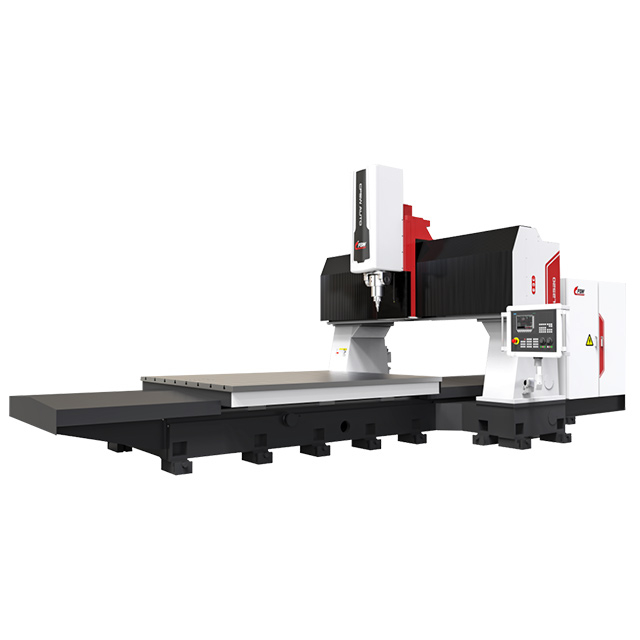
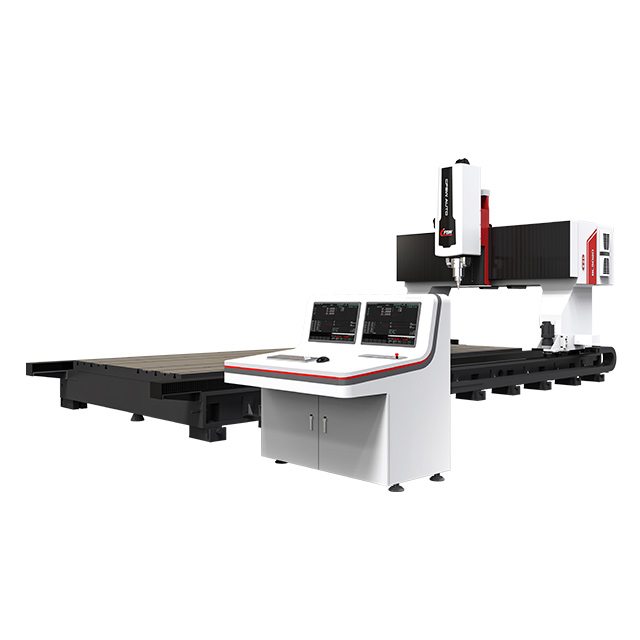
Our FSW-BL3020 Friction Stir Welding Machine is designed for large-format aluminum battery tray manufacturing.
Its gantry configuration and CNC-controlled welding system make it relevant for production applications requiring long welding paths and accurate tool positioning.
For manufacturers developing EV battery tray production lines, fixture requirements should be evaluated alongside machine specifications, welding parameters, aluminum component geometry, and production capacity.
Explore our large gantry friction stir welding machines to learn more about FSW equipment for aluminum battery tray manufacturing.
Proper fixture design is essential for achieving stable and repeatable friction stir welding in EV battery tray manufacturing. Secure clamping, rigid backing support, accurate positioning, and thermal expansion management all contribute to consistent weld quality.
For large aluminum battery trays, fixture design must also be coordinated with FSW machine capabilities, tool accessibility, welding parameters, and production requirements.
At ZHFSW, we provide friction stir welding machines for EV battery trays and industrial aluminum applications. Our equipment solutions support manufacturers seeking reliable aluminum welding processes and consistent production quality.
Contact our team to discuss your battery tray dimensions, welding requirements, and suitable FSW equipment options.
A: A battery tray welding fixture is a specialized tool designed to securely hold EV battery trays during friction stir welding, ensuring precise alignment and consistent weld quality.
A properly designed fixture helps maintain joint alignment, prevent workpiece movement, and provide stable backing support during friction stir welding. This improves process consistency and reduces the risk of welding defects associated with inadequate clamping or positioning.
A: Modular fixtures prioritize flexibility and faster adaptation to different battery tray designs, while custom fixtures can be optimized for a specific tray geometry and production process. Neither approach is universally more accurate; performance depends on fixture rigidity, locating, backing support, clamping layout, manufacturing accuracy, and process validation.
A: Hardened steel and aluminum alloys are typical for their strength, wear resistance, and thermal conductivity, balancing durability and weight.
A: Depending on the fixture and machine configuration, sensors can monitor selected variables such as clamping status or force, workpiece position, and temperature. When integrated with compatible machine controls, this information can support setup verification, process monitoring, traceability, alarms, and maintenance decisions.
A: They manage thermal expansion, ensure consistent clamping over large trays, provide operator and tool accessibility, and reduce fixture wear.
A: Fixture cost varies widely depending on tray size, geometry, clamping method, backing design, automation level, materials, and production requirements. Modular fixtures may reduce initial tooling investment when components can be reused across product variants, while dedicated custom fixtures may require more engineering and manufacturing investment.
A: Inspect locating features, clamps, backing supports, wear surfaces, and fixture alignment. Regular maintenance and recalibration of locating pins and clamping elements can help maintain repeatable battery tray positioning.
Backing support helps resist the axial forces generated by the rotating FSW tool and prevents excessive movement or deformation of aluminum components. Proper backing design is essential for maintaining joint stability and consistent weld formation.
Fixture design should consider the FSW machine's working area, axial force capability, spindle clearance, welding paths, and positioning requirements. The fixture must provide stable support while allowing the welding tool to access all required joints without interference.