

Views: 0 Author: Site Editor Publish Time: 2025-10-14 Origin: Site
Imagine welding without sparks or fumes. Friction Stir Welding (FSW) offers a clean, efficient alternative. It's transforming manufacturing with robotic systems that enhance precision and automation. In this post, you'll learn about FSW's role in smart manufacturing and the evolution of robotic welding systems.
Robotic friction stir welding (FSW) systems represent a sophisticated integration of robotics and advanced welding technology. These systems are designed to deliver precision, efficiency, and flexibility in the friction stir welding process. Understanding their core components is essential for appreciating how robotic FSW machines operate within smart manufacturing environments.
At the heart of any robotic friction stir welding system lies the robot body and its control system. This component acts as the motion device, responsible for the physical movements required during the welding process. The robot body must possess high rigidity and load capacity because the friction stir process involves significant forces and precise posture control.
The control system includes the robot control cabinet and an operator panel, often integrated with specialized FSW software. This software manages the robotic FSW system’s movements, force application, and path planning. Together, these elements enable automation in welding by ensuring the friction stir welding robot can consistently perform complex motions with accuracy and repeatability.
The FSW spindle is the end effector of the robotic system, directly driving the rotation of the welding tool. Unlike traditional arc welding machines, the friction stir welding machine uses a solid-state process, so the spindle must maintain precise rotational speed and torque. Typically, electric spindles are preferred due to their compactness and ease of maintenance.
Force sensors embedded within the spindle assembly play a critical role. They collect real-time data on welding forces, which the spindle control system uses to adjust parameters dynamically. This feedback loop enhances the stability and quality of the weld by maintaining optimal pressure and tool engagement throughout the fsw welding process.
The spindle control mechanism also manages tool clamping, cooling, and data transmission to the main robot controller. This integrated approach ensures the friction stir welding equipment operates efficiently and safely.
Supporting the primary components are various auxiliary devices and accessories that enhance the system’s capabilities. Welding fixtures help secure workpieces, ensuring consistent joint alignment during the stir welding process. Safety protection facilities safeguard operators and equipment during operation.
Additional equipment such as linear units and welding positioners expand the system's flexibility, allowing the robotic friction stir welding robot to handle complex geometries and three-dimensional structures. Loading and unloading devices streamline production workflows, contributing to higher throughput and scalability.
These accessories are crucial for adapting robotic FSW systems to diverse manufacturing needs, from aerospace components to automotive assemblies.
Note: Selecting a robotic friction stir welding system with a well-integrated control system and high-precision spindle significantly improves weld quality and process reliability in smart manufacturing welding applications.
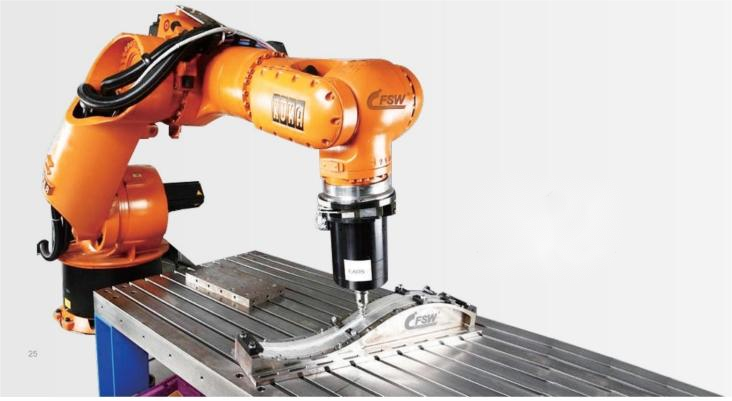
Robotic friction stir welding (FSW) systems are revolutionizing manufacturing by combining the precision of friction stir welding with the flexibility and automation of robotics. This synergy brings several key advantages that make robotic FSW an essential component in the future of welding technology and smart manufacturing welding.
One of the most significant benefits of robotic friction stir welding is the high level of automation it provides. Unlike manual or semi-automatic fsw welding machines, robotic fsw systems operate with minimal human intervention. This automation reduces labor costs and the risk of human error. The friction stir welding robot can execute complex weld paths with consistent speed and force, ensuring uniform weld quality across batches.
Moreover, robotic friction stir welding equipment can work continuously with high repeatability. This capability boosts production throughput and shortens cycle times, which is crucial for industries like aerospace and automotive that demand both volume and precision. The integration of advanced control systems enables real-time monitoring and adjustment during the friction stir process, further enhancing efficiency and reducing waste.
Robotic friction stir welding machines excel in handling complex geometries and three-dimensional structures that are challenging for traditional welding methods. The flexibility of robotic welding solutions allows manufacturers to produce intricate components without extensive fixture setups or manual adjustments.
This adaptability reduces tooling costs and setup times, making robotic FSW systems cost-effective for both low and high-volume production runs. Additionally, the solid-state nature of the friction stir welding process minimizes defects such as porosity and cracking, lowering rework and scrap rates. Over time, these savings contribute to a significant reduction in total manufacturing costs.
Robotic fsw systems offer scalability that traditional friction stir welding machines cannot match. Manufacturers can easily scale production by adding more robotic cells or integrating robots with other automation systems. This modularity supports flexible manufacturing lines capable of switching between different products or weld configurations with minimal downtime.
Furthermore, the versatility of friction stir welding robots enables their use across various materials and thicknesses, including aluminum alloys, magnesium, and copper. This broad application scope makes robotic friction stir welding a valuable asset in smart manufacturing environments that require rapid adaptation to changing product demands.
Tip: When selecting a robotic friction stir welding system, prioritize models with advanced control software and force feedback capabilities to maximize automation benefits and weld quality in complex manufacturing tasks.
Robotic friction stir welding (FSW) is evolving rapidly thanks to breakthroughs in technology. These innovations are transforming traditional fsw welding machines into intelligent, adaptive systems that enhance quality and efficiency. Let’s explore some of the key advancements shaping the future of friction stir welding equipment and robotic fsw systems.
Artificial intelligence (AI) plays a pivotal role in optimizing the friction stir process in real time. By analyzing data collected from force sensors, spindle controls, and robot motion, AI algorithms adjust welding parameters dynamically. This continuous feedback loop ensures the friction stir welding robot maintains optimal tool pressure, rotation speed, and travel rate.
Such real-time optimization reduces defects like voids or insufficient bonding, leading to superior weld quality. It also minimizes material waste and energy consumption, aligning with smart manufacturing welding goals. Over time, AI systems learn from each weld, refining process control and boosting productivity.
Traditional friction stir welding often requires precise fixturing to hold parts in place. However, advances in seam tracking technology now allow robotic friction stir welding machines to operate with minimal or no fixtures. Using laser sensors and 3D vision systems, the robot detects joint geometry and adapts its path dynamically.
This fixtureless welding capability enhances flexibility, especially for complex or large structures where fixed jigs are impractical. The friction stir welding robot can automatically adjust torch angles and speed, compensating for part misalignments or thermal distortions. This reduces setup time and costs while maintaining consistent weld quality.
Robotic fsw systems are increasingly integrated into Industry 4.0 frameworks. Connectivity with the Internet of Things (IoT) enables real-time data collection, remote monitoring, and predictive maintenance. Welding parameters, equipment status, and quality metrics are continuously transmitted to centralized manufacturing execution systems (MES).
This integration allows manufacturers to optimize workflows, reduce downtime, and make data-driven decisions. It also supports traceability and compliance, which are critical in aerospace and automotive sectors. As a result, friction stir welding equipment becomes a smart, connected asset within the broader digital manufacturing ecosystem.
Tip: To maximize the benefits of robotic friction stir welding, invest in systems equipped with AI-driven control and advanced seam tracking sensors for enhanced adaptability and weld consistency in smart manufacturing environments.
Robotic friction stir welding (FSW) is rapidly becoming a cornerstone technology across various industries. Its ability to deliver strong, defect-free joints in lightweight alloys makes it invaluable in sectors where precision and durability are critical. Let’s explore how robotic friction stir welding systems are transforming aerospace, automotive, construction, electronics, and emerging fields.
In aerospace, the demand for lightweight, high-strength components is ever-increasing. Robotic friction stir welding machines excel in joining aluminum alloys used in aircraft fuselages, wings, and fuel tanks. The friction stir process produces welds with superior mechanical properties and minimal distortion, which is essential for flight safety and performance.
Similarly, the automotive industry benefits from robotic fsw systems by improving the manufacturing of electric vehicles and lightweight chassis parts. The automation in welding reduces cycle times and ensures consistent quality, making it easier to meet stringent industry standards. The friction stir welding robot’s ability to handle complex geometries also supports innovative vehicle designs.
In construction, robotic friction stir welding equipment is applied to fabricate structural components such as steel frameworks and aluminum panels. The precision of robotic fsw systems enhances joint strength and corrosion resistance, extending the lifespan of buildings and infrastructure.
The electronics sector uses friction stir welding technology advancements to join delicate components without damaging heat-sensitive materials. This capability is particularly valuable in battery manufacturing and semiconductor packaging, where traditional welding methods may cause defects.
Beyond established industries, robotic friction stir welding is gaining traction in emerging fields like renewable energy, shipbuilding, and aerospace composites. For example, robotic fsw systems are used to manufacture wind turbine blades and battery enclosures for energy storage solutions.
The future of welding technology points to increased adoption of friction stir welding robots in additive manufacturing and hybrid joining processes. These advanced welding systems promise to enhance material performance and reduce environmental impact, aligning with smart manufacturing welding trends.
Tip: When exploring applications of robotic friction stir welding, consider industries that require lightweight, high-strength joints and benefit from automation in welding to improve quality and production efficiency.
Robotic friction stir welding (FSW) is a groundbreaking technology, but it faces several challenges that can impact its performance and adoption in smart manufacturing welding environments. Understanding these obstacles and the solutions being developed is crucial for leveraging the full potential of robotic friction stir welding systems.
The friction stir process works exceptionally well on aluminum and other non-ferrous metals, yet material limitations remain a concern. Some alloys, especially those with high melting points or complex microstructures, can be difficult to weld consistently using robotic fsw systems. For example, certain steels and titanium alloys pose challenges due to their thermal properties and tool wear rates.
To overcome these material constraints, advancements in friction stir welding equipment focus on developing specialized welding tools and optimized process parameters. Innovations such as stationary shoulder stir welding and retractable spindle designs improve heat management and reduce tool degradation. These improvements enable friction stir welding robots to handle a wider range of materials without sacrificing weld quality.
Robotic friction stir welding involves complex coordination between the robot body, spindle, and control systems. Technical barriers include maintaining precise force control, managing thermal effects, and ensuring stable tool engagement throughout the fsw welding process. Any deviation can cause defects like voids, tunneling, or improper bonding.
Modern robotic fsw systems address these challenges with high-frequency force sensors and advanced control algorithms. For instance, force control frequencies up to 250Hz allow real-time adjustment of tool pressure, enhancing process stability. Additionally, integrating AI-driven optimization helps predict and correct welding anomalies on the fly.
Another solution is the incorporation of multi-axis robotic arms and seventh-axis systems that increase the robot’s flexibility and reach. These systems allow for complex path planning and better handling of three-dimensional welds, overcoming limitations posed by traditional gantry-style fsw welding machines.
Achieving consistent quality and precision in robotic friction stir welding is essential, especially in industries like aerospace and automotive where safety standards are stringent. Variations in joint fit-up, surface conditions, and environmental factors can affect weld integrity.
To ensure high-quality outcomes, robotic friction stir welding machines are equipped with seam tracking and adaptive path control technologies. These systems use laser sensors and 3D vision to detect joint misalignments in real time, allowing the friction stir welding robot to adjust its trajectory dynamically. This reduces reliance on expensive fixtures and minimizes human intervention.
Furthermore, continuous monitoring of welding parameters and automated data logging support quality assurance and traceability. Integration with Industry 4.0 platforms enables predictive maintenance and process analytics, helping manufacturers maintain tight tolerances and reduce defects.
Tip: To overcome challenges in robotic friction stir welding, invest in systems with advanced force control, adaptive seam tracking, and specialized tooling designed for diverse materials to ensure precision and reliability in smart manufacturing welding.
Robotic friction stir welding (FSW) is at the forefront of the future of welding technology. As smart manufacturing welding evolves, several key trends are shaping robotic fsw systems, making them more efficient, sustainable, and connected.
Sustainability is becoming a priority in manufacturing, and friction stir welding machines are leading the charge. Unlike traditional fusion welding, the friction stir process is a solid-state technique that consumes less energy and produces minimal emissions. Robotic friction stir welding equipment reduces the need for filler materials and shielding gases, lowering environmental impact.
Manufacturers are adopting eco-friendly welding solutions by integrating robotic welding solutions that optimize energy use and minimize waste. For example, battery-powered portable fsw welding machines and advanced cooling systems help reduce power consumption. These practices align with global efforts to achieve greener production and comply with tightening environmental regulations.
The future of robotic friction stir welding heavily relies on advancements in robotics and artificial intelligence. Robotic fsw systems are becoming smarter with AI-powered real-time optimization, allowing friction stir welding robots to adapt dynamically to variations in materials and joint conditions.
New developments include collaborative robots (cobots) that safely work alongside human operators, enhancing flexibility in smart manufacturing welding. Multi-axis robotic arms with enhanced precision expand the capability to weld complex three-dimensional structures. AI-driven seam tracking and adaptive control improve weld quality by continuously monitoring and adjusting parameters during the friction stir process.
Moreover, integration with Industry 4.0 technologies enables predictive maintenance and remote monitoring, increasing uptime and reducing operational costs.
The market for robotic friction stir welding systems is expanding rapidly. Growth is fueled by rising demand in aerospace, automotive, construction, and electronics sectors. These industries value the precision, repeatability, and scalability robotic fsw systems offer.
Industry reports project a compound annual growth rate (CAGR) exceeding 10% in robotic welding markets over the next decade. This expansion drives innovation in friction stir welding equipment and encourages adoption of advanced welding systems in small and large manufacturers alike.
Robotic friction stir welding is also influencing workforce dynamics by addressing labor shortages through automation in welding. As more companies embrace smart manufacturing welding, robotic fsw systems will become essential assets for competitive, sustainable production.
Tip: Invest in robotic friction stir welding systems that incorporate AI and Industry 4.0 connectivity to future-proof your manufacturing operations with eco-friendly, efficient, and intelligent welding solutions.
Robotic friction stir welding (FSW) systems are revolutionizing smart manufacturing with their precision, efficiency, and automation. These systems excel in industries like aerospace and automotive, offering enhanced weld quality and production scalability. As technology advances, FSW systems integrate AI and Industry 4.0, promoting eco-friendly practices. Companies like Zhihui Welding lead in providing innovative FSW solutions, ensuring competitive advantages in diverse manufacturing environments. The future of FSW promises continued growth and impact, making it a cornerstone of modern production techniques.
A: Robotic friction stir welding systems offer enhanced automation and efficiency, reducing labor costs and human error. They provide consistent weld quality, handle complex geometries, and minimize defects, making them cost-effective for high-volume production in smart manufacturing environments.
A: Unlike traditional arc welding, the friction stir welding process is a solid-state technique that doesn't melt the materials. Instead, it uses a rotating tool to join materials through friction and pressure, resulting in strong, defect-free joints with minimal distortion.
A: Innovations such as AI-driven optimization, seam tracking, and Industry 4.0 integration are enhancing robotic friction stir welding systems. These advancements improve adaptive control, real-time monitoring, and connectivity, boosting efficiency and sustainability in smart manufacturing welding.
A: Robotic friction stir welding systems overcome material limitations by using specialized tools and optimized process parameters. Advancements like stationary shoulder stir welding improve heat management, allowing friction stir welding robots to handle diverse materials effectively.
A: Robotic friction stir welding systems are eco-friendly because the friction stir process consumes less energy and produces minimal emissions compared to traditional welding. They reduce the need for filler materials and shielding gases, aligning with sustainable manufacturing practices.


