Views: 0 Author: Site Editor Publish Time: 2026-07-15 Origin: Site
Aluminum alloy 7075 presents a fundamental paradox on the manufacturing floor. It offers an exceptional strength-to-weight ratio that remains mandatory for structural aerospace and automotive applications. However, its high susceptibility to hot cracking and stress corrosion cracking makes traditional fusion welding virtually impossible. When exposed to the liquid-to-solid phase transitions of arc welding, the high zinc and magnesium content leads to severe hot tearing and porosity, rendering the joint structurally unsound and useless for load-bearing applications.
Solid-state joining is the mandatory alternative. Yet, Friction Stir Welding Aluminum alloy 7075 introduces distinct production bottlenecks. Engineers must navigate specific challenges regarding rapid tool wear, severe microstructural degradation in the Heat-Affected Zone (HAZ), and a notoriously narrow window for optimal process parameters. Failing to control these variables results in compromised mechanical properties and unpredictable fatigue life.
This guide serves as a technical evaluation framework for manufacturing engineers and production managers. It outlines how to navigate parameter optimization, mitigate defect formation, and select the right tooling and equipment to scale 7075 operations reliably without compromising joint integrity.
The 7xxx series aluminum alloys derive their immense strength from a complex precipitation hardening process. The primary alloying elements, zinc and magnesium, form fine precipitates that restrict dislocation movement within the crystal lattice. While beneficial for mechanical strength, this specific chemical composition creates severe metallurgical limitations during conventional fusion welding. You cannot simply run a TIG torch over a 7075 joint and expect it to hold.
When 7075 aluminum is melted using standard arc welding techniques, the material undergoes a rapid liquid-to-solid phase transition. The wide freezing range of the alloy promotes the formation of low-melting-point eutectic phases along the grain boundaries. As the weld pool cools and contracts, these liquid films cannot withstand the induced thermal stresses, leading to catastrophic hot tearing. Furthermore, the vaporization of volatile elements like zinc creates extensive porosity throughout the fusion zone. The result is a joint that looks terrible and performs worse under tensile load.
Solid-state joining eliminates these solidification defects entirely. By keeping the material below its melting point, friction stir welding prevents the formation of brittle intermetallic compounds and eliminates hot cracking. It is not merely an alternative; it is the only viable structural joining method for high-strength 7xxx series alloys. A successful 7075 weld in a production environment is defined by a defect-free macrostructure, an acceptable as-welded joint efficiency exceeding 70%, and a predictable fatigue life that meets stringent aerospace or automotive standards.
To achieve this, operators must understand the mechanics of plasticized metal flow. The material is not melting; it is being forged. The tool pin stirs the softened metal while the shoulder contains it, applying immense downward pressure. This forging action requires rigid machinery and exact parameter control, which we will break down in the following sections.
The thermal cycle inherent to the FSW process significantly impacts the pre-existing temper of 7075 aluminum. In the T6 and T651 conditions, the alloy is artificially aged to achieve peak strength through the uniform dispersion of fine strengthening precipitates, primarily the eta prime and eta phases (MgZn2). During welding, the intense frictional heat generation causes these precipitates to undergo complex transformations.
Within the stir zone (SZ), temperatures often exceed the solvus temperature of the precipitates, causing them to dissolve back into the solid solution. In the adjacent Heat-Affected Zone (HAZ), the temperatures are lower but still sufficient to cause significant coarsening of the precipitates. This overaging effect drastically reduces the material's ability to resist plastic deformation. FSW also alters the pre-existing stretched, low-residual-stress state of T651 plates. The localized thermal expansion and subsequent contraction introduce new residual stresses near the weld line.
Consequently, the cross-section of a 7075 friction stir weld exhibits a characteristic "W-shaped" hardness profile. The hardness drops significantly in the HAZ, rises slightly in the stir zone due to dynamic recrystallization and solid solution strengthening, and drops again on the opposite side. The weakest point of the joint is almost always located at the boundary between the HAZ and the Thermo-Mechanically Affected Zone (TMAZ), where precipitate coarsening is most severe.
| Weld Zone | Microstructural State | Typical Hardness (HV) | Impact on Tensile Strength |
|---|---|---|---|
| Base Metal (7075-T6) | Peak aged, fine precipitates | 170 - 180 | Baseline (100%) |
| Heat-Affected Zone (HAZ) | Overaged, coarsened precipitates | 110 - 125 | Significant reduction (Weakest link) |
| Thermo-Mechanically Affected Zone (TMAZ) | Highly deformed, partial dissolution | 120 - 135 | Moderate reduction |
| Stir Zone (SZ) | Dynamic recrystallization, solid solution | 135 - 150 | Slight recovery due to fine grain size |
Aluminum alloy 7075 maintains a remarkably high flow stress at elevated temperatures compared to softer alloys like 6061. This high deformation resistance places immense mechanical and thermal loads on the FSW tool. The tool must withstand severe axial forces, high torque, and continuous abrasive wear while plunging into and traversing through the solid metal.
Selecting the appropriate tool material is critical for maintaining consistent weld quality and preventing catastrophic tool shearing. Standard tool steels may suffice for thin sheets or short production runs, but they degrade rapidly under continuous high-load conditions on the shop floor.
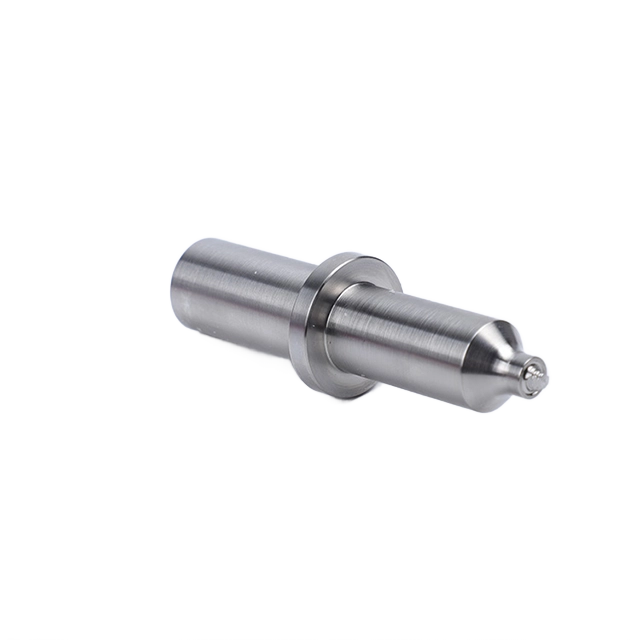
Beyond material composition, the geometry of the tool pin dictates material flow behavior. Threaded pins actively drive the plasticized aluminum downward, enhancing consolidation at the root. Tapered profiles reduce the required plunge force and minimize tool wear. Fluted designs increase the shearing action, breaking up oxide layers more effectively and promoting a homogenous stir zone. Optimizing these geometric features is essential for mitigating defects in high-strength aluminum.
Process deviations during the welding of 7075 immediately manifest as structural defects. These flaws are generally categorized by their relationship to the heat input. Cold defects occur when the heat generation is insufficient to fully plasticize the material. This leads to "kissing bonds" where the interface is physically closed but lacks metallurgical bonding, or wormholes (tunnel defects) running along the advancing side of the weld due to inadequate material flow.
Conversely, hot defects arise from excessive heat input. Overheating causes the material to become too fluid, resulting in excessive flash generation along the weld margins, surface galling, and severe microstructural degradation that plummets the joint's tensile strength.
Root flaw vulnerability is a specific concern in butt joints. Lack-of-penetration defects occur at the bottom of the joint if the pin does not plunge deep enough or if the downward forging force is inadequate. Lap joints present entirely different challenges. "Hooking" is a common lap joint defect where the original sheet interface bends upward into the top sheet, effectively reducing the load-bearing cross-section. Cold laps and vertical sheet thinning also occur if the downward material flow is not precisely controlled. Mitigating these lap joint defects requires specialized parameter calibration and often custom tool designs.
| Defect Type | Primary Cause | Visual / NDT Indication | Corrective Action |
|---|---|---|---|
| Wormhole (Tunnel Defect) | Insufficient heat input, low axial force | Subsurface void on advancing side (Ultrasonic/X-ray) | Increase RPM, decrease traverse speed, increase Z-axis force. |
| Kissing Bond | Inadequate oxide disruption, low plunge depth | Microscopic unbonded interface at root | Increase plunge depth, utilize threaded/fluted pin profile. |
| Excessive Flash | Excessive heat input, over-plunging | Large ribbons of expelled material on surface | Decrease RPM, increase traverse speed, reduce plunge depth. |
| Hooking (Lap Joints) | Improper material flow dynamics | Upward curvature of interface into top sheet (Cross-section) | Adjust tool tilt angle, modify pin length, optimize RPM/IPM ratio. |
The core of Friction Stir Welding Aluminum relies on balancing tool rotational speed (rpm) and welding traverse speed (mm/min). This ratio governs the total heat input per unit length of the weld. Higher rotational speeds increase frictional heat generation, softening the material and facilitating flow. However, excessive rpm risks abnormal grain growth in the stir zone and severe overaging in the HAZ.
Increasing the traverse speed reduces the overall heat input. This improves production efficiency and minimizes the width of the degraded HAZ, but pushing the traverse speed too high risks tool breakage and the formation of void defects due to insufficient material plasticization. The resulting mechanical properties—including Ultimate Tensile Strength (UTS), yield strength, and elongation—are directly linked to this parameter ratio. Optimizing the heat input envelope is the only way to maximize joint efficiency.
Engineers frequently use the weld pitch ratio (traverse speed divided by rotational speed) as an evaluation metric. Maintaining an optimal pitch ratio ensures consistent heat generation and material deposition, providing a reliable baseline for predicting weld quality across different material thicknesses. For 7075, finding the sweet spot requires rigorous testing, often starting with conservative parameters (e.g., 400 RPM and 150 mm/min) and scaling up while monitoring spindle torque and joint integrity.
Maintaining a strict downward forging force is critical for 7075 aluminum. The high flow stress of the material requires substantial pressure to ensure defect-free consolidation at the trailing edge of the tool. If the axial force drops, the plasticized material will not fill the cavity left by the advancing pin, resulting in continuous tunnel defects. Depending on plate thickness, axial forces for 7075 can range from 10 kN to over 30 kN.
The tool tilt angle, typically set between 1 and 3 degrees, facilitates vertical material flow. By tilting the tool backward relative to the direction of travel, the shoulder acts as a compressive forging surface, trapping the plasticized metal and preventing superficial surface defects. Proper tilt ensures the material is driven downward and backward, creating a dense, consolidated joint.
Equipment capabilities dictate how these parameters are controlled. Rigid position control systems maintain a set plunge depth regardless of material variations. While simpler, position control can lead to fluctuating consolidation pressure if the plate thickness varies. Active force control systems dynamically adjust the Z-axis position to maintain a constant downward pressure, ensuring consistent consolidation and superior weld quality across varying material tolerances.
Developing optimal parameters for 7075, particularly for complex lap joints or varying thicknesses, traditionally requires extensive trial and error. Modern production environments are shifting toward predictive modeling using Artificial Neural Networks (ANNs) and machine learning algorithms.
These models analyze vast datasets of empirical weld data to predict mechanical outcomes based on specific parameter inputs. By feeding the network data on tensile strength, hardness profiles, joint configurations, tool geometries, and thermal inputs, engineers can simulate the welding process virtually. This approach drastically reduces the time and material costs associated with R&D, allowing manufacturers to pinpoint the optimal parameter windows for highly specific joint geometries before cutting any metal.
Joining 7075 to other aluminum alloys, such as 2024 or 6061, introduces complex material flow dynamics. The engineering rule-of-thumb dictates careful consideration of material placement relative to the advancing and retreating sides of the tool. The advancing side experiences higher relative velocities and more aggressive shearing forces.
Typically, placing the harder material (7075-T6/T651) on the advancing side and the softer material on the retreating side optimizes material mixing and prevents void defects. When joining 7075-T651 to 2024-T351, the intermixing zone dictates the overall tensile shear performance. The tool must effectively plasticize and blend both distinct microstructures without causing excessive heat accumulation in the softer alloy.
Achieving a homogenous stir zone is difficult when joining alloys with vastly different thermal conductivities and deformation resistances. The tool must generate enough heat to plasticize the 7075 without overheating and degrading the secondary alloy. This requires highly specialized pin profiles designed to force aggressive vertical mixing.
Furthermore, joining dissimilar aerospace-grade aluminums requires an evaluation of corrosion potential. The distinct chemical compositions can create localized galvanic cells within the weld zone. Proper surface preparation and post-weld protective coatings are necessary to mitigate galvanic corrosion risks in service environments.
Standard CNC milling machines often fail when repurposed for 7075 FSW. The high flow stress of the alloy generates massive axial and radial loads that exceed the structural rigidity of standard machine tool spindles and gantries. Insufficient Z-axis rigidity leads to tool deflection, inconsistent plunge depths, and ultimately, defective welds.
Dedicated FSW machinery is required to scale production reliably. These machines feature heavy-duty cast iron frames, specialized high-torque spindles, and active force control systems capable of maintaining precise downward pressure under extreme loads. The elimination of consumable filler wires, shielding gases, and extensive post-weld defect repair justifies the investment for high-volume aerospace and automotive applications.
To successfully integrate friction stir welding for 7075 aluminum into your production line, execute the following steps:
A: Standard arc welding melts the material. For 7075, the high zinc and magnesium content causes severe hot tearing and porosity during the liquid-to-solid phase transition, resulting in structurally unsound joints.
A: The weakest point is typically the boundary between the Heat-Affected Zone (HAZ) and the Thermo-Mechanically Affected Zone (TMAZ), where the thermal cycle causes severe coarsening of the strengthening precipitates.
A: Higher rotational speed increases frictional heat. Too little heat causes cold defects like wormholes, while excessive heat causes severe microstructural degradation, abnormal grain growth, and excessive flash.
A: A kissing bond is a solid-state defect where the material interfaces are physically pushed together but lack actual metallurgical bonding, usually caused by insufficient heat input or inadequate material flow.
A: Lap joints are prone to specific defects like "hooking," where the interface bends upward, and vertical sheet thinning. These geometric flaws severely reduce the load-bearing cross-section and require highly specific tool designs to mitigate.
A: Welding 7075 requires immense axial force. Standard CNC mills usually lack the necessary Z-axis rigidity and active force control, leading to tool deflection and inconsistent weld quality. Dedicated FSW equipment is strongly recommended.